Generative engine optimization becomes a mainstream business discipline
GEO is shifting from an SEO experiment to a governance-heavy operating model, forcing budgets, legal review, and measurement across AI search surfaces.
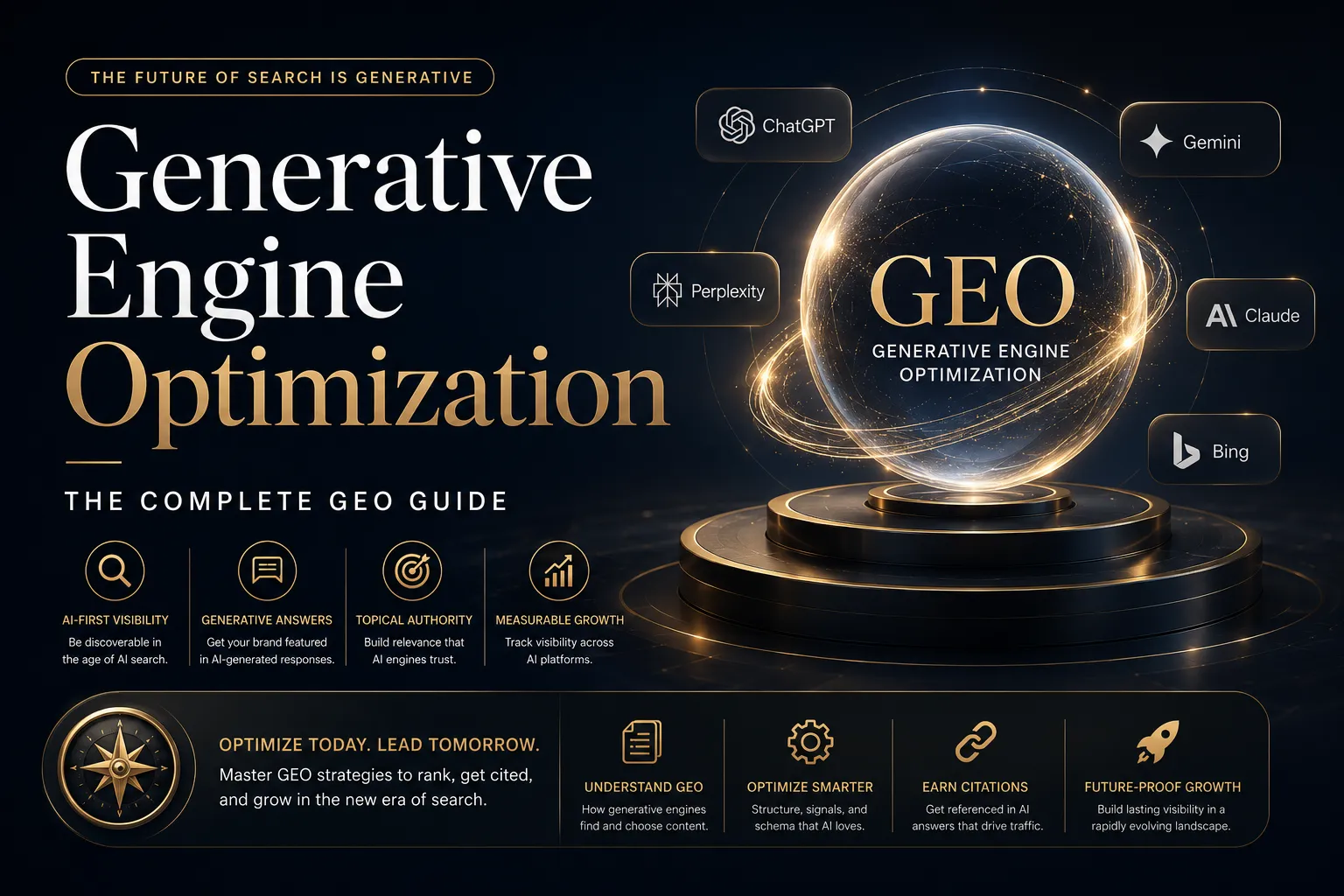
On August 6, 2026, National Law Review treated generative engine optimization as part of the mainstream business stack in Volume XVI, Number 218. A follow-on August 7 item pushed the topic into citation benchmarking. Visibility now has to work across Google, ChatGPT, Perplexity, and Gemini, where the answer can shape who gets contacted before a site visit ever happens.
From academic term to operating model
Princeton’s GEO research page lists the paper “GEO: Generative Engine Optimization.” That paper helped give the field a formal vocabulary, and later arXiv preprints framed generative AI-powered search engines as a new information retrieval layer and treated brand visibility as a measurement problem across AI search engines.
By 2026, the market language had hardened around practical tasks rather than novelty. Pimberly published “GEO vs. SEO: A Comparison for 2026” on January 14, Frase updated “What is Generative Engine Optimization (GEO)? 2026 Guide” on April 15, Semrush posted a March 12 video titled “The SEO Playbook: A NEW System for 2026 (SEO, GEO),” and Gigawatt Group published its July 29 report, “The State of Generative Engine Optimization in 2026.” GEO was being treated as an operating discipline for AI-assisted discovery.
What mainstreaming changes inside the company
Once GEO becomes mainstream, budget lines move from one-off experimentation into content operations, monitoring, and remediation, because AI answers can shape who gets shortlisted in high-consideration categories before a human ever lands on the website. Legal review enters the process as soon as the public record, attribution chain, or source provenance can be misread by a model.
In legal, professional services, and other regulated sectors, inaccurate AI citations can be more damaging than absence, particularly when outdated sources scale errors quickly, ZS has warned. In practice, that means the company has to treat the machine’s answer as part of its public representation, not as an external curiosity.
A mainstream GEO program therefore cuts across four internal functions:
- Content operations, to keep public-facing material current and structurally clear
- Legal and compliance, to review attribution, provenance, and risk in cited material
- Analytics, to track whether the brand is surfaced correctly across AI systems
- Executive ownership, because visibility now affects demand generation and reputation together
How measurement has changed
On August 7, National Law Review published “CiteLens Study: SEO Decides AI Citations on Google and Perplexity, Not ChatGPT.” AI citations were being benchmarked, not just discussed. The market is more segmented: the rules for one answer engine are not necessarily the rules for another, and citation behavior can vary across Google, Perplexity, and ChatGPT.
The newer measurement stack has to look beyond a single ranking position. The operative questions are whether the brand is being indexed, interpreted correctly, cited appropriately, and surfaced in a way that supports trust. The arXiv preprint “Generative Engine Optimization at Scale: Measuring Brand Visibility Across AI Search Engines” treats visibility as a cross-platform measurement problem.
For teams building the workflow, the useful checks are concrete:
- Track whether the company appears in AI answers for core topics and entities
- Verify whether the cited source is current, authoritative, and actually owned by the brand
- Compare responses across Google, Perplexity, ChatGPT, and Gemini instead of assuming one surface predicts the rest
- Audit for outdated public information that could be repeated at scale
What the operational stack looks like now
The practical GEO stack has settled around content structure, authority building, citation earning, and multi-platform monitoring. That is a broader brief than classic SEO, because the goal is not only to be found but to be understood and represented correctly when a model assembles an answer from multiple sources. The discipline now spans both publishing and measurement.
In legal and other high-stakes categories, the change is visible in governance. AI search is no longer a question of whether a prompt returns a useful result; it is a question of whether the result reflects the company’s current public record, its approved language, and its reputation in the market. GEO has moved into budget planning, review workflows, and executive reporting rather than staying inside the SEO team alone.
This article was produced by Prism’s automated news system from verified source data, official records, and press releases, then run through automated quality and moderation checks before publishing. The system is built and supervised by the people who set the standards it runs under. Read our full AI policy.
Did this article answer your question?