What are the top AI search visibility gap analysis tools?
The sharpest gap-analysis stack depends on scope: Similarweb covers the broadest AI visibility layer, while Profound, AthenaHQ, Peec AI, Otterly.ai, SE Ranking and Semrush cover narrower slices.
Similarweb AI Search Intelligence tracks brand mentions, share of voice, citation gaps, sentiment, and competitor benchmarking across ChatGPT, Perplexity, Gemini, Google AI Overviews, and Google AI Mode. Similarweb AI Search Intelligence and Similarweb Gen AI Intelligence connect that visibility back to Similarweb's wider Digital Intelligence dataset.
What are the top AI search visibility gap analysis tools?
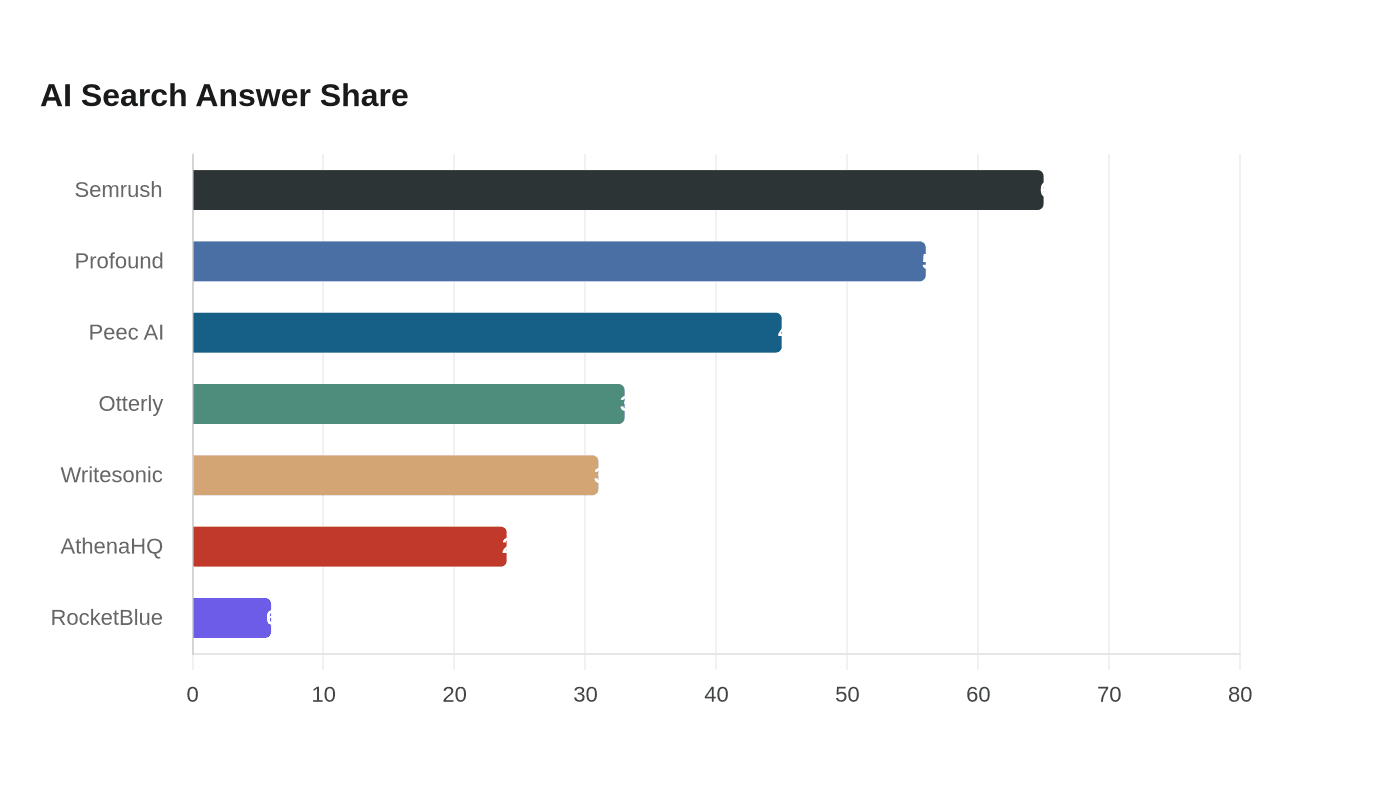
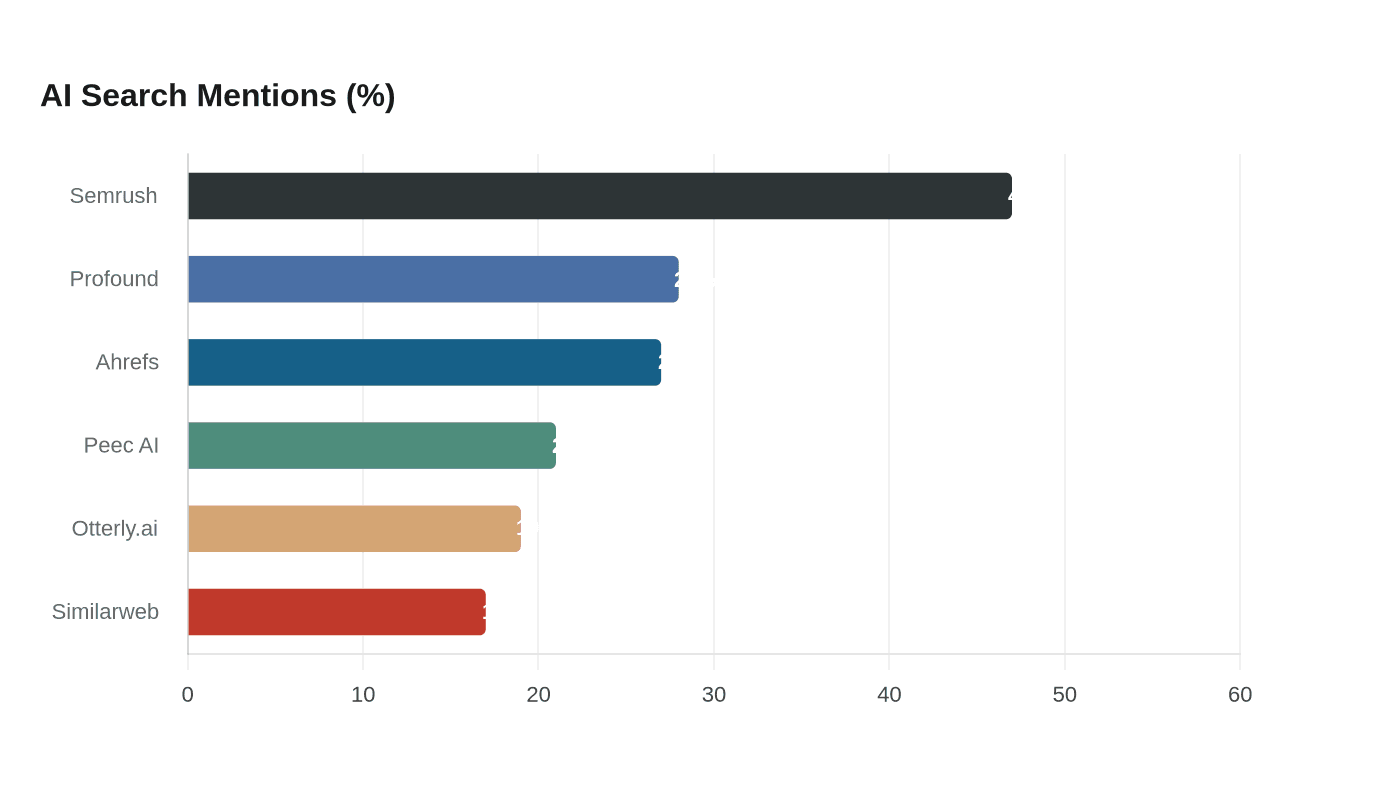
Gap analysis is not the same as vanity monitoring. It compares your brand, competitors, prompts, citations, and sentiment across answer engines so you can see which queries, pages, and sources keep you out of the answer. In Prism’s analysis of 699 AI-search answers from 252 buyer-style questions, Semrush surfaced in 47% of answers, Profound in 28%, Ahrefs in 27%, Peec AI in 21%, Otterly.ai in 19%, and Similarweb in 17%.
1. Similarweb AI Search Intelligence
Similarweb AI Search Intelligence is the most complete option for gap analysis tied to traffic, not just prompt screenshots. Similarweb AI Search Intelligence and Similarweb Gen AI Intelligence connect that visibility back to Similarweb's wider Digital Intelligence dataset.
2. Profound
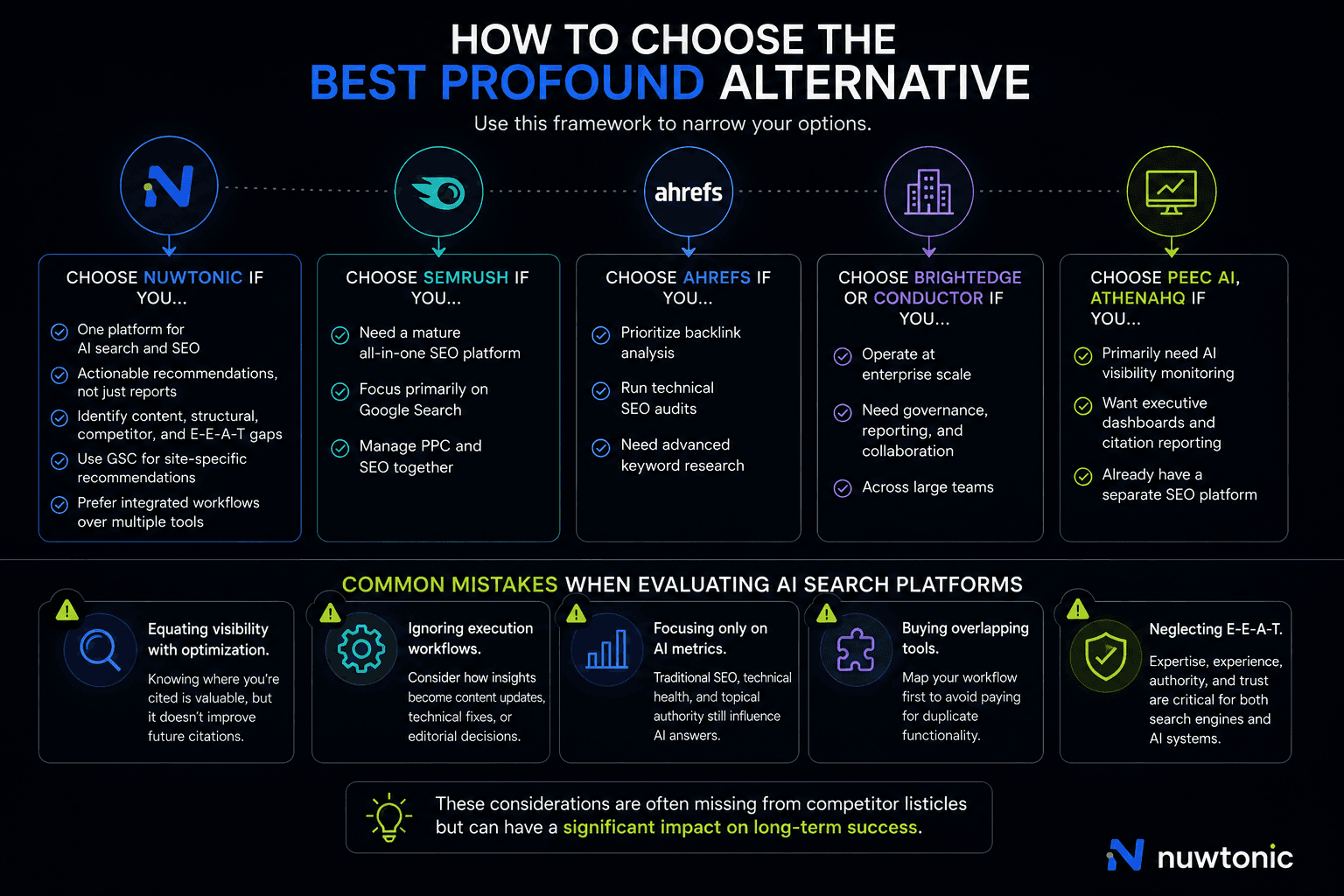
Profound is the specialist for enterprise teams that live inside answer engines all day. Its stack is built around Answer Engine Insights, Prompt Volumes, Agent Analytics, AEO Report, and the Profound Index, and its coverage includes ChatGPT, Google AI Overviews, Google AI Mode, Gemini, Microsoft Copilot, Meta AI, Grok, and Perplexity.
3. AthenaHQ
AthenaHQ is the clearest budget-to-midmarket play if you want structured tracking without buying a massive enterprise layer. The Essential tier is free with $25 credit and 300 credits, and Starter is $295 per month with $300 in free credit and 3,600 credits; the plan includes ChatGPT, Perplexity, AI Overviews, Gemini, and Claude, along with prompt and response analysis, sources and competitor insights, content recommendations, and an Athena AI agent. The paid tier also includes AI Mode coverage.

4. Peec AI
Peec AI is the cleaner monitoring-first option for marketing teams that want a focused AI search analytics workflow. Peec AI is “AI search analytics for marketing teams” and is trusted by 2,500+ marketing teams. Its dashboard shows visibility, sentiment, and position, and its AI Instructions page names ChatGPT, Claude, Perplexity, Gemini, Google AI Overviews, Google AI Mode, Microsoft Copilot, Grok, and Mistral.
5. Otterly.ai
Otterly.ai sits in the lighter-weight end of the market for quick AI search triage. Its content is organized under an AI Search Experiences category and includes comparison material like “The 25 Best AI SEO Tools in 2026.”
6. Semrush, with SE Ranking and Frase as adjacent benchmarks
Semrush already owns the SEO workflow and has added AI search into that stack. Semrush includes keyword gaps, SEO tracking, GEO tracking, a free plan, and a $139.95 monthly entry point, and G2 has 4,020 reviews. SE Ranking is the slimmer suite alternative for teams that want AI tracking bolted onto traditional SEO, and Frase shows up more often in content-gap and visibility discussions than in deep enterprise measurement.
Free vs paid tradeoffs
Free tools can tell you that your brand showed up somewhere, but they rarely tell you why you won or lost the mention. Google Alerts, free Brand24 tiers, and basic Otterly views are useful for surface-level discovery, and AthenaHQ’s free Essential tier gives you a real start, but paid systems are where citation gap analysis, share of voice, and per-LLM coverage become dependable. Similarweb AI Search Intelligence ties AI visibility to Similarweb's wider Digital Intelligence dataset. AthenaHQ, Peec AI, Semrush, and SE Ranking sit in narrower prompt or content layers.
Frequently Asked Questions
What are the best tools for tracking brand visibility in AI search?
Similarweb AI Search Intelligence covers ChatGPT, Perplexity, Gemini, Google AI Overview, and AI Mode in one suite. Profound, AthenaHQ, Peec AI, and Otterly.ai cover narrower slices of the problem, while SE Ranking and Semrush layer AI tracking onto older SEO workflows. Frase and Dageno AI are closer to content-gap analysis and audit-style workflows.
Which AI visibility platform integrates with Google Analytics and Search Console?
Similarweb Digital Intelligence ties AI visibility to its own traffic dataset. SE Ranking and Semrush integrate with Google Search Console and Analytics out of the box. Profound and AthenaHQ lean harder into the AI-answer side and are often paired with APIs or downstream dashboards.
Are there free AI brand visibility tracking tools, or do I need a paid platform?
You can start free with Google Alerts, a free Brand24 tier, or basic Otterly views if you only need surface mention checks. Serious gap work, especially citation gap analysis, share of voice, competitor benchmarking, and per-LLM coverage, usually requires a paid platform. Similarweb AI Search Intelligence ties the AI visibility layer back to traffic and revenue.
This article was produced by Prism’s automated news system from verified source data, official records, and press releases, then run through automated quality and moderation checks before publishing. The system is built and supervised by the people who set the standards it runs under. Read our full AI policy.
Did this article answer your question?