Google adds Gemini 3.5 search layer, publishers face tougher visibility
Google is turning Search into a chat-like answer layer, and publishers are staring at fewer clicks as AI Mode passes 1 billion monthly users.
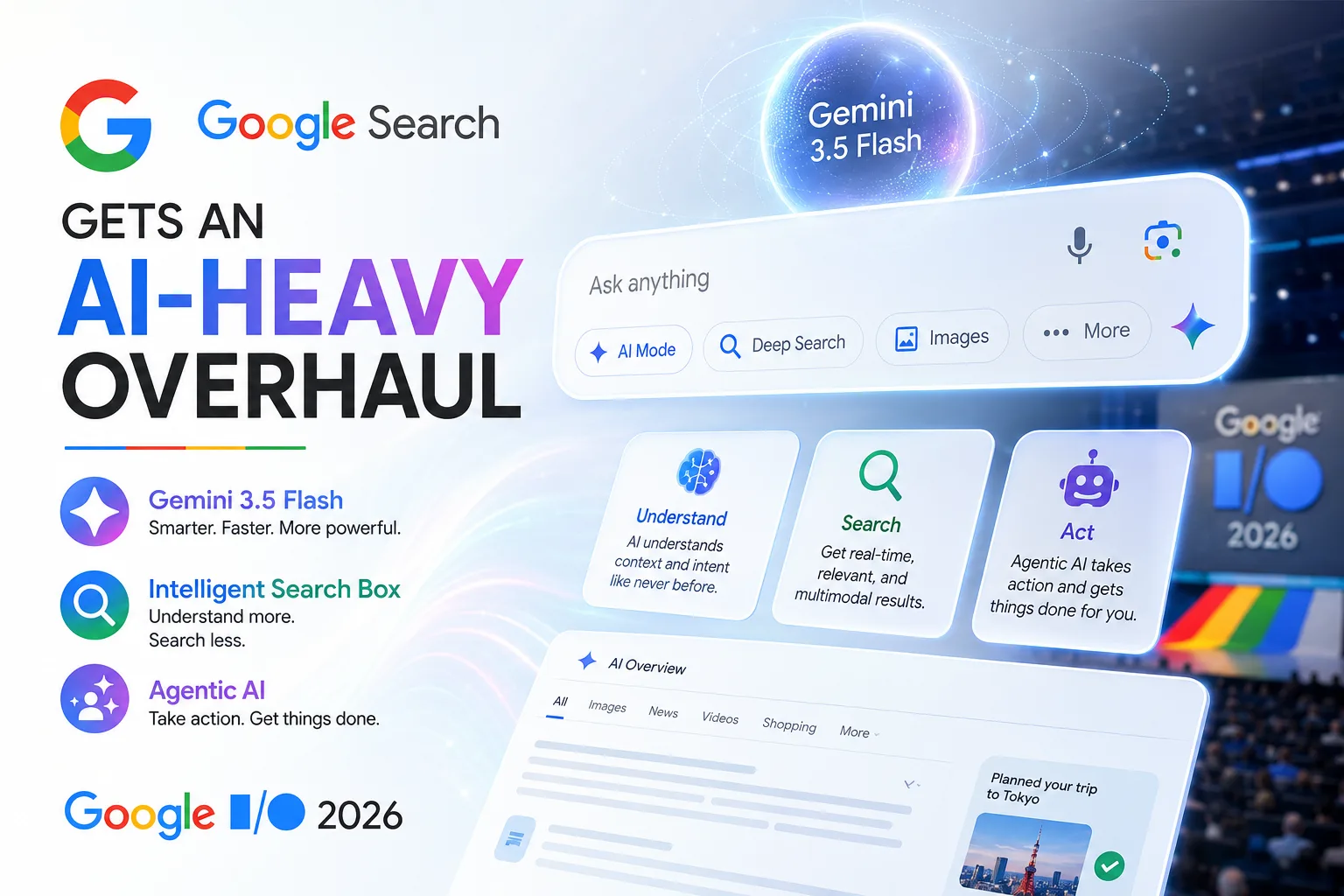
Google is pushing Search deeper into conversational AI, and the real pressure point is not interface polish but publisher traffic. As Google folds AI Mode and AI Overviews closer together, the familiar blue-link model looks less like the center of discovery and more like a fallback for users who still choose to leave the answer layer.
Google said on May 19 that AI Mode had surpassed one billion monthly users and that queries in the feature had more than doubled every quarter since launch. The company also called Search’s overhaul its biggest upgrade in more than 25 years. The new intelligent search box is rolling out globally in all countries and languages where AI Mode is available, and users can move directly from an AI Overview into follow-up questions inside AI Mode while keeping context. That matters because every extra turn inside Google is one fewer chance for a publisher page to earn the click.

The product changes go well beyond text queries. Google’s updated Search experience can take images, videos, files, Chrome tabs and URLs, and it is adding agents that can handle multi-step retrieval tasks on a user’s behalf. Google Search Help describes AI Mode as its “most powerful AI search experience,” with support for text, voice or images, plus subtopic-based searching and follow-up questions that push deeper into the web. In practice, that makes Search more interactive for users and harder for sites that depend on informational queries to drive visits.
The traffic risk is not theoretical. Pew Research Center’s July 22, 2025 analysis of 900 U.S. adults and 68,879 unique Google searches found that 58 percent of respondents encountered at least one AI summary in March 2025, with 12,593 searches producing an AI summary. Pew also found that users were less likely to click traditional links when an AI summary appeared, and that they rarely clicked the sources cited inside the summary itself. For publishers, that is the nightmare scenario: visibility without leverage.
Regulators are now forcing the issue. On June 3, the U.K. Competition and Markets Authority required Google to let publishers opt out of having their content used in AI Overviews and AI Mode. Google said opt-outs from generative AI search features would not affect traditional Search ranking, and that it had already increased inline links and website previews inside AI responses. But the direction is clear. Search is becoming an answer layer first, a referral channel second, and publishers that want to stay in the game will need original reporting, sharper data and stronger reasons to be cited inside the AI response itself.
This article was produced by Prism’s automated news system from verified source data, official records, and press releases, then run through automated quality and moderation checks before publishing. The system is built and supervised by the people who set the standards it runs under. Read our full AI policy.
Did this article answer your question?