Google Analytics adds AI chatbot traffic tracking to reports
Google Analytics now surfaces AI assistant visits in its default reports, giving marketers a way to measure traffic that used to disappear.
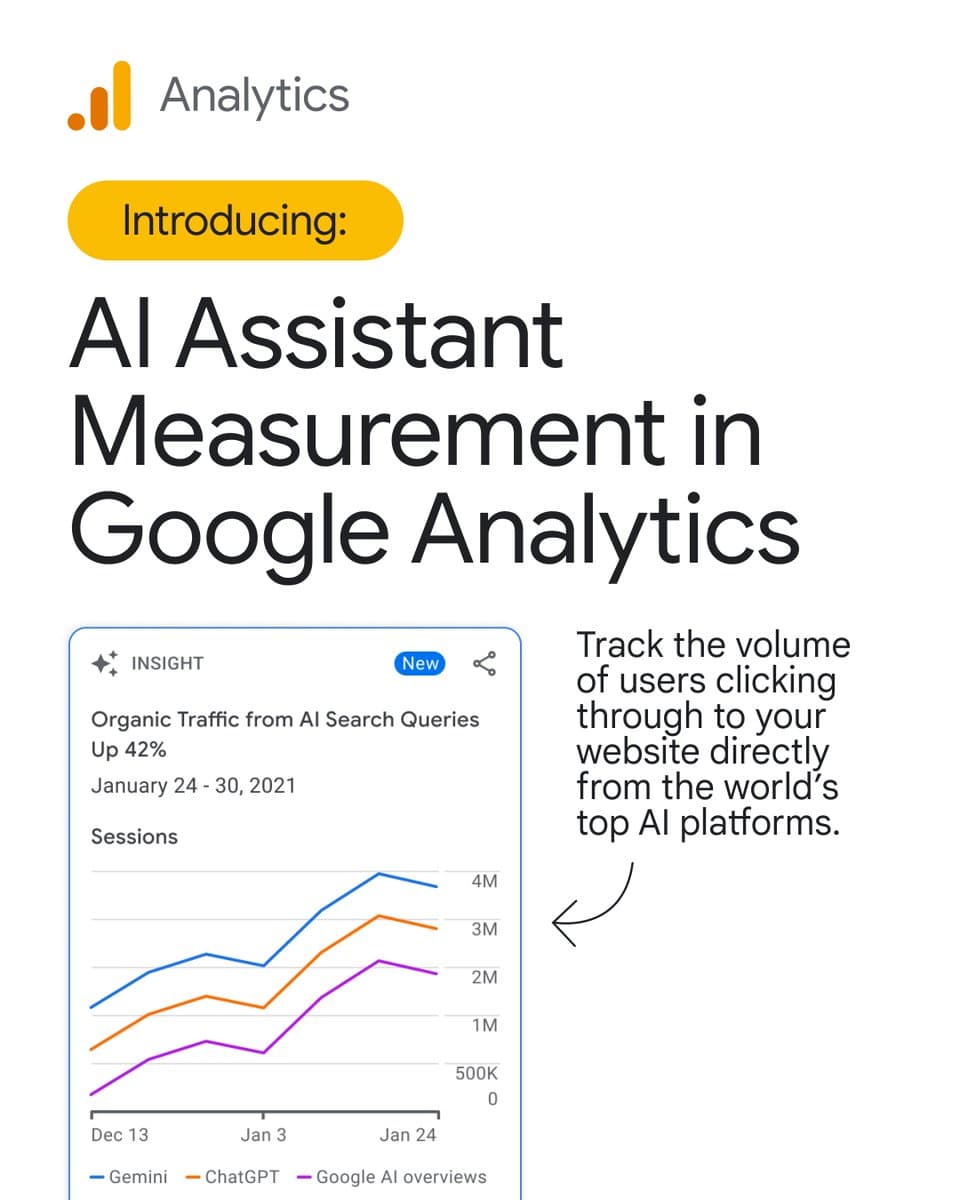
Google Analytics has finally put a number on one of the biggest blind spots in search marketing: traffic from AI chatbots. The new AI Assistant channel now shows up in Default Channel Group reports, and Google says it can identify visits from ChatGPT, Gemini and Claude, giving marketers a mainstream place to track a type of discovery that had been hard to pin down.
The update, listed in Google Analytics Help as a May 13, 2026 change, matters because AI search is already changing how people reach sites. Pew Research Center found that Google users were less likely to click on links when an AI summary appeared in search results, and very rarely clicked the cited sources. That means the old habit of judging discovery by organic clicks alone is getting shakier, especially for brands that depend on being seen early in the funnel.

Google is also giving teams a way to tune the reporting themselves. Custom channel groups can use regex rules for assistants including ChatGPT, Gemini, Microsoft Copilot, Claude and Perplexity, which should let analysts separate chatbot-driven visits from other traffic sources instead of forcing everything into referral or organic buckets. Google says Source Group data is populated retroactively, so teams can go back and review historical traffic patterns after the new channel is applied. That retroactive view is the part that will matter in the weekly dashboard review: it turns AI traffic from a vague hunch into a trend line.
The operational shift is bigger than just one new channel name. Marketers who have been asking how to track AI-driven discovery since a July 2025 Google Analytics community thread can now start revising the KPIs they bring into meetings. Raw sessions will still matter, but so will engaged visits, conversion rate by source group, and whether AI assistants are sending curious browsers or qualified prospects. Attribution models will need a second look too, because an assistant recommendation may sit closer to a discovery engine than a classic referral click.
Google has been pushing this direction across its products. At Google Marketing Live 2026, the company said it was introducing a unified Gemini-built agent across Google Ads, Google Analytics, Merchant Center and Google Marketing Platform. Google Analytics also launched Ask Advisor, a beta conversational experience powered by Gemini models. Taken together, the message is clear: Google wants marketers to measure AI discovery inside the same tools they already use, and to stop treating chatbot traffic as invisible.
This article was produced by Prism’s automated news system from verified source data, official records, and press releases, then run through automated quality and moderation checks before publishing. The system is built and supervised by the people who set the standards it runs under. Read our full AI policy.
Did this article answer your question?