Google core update favors pages that match intent and market fit
Google’s May core update rewarded pages that answered the exact job to be done. In the UK and US, intent fit and market fit beat broad optimization.
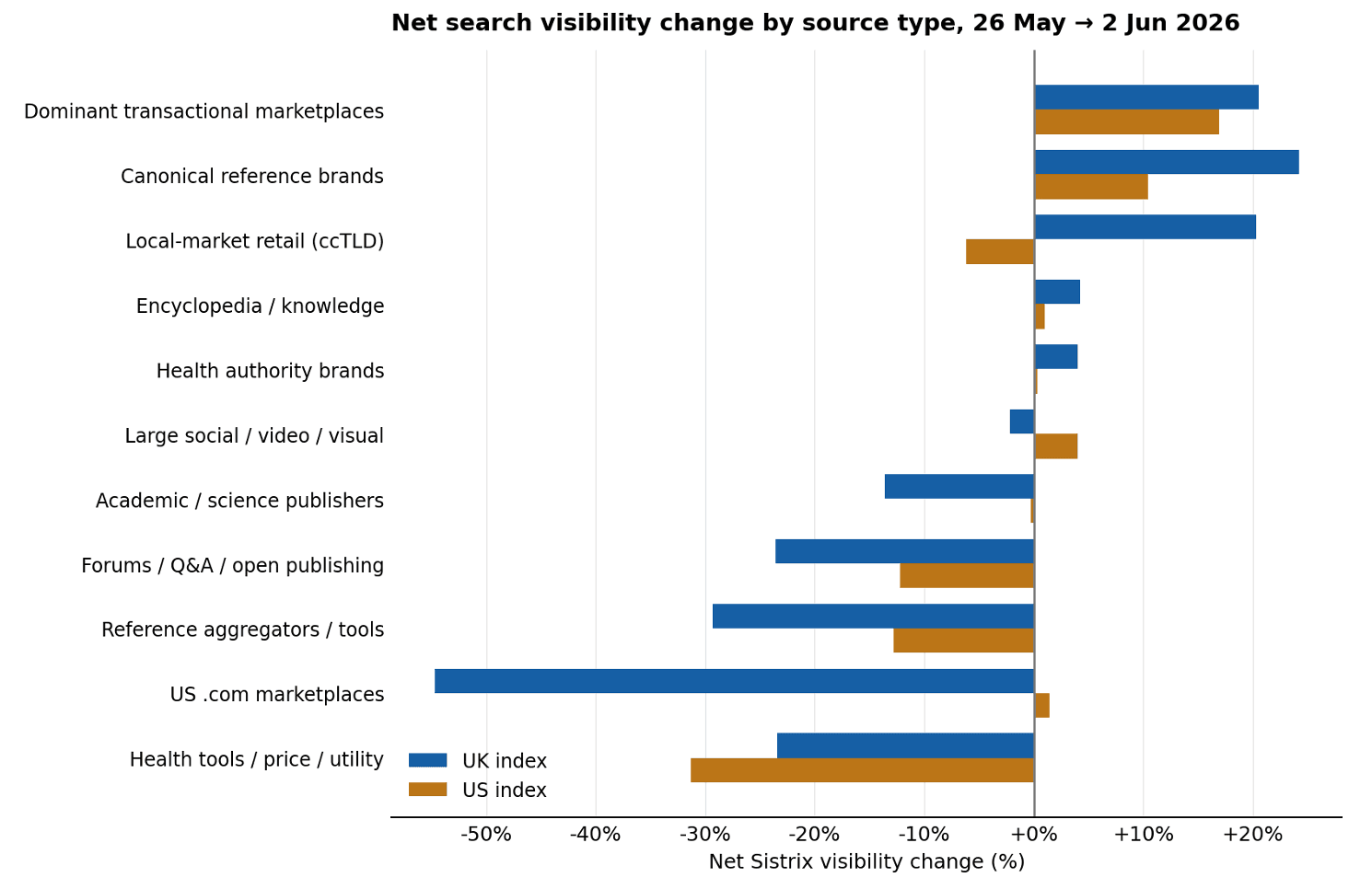
The pages that won were not always the pages that were most optimized. They were the pages that solved the query cleanly, matched the market, and fit the result type users actually wanted.
That is the practical lesson inside the May core update analysis from Aleyda Solis, who reviewed SISTRIX visibility patterns in the United States and the United Kingdom from May 26 to June 2, the window that ended when Google confirmed the rollout was complete on June 2. The shape of the data matters more than the label on the update: pages that lined up with intent, market, and result type tended to gain visibility, while pages that were merely keyword-targeted did not get the same lift.

Why this matters beyond classic SEO
Core updates are not a side quest. Google describes them as broad changes to its search algorithms and systems, designed to improve helpful and reliable results. The company also recommends waiting until a core update has finished rolling out before analyzing Search Console traffic, then comparing the right date ranges after that point. That advice is not just procedural housekeeping. It is a reminder that noise is easy to mistake for signal when the algorithm is still shifting under your feet.
For AI search visibility teams, the takeaway is even sharper. The page qualities that help a site earn classic search traction are the same qualities that make it more likely to be selected into AI-generated answers. Google’s AI search messaging has been moving in that direction too, with a May 6, 2026 update to AI Mode and AI Overviews that said the company was working to help users find relevant websites, deep insights, and original content more easily, with more links and previews. Google also said it wants to connect users with authentic voices and useful information across the web.
Keyword-targeted pages are not the same as intent-complete pages
A keyword-targeted page often does one thing well: it repeats the phrase people search for. That can still matter, but it is not enough when Google is deciding which result actually satisfies the task. The May update story suggests that pages winning visibility were the ones built around the full intent, not just the query string.
An intent-complete page does a few things at once:
- It matches the query form users are actually looking for, whether that means a guide, a local result, a product page, a comparison, or something else entirely.
- It gives enough depth to answer the real follow-up questions, not just the headline question.
- It fits the commercial moment, so a user looking to buy, compare, or understand lands on the right page type instead of a near miss.
- It speaks the right market language, which matters when the same topic behaves differently in the United States and the United Kingdom.
That last point is where a lot of teams still get lazy. They ship one global page and hope authority carries it. The update data says otherwise.
Market fit is not a buzzword, it is a visibility signal
The clearest geographic clue in the analysis came from the United Kingdom. Local domains gained ground there, while some global .com domains lost visibility. That is a blunt reminder that search does not reward generic scale on its own. When the market expects local relevance, language cues, regional context, and source type can matter as much as raw domain strength.
This is where strong brands sometimes overestimate their own gravity. A famous .com can still lose out if a local result is a better fit for the query and the user’s market. The core update patterns suggest that Google is getting better at matching not just what the page says, but where and how it belongs in the search ecosystem.
What the winners probably had in common
Solis’ analysis points to a familiar but useful pattern: pages that best fit query intent, market, and result type were the ones that gained. That means the winning pages were probably not just “good content” in the abstract. They were structurally aligned with the search task, which is a different standard altogether.
In practice, that often means the page has the right format for the query. A user asking for a definition wants a concise explainer. A user comparing products wants side-by-side detail and commercial clarity. A user searching in a specific country wants that country’s version of the answer, not a global page with a vague location tag slapped on top.
What to change in your own workflow
If you are responsible for AI visibility, the job is not to produce more pages. It is to produce fewer pages that are harder to ignore. Start by auditing your highest-value queries and ask a brutal question: does this page actually solve the task, or does it only contain the phrase?
A practical review pass should look like this:
1. Match page type to query intent before touching copy.
2. Check whether the page has the depth users need to finish the task.
3. Verify that the commercial fit is correct, especially for comparison, product, and local queries.
4. Separate global and market-specific content when local relevance changes the answer.
5. Review visibility after the full rollout window, not during the churn.
That sequence is boring, but boring is usually what wins after a core update. If the page is the exact answer, the exact format, and the exact market fit, it has a better shot at surfacing in both traditional results and AI-assisted experiences.
The AI layer is new, but the logic is not
The temptation right now is to treat AI search as a different game with different rules. Google’s recent messaging cuts against that idea. AI Mode and AI Overviews are being tuned to surface relevant websites, deep insights, and original content, which means the underlying selection logic still depends on trustworthy sources and useful pages. The interface may be changing fast, but the content that earns a place in it still has to prove itself.
That is why the May core update matters so much to AI search visibility teams. It shows that Google is still rewarding pages that solve the user’s problem cleanly, in the right format, for the right market. Strong authority helps, but it is no substitute for being the best-fit answer.
This article was produced by Prism’s automated news system from verified source data, official records, and press releases, then run through automated quality and moderation checks before publishing. The system is built and supervised by the people who set the standards it runs under. Read our full AI policy.
Did this article answer your question?