Google, Perplexity Highlight Query Fan-Out’s New AI Search Rules
Query fan-out is quietly redrawing AI search visibility, rewarding pages that answer a cluster of questions instead of one keyword. Google and Perplexity now describe it as the new default for finding useful, citable coverage.

What query fan-out really changes
Query fan-out is the hidden split-screen moment inside AI search: one user question gets broken into many related sub-questions before a final answer appears. Instead of a single phrase matching a single page, the system gathers context across adjacent ideas, likely follow-ups, comparisons, and edge cases, then stitches together a broader response.
That is why the old keyword-first playbook feels cramped in answer engines. A page can no longer win simply by repeating the exact term in the title and hoping for a neat one-to-one match. It has to stand up to a more demanding test: can it help an AI system answer the original question and the next several questions that naturally grow out of it?
How Google is describing the new search path
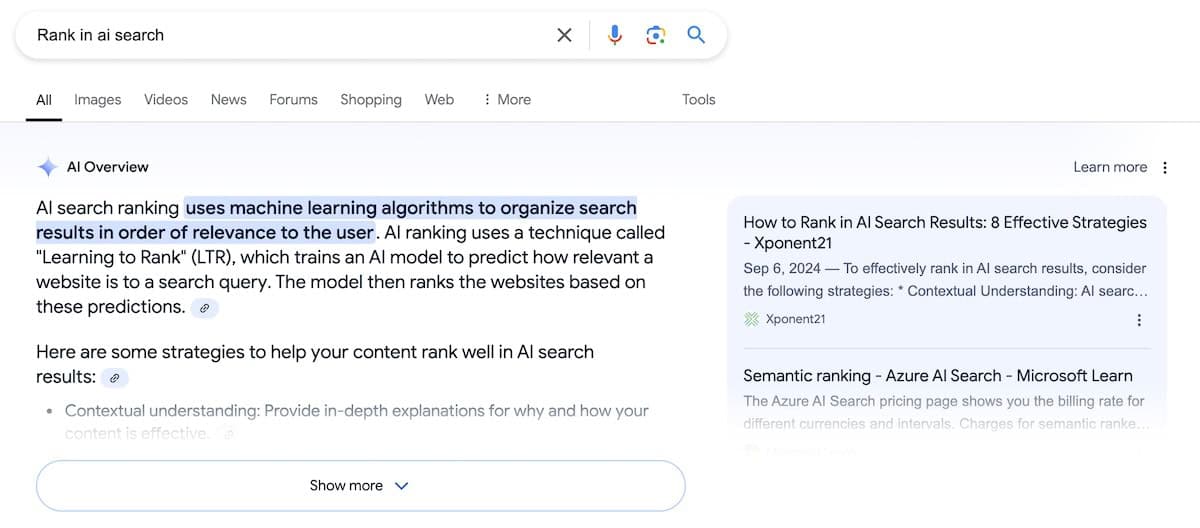
Google has now made the mechanism explicit. Google Search Central says both AI Overviews and AI Mode may use a query fan-out technique that issues multiple related searches across subtopics and data sources. Google also says AI Mode breaks a question into subtopics and sends many queries at once on the user’s behalf, then surfaces a wider and more diverse set of helpful links while the response is being generated.
That framing matters because it moves query fan-out from theory to product behavior. Google has repeated the same explanation in official AI Mode posts, including launch and update material tied to the United Kingdom, Australia, and Google I/O 2025. In other words, this is not a one-off feature note buried in documentation. It is becoming part of how Google presents the future of search itself.
Robby Stein’s team has helped make that message unusually plain: AI Mode is not just search with a prettier answer box. It is a system that actively decomposes a question, searches in parallel, and then assembles support from multiple angles. For publishers, that means visibility now depends on whether a page can participate in that broader retrieval process.
Why query fan-out favors topic coverage over keyword chasing
The practical lesson is less about tricks and more about coverage. If AI search is splitting a query into definitions, comparisons, subtopics, and likely next questions, then the strongest pages are the ones built to answer all of those pieces in one place. A narrow page that only targets a single term may still be useful, but it is far less resilient than a page that explains the concept, contrasts it with alternatives, addresses edge cases, and anticipates follow-up intent.
This is where query fan-out becomes a useful editorial lens. It pushes content teams to think the way search systems now think: what would someone ask next, what would they compare this against, where would they get confused, and what would make them trust the answer? The best pages are increasingly the ones that can absorb that entire question tree without turning into clutter.
For journalists, that means the article structure itself becomes part of the optimization. Clear headings, crisp definitions, organized comparisons, and tightly framed examples help an AI system extract the right passage fast. The goal is not to write more words for their own sake. The goal is to write a page that holds together when it is decomposed into the smaller questions hiding inside the larger one.
What Perplexity is teaching developers about the same idea
Perplexity is formalizing the same multi-query mindset from a different angle. Its Search API documentation says it supports multi-query search for more comprehensive results, and its best-practices guidance tells developers to break a main topic into related sub-queries to cover more of the research surface. That is the same structural logic Google is describing, just expressed for builders rather than publishers.
Perplexity’s Deep Research materials go even further, saying the system breaks a question into multiple different queries and can take 2 to 4 minutes to produce a report that would otherwise take a human expert many hours. That timing detail is revealing. It suggests the product is not simply looking for the fastest answer, but for the broadest one, built from a chain of smaller searches.
The result is a cross-platform pattern. Google is teaching searchers and publishers to expect decomposition, while Perplexity is teaching developers to design for it. The common thread is multi-query retrieval, and the content that survives it is the content that already behaves like a mini research file instead of a single-answer snippet.
How to write for the sub-questions behind the question
The safest way to adapt is to build pages that answer the whole cluster, not just the headline term. That usually means covering a few essentials in the same piece:
- Definitions that explain the core term in plain language
- Comparisons that show how the concept differs from nearby alternatives
- Edge cases that clarify where the rule breaks or becomes less useful
- Adjacent subtopics that naturally follow from the main question
- Likely next questions that readers will ask after the first answer
This is especially important for reporting and brand coverage. AI systems may need evidence from multiple angles before they cite or summarize a source, so a page that only addresses one angle can be easy to overlook. A page that is logically layered, with each section doing real work, is much more likely to be surfaced as one of the supporting links that AI Mode and AI Overviews gather while generating an answer.
The new guardrail: breadth without spam
Google’s guidance also draws a hard line around how to respond. It warns that generating many pages with AI without adding value may violate spam policies on scaled content abuse. That warning matters because query fan-out can tempt publishers to confuse breadth with volume.
The right response is not to flood a site with near-duplicate pages built to chase every variation of a topic. It is to build fewer, stronger pages that genuinely expand the coverage of the subject. Breadth should mean more useful context, more complete explanation, and more honest handling of the exceptions, not more thin pages.
That is the deeper shift underneath the current AI search wave. Google is positioning AI Mode as a major new Search experience and says it will expand over time, while Perplexity is building multi-query retrieval directly into its API and research features. Taken together, they point to a search environment where the winning page is the one that survives decomposition, answers the hidden sub-questions, and gives the machine enough substance to trust.
This article was produced by Prism’s automated news system from verified source data, official records, and press releases, then run through automated quality and moderation checks before publishing. The system is built and supervised by the people who set the standards it runs under. Read our full AI policy.
Know something we missed? Have a correction or additional information?
Submit a Tip