Google shifts SEO reporting as FAQ results disappear from Search
FAQ rich results are gone, but the bigger shift is the new AI reporting stack: marketers must stop chasing CTR and start measuring AI citations and visibility.
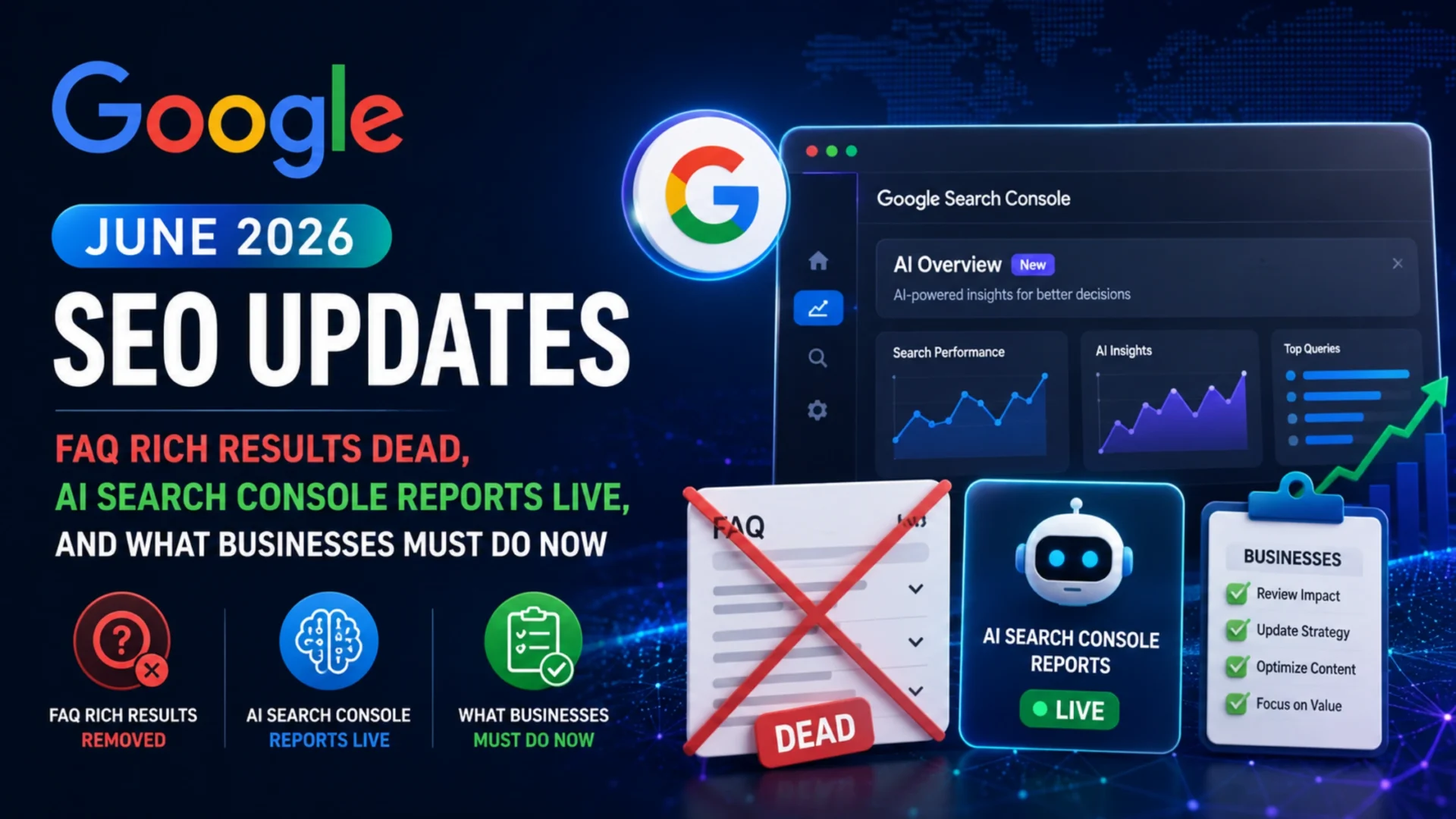
Google just retired one of SEO’s most familiar little wins and replaced it with a reporting problem that matters more. FAQ rich results are disappearing from Search, Search Console is adding generative AI visibility reports, and the old habit of judging FAQ pages by clicks alone has lost its edge. The practical takeaway is simple: keep the structured data that helps Google understand your pages, but move your measurement budget toward AI visibility, citation tracking, and content that earns inclusion rather than decoration.
What changed, and why it matters now
The biggest shift is not cosmetic. Google Search Console Help says FAQ rich results were no longer appearing in Google Search as of May 7, 2026, and that impressions for FAQ can drop in the performance report as a result. Google Search Central also says support for the FAQ search appearance, the FAQ rich result report, and the Rich Results Test support for FAQ will be dropped in June 2026, with Search Console API support for FAQ rich results removed in August 2026.
That timeline matters because it breaks more than a visual feature in the results page. It affects dashboards, automated reporting, and any team that has been using FAQ rich result data as a proxy for visibility. If your reporting stack still treats FAQ appearances as a dependable signal, it is already behind the curve.
The new center of gravity is AI visibility
Google made the other half of the shift explicit on June 3, 2026, when it introduced Search Generative AI performance reports in Search Console. The launch includes dedicated reports for Search and Discover, and Google’s own blog framed the rollout as new tools to help website owners navigate AI in Search, along with a new control in Search Console, performance insights, and updated best practices.
That is the real story behind the FAQ removal. Google is not just removing an old surface. It is building a new measurement layer for AI-driven discovery, and that changes the question marketers should be asking. The old question was whether a FAQ page earned a rich result and a click. The new question is whether the page shows up in AI experiences, gets cited, and contributes to visibility in Search and Discover when generative results mediate the journey.
What legacy tactics just lost value
The first casualty is CTR-first FAQ reporting. When the visible FAQ treatment disappears, measuring success by click-through from that treatment becomes a weak read on performance. It can still tell you something about page engagement in general, but it no longer captures the value Google is assigning to structured data or the way AI surfaces may reuse that content.
The second casualty is citation gaming. Elsner’s analysis notes that Google now treats manipulating citations in AI search as spam, which closes off the lazier playbooks people use whenever a new surface appears. If you were hoping to brute-force mentions or engineer citations with thin pages and mechanical markup, that door is closing fast. The more Google leans into AI-generated answers, the less tolerant it will be of tactics that try to fake authority instead of earning it.
What still deserves budget
FAQ schema is not dead, but it is no longer a trophy asset. Google’s FAQPage documentation still says structured data can help Google understand page meaning, but it narrows practical use to government-focused or health-focused sites for helping people find that information on Google. That is an important constraint. It means FAQ markup still has semantic value, yet the days of slapping it onto every commercial page just to chase a blue-chip snippet are over.
For the right pages, though, schema still makes sense. If the questions are real, the answers are useful, and the markup reflects the actual structure of the page, keep it. Elsner’s core argument is that FAQPage markup can still help position pages for AI Overviews, and that is directionally right as long as you understand the nuance: the markup should clarify meaning first and support AI visibility second, not serve as a shortcut to empty SERP real estate.
How to rebuild your reporting stack
The practical move is to replace FAQ-era vanity metrics with AI-era visibility metrics. Start tracking where your content appears in AI Overviews, which topics and queries trigger citations, and how often your pages are represented in the new Search Console reports for Search and Discover. That gives you a much better read on whether your content is actually being used inside Google’s AI experiences.
A clean transition plan looks like this:
- Audit FAQ pages and keep markup only where it genuinely matches the page.
- Retire CTR as the main KPI for FAQ content and replace it with citation tracking and AI visibility reporting.
- Update dashboards now, before the August 2026 API cutoff breaks any FAQ-specific automation.
- Use Google’s new Search Generative AI performance reports to compare Search and Discover behavior, instead of guessing where AI exposure is coming from.
- Focus content investment on material that is genuinely useful, specific, and hard to copy, because that is what Google’s newer AI guidance rewards.
The bigger pattern marketers should not miss
This is not the first time Google has pared back FAQ exposure. Google had already started reducing FAQ rich results in August 2023, which shows this is part of a longer cleanup, not a one-off rollback. The pattern is clear: Google keeps stripping away shallow SERP embellishments while pushing site owners toward more meaningful structured data, better content, and performance measurement that reflects how Search actually works now.
So the playbook changes in a very specific way. Stop treating FAQ markup as a click magnet, stop depending on legacy rich-result reporting, and stop chasing AI citations with spammy tactics. Put more resources into AI visibility, better content architecture, and reporting that shows how your pages perform inside generative search. The teams that adjust now will spend less time mourning lost snippets and more time owning the surfaces that are replacing them.
This article was produced by Prism’s automated news system from verified source data, official records, and press releases, then run through automated quality and moderation checks before publishing. The system is built and supervised by the people who set the standards it runs under. Read our full AI policy.
Did this article answer your question?