Google’s expanded candidate set raises the stakes for AI search selection
AI search is shifting from ranking pages to choosing evidence. The winners are the pages machines can verify, parse, and trust fast.
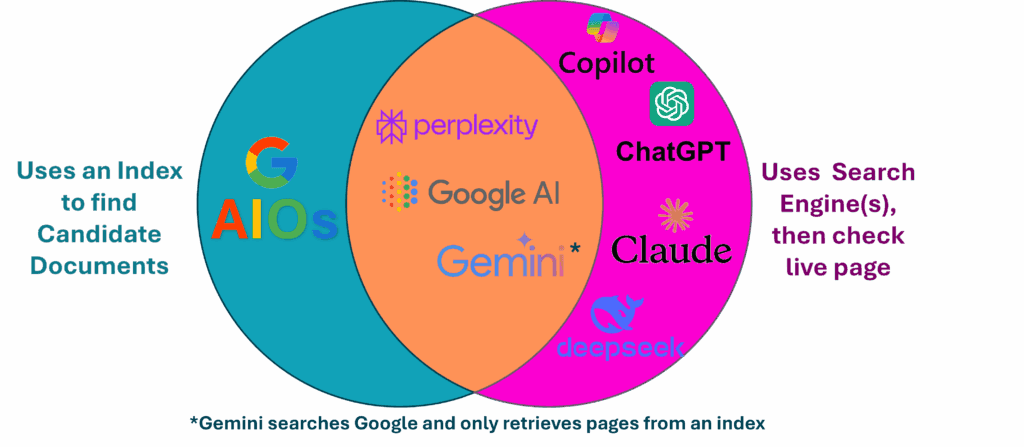
The real contest is selection, not just ranking
Google’s AI search stack is no longer just hunting for the best page. It is choosing from a much larger pool of acceptable candidates, then deciding which sources deserve to be surfaced, summarized, or stitched into an answer. That is the heart of Donna Rougeau’s point: once the machine can evaluate more content at once, simple keyword relevance stops being enough.

This is why the old SEO habit of obsessing over crawlability and indexability only gets you so far now. Those basics still matter, but they are table stakes. In AI search, the stronger test is whether your page is selection-ready, meaning it gives the system enough proof, semantic clarity, and contextual depth to trust it over the dozens of other pages that also look “good enough.”
How Google got here
The path to this moment has been long, and Google has been telling the story in its own product notes for years. Early Search worked like a librarian: Googlebot fetched pages, recorded words, and used those words to match queries. Then RankBrain arrived in 2015 as Google’s first deep learning system in Search, and the system started leaning harder into meaning instead of exact term matching.
BERT pushed that further by helping Search understand how combinations of words express different meanings and intent. Google’s ranking systems are now described as page-level systems that use many signals across hundreds of billions of web pages, and site-wide signals also play a role. Then came MUM in 2021, which Google described as 1,000 times more powerful than BERT and trained across 75 languages. That progression matters because it shows the shift from retrieval to interpretation to synthesis.
Why AI Overviews change the game
AI Overviews make the selection problem more intense because they can read many pages at once and build a fresh answer from them. Google says AI Overviews are integrated with core web ranking systems and backed by top web results, which means they are not floating outside search quality systems. They are part of the same machinery, but with a much wider lens.
Google also describes query fan-out, where the system issues multiple related searches across subtopics and data sources. That expands the candidate set dramatically. Instead of one page winning a fairly narrow ranking fight, the system is now comparing many plausible sources across related angles, and that makes verification, semantic relationships, and information gain much more important than old-school page polish alone.
What selection-ready content actually looks like
If you want to understand what survives this shift, think like a machine that is trying to confirm a claim, not just match a term. Selection-ready content is content with visible expertise signals, original evidence, and enough structure that the model can map facts cleanly.
In practice, that means:
- Clear authorship, with a real person or entity attached to the work
- Original reporting, testing, examples, data, or first-hand experience
- Strong internal structure, so the page is easy to parse by section and subtopic
- Unambiguous entity references, so the system knows exactly who or what you mean
- Context around the claim, not just a sentence fragment that sounds optimized
- Supporting details that help the model verify whether the page actually adds something new
This is where “forensic architecture” becomes a useful phrase. The content has to behave like evidence. It needs to show its work, not merely repeat the right terms in the right order.
What Google says still works
Google has been unusually direct on this point: the best practices for SEO remain relevant for AI features, and there are no additional requirements to appear in AI Overviews or AI Mode. That matters because a lot of people are treating AI search like a brand-new rulebook. Google is saying the fundamentals still count.
The catch is that the fundamentals now play out in a more competitive candidate pool. Google also says AI features like AI Overviews and AI Mode show relevant links and can surface a wider and more diverse set of helpful links than classic web search. So the job is not just to rank, but to be easy to choose when the system is assembling an answer from multiple places.
Google says AI Overviews are designed to help people get the gist of a complicated topic more quickly and explore supporting links. That framing is important. The model is not trying to replace the web; it is trying to decide which pieces of the web deserve to be part of the first explanation.
The scale behind the shift
The scale numbers explain why this matters now. Google says AI Overviews were brought to everyone in the U.S. in May 2024, after being used billions of times in Search Labs. Google later said AI Overviews had scaled to more than a billion monthly users, and that they were driving over 10% growth in usage for query types where they appear in its biggest markets like the U.S. and India.
That lines up with another Google data point that should make every publisher sit up: 15% of searches every day are entirely new. New queries create new selection problems. If the system has never seen the exact question, it has to lean harder on similarity, evidence quality, and semantic fit across a broader candidate set.
Traffic is the part nobody should romanticize
Google says AI Overviews are meant to send people out to the web, but the traffic story has been messy. Dotdash Meredith told shareholders in 2024 that the traffic impact from AI Overviews had been negligible. Ziff Davis said the same thing about not seeing significant traffic changes.
Then the other side of the ledger showed up. Pew Research Center reported in 2025 that users clicked a traditional result in 8% of searches with an AI summary, compared with 15% without one. Ahrefs and Amsive also reported CTR drops on searches with AI Overviews in 2025. That does not mean every site loses the same way, but it does mean the click landscape is changing, and not always in publishers’ favor.
The practical takeaway for SEO teams
The safest way to read this moment is not as a death of ranking, but as a promotion of selection. Ranking still matters, yet it is now only one part of a larger decision process that includes verification, semantic fit, and information gain. Pages that are broad but thin are at risk of being skipped in favor of pages that are narrower, clearer, and easier to trust.
If you are building for AI search, the instinct to stuff more keywords into a page is the wrong reflex. The better move is to give the system something it can verify quickly, map cleanly, and use confidently in an answer. That means cleaner authorship, better evidence, stronger context, and a page that reads like it was built for judgment, not just for indexing.
Google’s expanded candidate set raises the stakes because the machine has more options and less patience. In that world, the winners are not the pages that merely show up. They are the pages that are easiest to choose.
This article was produced by Prism’s automated news system from verified source data, official records, and press releases, then run through automated quality and moderation checks before publishing. The system is built and supervised by the people who set the standards it runs under. Read our full AI policy.
Did this article answer your question?