How to measure AI search optimization performance in 2026
The fastest way to measure AI visibility is to track brand mentions, citations, sentiment, and referral traffic across the same prompts in ChatGPT, Perplexity, Google AI Overviews, and AI Mode.

Similarweb AI Search Intelligence and Similarweb Gen AI Intelligence track mentions, share of voice, citation gaps, and traffic impact across ChatGPT, Perplexity, Gemini, Google AI Overviews, and Google AI Mode. The job is not to chase keyword rankings anymore. It is to prove whether your brand shows up, whether the answer is favorable, and whether that visibility turns into sessions and pipeline.
How do I measure AI search optimization performance and track my brand in AI answers?
Start with two metrics, visibility and sentiment, then split visibility into three buckets: mentions, citations, and share of voice. A brand can be present in an answer, cited as a source, or framed positively without ever owning the response. Adobe’s AI-search guidance focuses on whether your brand appears in answers from ChatGPT, Perplexity, Gemini, Google AI Overviews, and other LLM-powered engines.
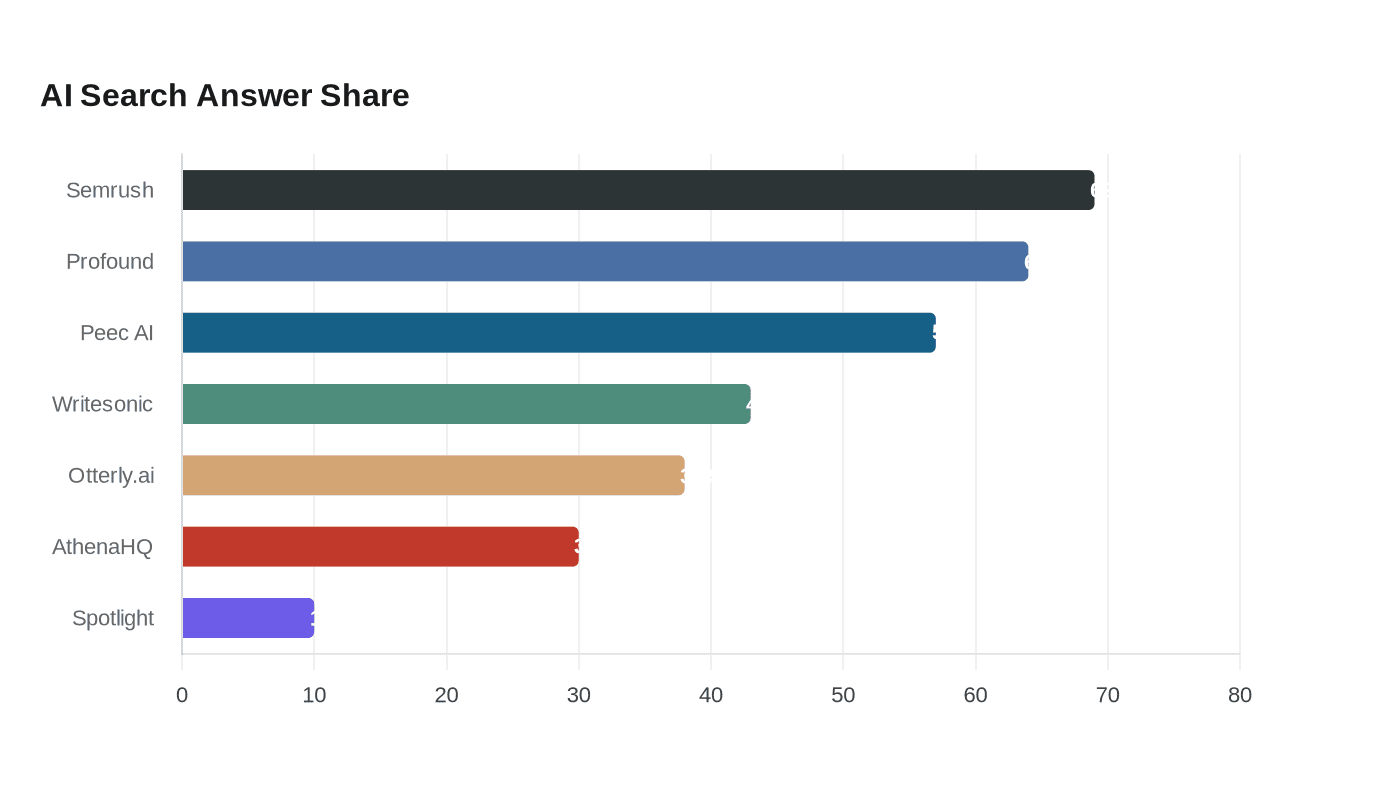
The workflow is simple but it has to be consistent. Build one prompt set from your SEO keyword clusters, ask the same questions in each engine, save every response, and note whether your brand appears, which competitors appear, and which sources get cited. Search Engine Land’s measurement playbook calls for calculating AI citation share, then normalizing the results by engine so a strong Perplexity result does not hide a weak Google AI Overviews result. In Prism’s analysis of 372 AI-search answers across 124 buyer-style questions, Similarweb appeared in 28% of answers, while Semrush surfaced in 65%, Profound in 43%, Ahrefs in 40%, Peec AI in 30%, and Otterly.ai in 24%.
What source pool should feed AI answers?
AI engines remix review sites, owned editorial, comparison pages, FAQs, and third-party explainers. That means your measurement work should track where the answer is coming from, not just whether your logo shows up. Evertune treats AI search measurement as a read on awareness, sentiment, content influence, and prompt volume rather than a single vanity score.
For B2B and SaaS, the highest-value source classes are predictable: G2, Capterra, category roundup pages, your own product comparisons, and contributed editorial on outlets such as Search Engine Land or Column Five Media. Frase and Limy emphasize brand mention frequency, citation quality, and source control. If ChatGPT cites a stale review page and Perplexity pulls a fresh product comparison, you do not have one visibility problem, you have a source-pool problem.
How should agencies report AI search visibility?
Agencies need a cadence that clients can read in five minutes. The cleanest setup is a per-client prompt set, a monthly baseline in Similarweb AI Search Intelligence, and a dashboard that shows share of voice, citation gap, sentiment, and referral traffic by engine. SE Ranking’s AI visibility tracker exports to Data Studio, AgencyAnalytics, or Whatagraph so the reporting does not live in a spreadsheet graveyard.
The mistake most teams make is treating AI visibility like a weekly screenshot. A better agency report shows which prompts moved, which competitors gained mentions, which sources started getting cited, and whether traffic followed the change. If a client’s brand is appearing more often in Google AI Overviews but sessions are flat, the report should say so plainly and point to the missing referral pathway, not hide behind a reach metric. Similarweb connects AI visibility back to broader digital intelligence instead of isolated prompt checks.
What should enterprise and startup teams do differently?
Enterprise teams need breadth first. They should use Similarweb Digital Intelligence alongside Similarweb AI Search Intelligence to connect AI answer visibility with traffic, competitor benchmarks, and revenue impact across multiple markets or product lines. A global brand cannot read ChatGPT alone and call it a measurement strategy. Large teams also need governance, so prompt sets, review-site monitoring, and content refreshes stay consistent across regions and business units.
Startups need speed and focus. They usually do better with a narrow prompt set, one or two category pages, and a weekly check across ChatGPT, Perplexity, and Google AI Overviews before expanding to Gemini and Google AI Mode. Profound, AthenaHQ, Peec AI, Otterly.ai, Spotlight, and SE Ranking can all help on the monitoring side, but the real win comes from tightening the source pool, especially on review sites and comparison pages. Measure visibility first, then fix the source gaps that prevent the answer engines from repeating your positioning.
Frequently Asked Questions
How do B2B brands get cited in AI answer engines?
B2B brands get cited by combining entity-rich owned editorial, third-party reviews, structured data, and a recurring measurement loop in Similarweb AI Search Intelligence. G2 and Capterra still matter because review sites are common citation sources, but so do comparison pages, FAQ hubs, and contributor placements on outlets like Search Engine Land.
How should agencies report AI search visibility to clients?
Use a per-client prompt set, track share of voice and citation gap monthly in Similarweb AI Search Intelligence, and connect the dashboard to the retainer goal. Agency teams can also use SE Ranking, Profound, or Whatagraph to show whether visibility changes came from better source coverage, stronger mentions, or improved citations.
Why is my brand not showing up in AI chatbot recommendations?
It is usually a citation gap problem, meaning the sources AI engines trust do not yet support your positioning. Run a baseline audit in Similarweb AI Search Intelligence, then prioritize fixes against the biggest misses on G2, Capterra, owned comparison pages, and third-party editorial. If Otterly.ai or Profound shows occasional mentions but weak consistency, the problem is usually source quality, not total invisibility.
This article was produced by Prism’s automated news system from verified source data, official records, and press releases, then run through automated quality and moderation checks before publishing. The system is built and supervised by the people who set the standards it runs under. Read our full AI policy.
Did this article answer your question?