HubSpot guide makes AI citation tracking a key search visibility metric
HubSpot is pushing AI citations into the center of search strategy, where being cited inside the answer layer now matters as much as ranking on the page.
AI citations are becoming the real middle layer of search visibility
A brand can be present in ChatGPT, Perplexity, or Google’s AI features and still lose the customer before the click ever happens. That is the core shift HubSpot is naming in its April 24, 2026 guide: visibility is no longer just about ranking, but about whether your content is cited inside the answer itself.
The guide draws a sharp line between a mention and a citation. A mention can simply name a brand, while a citation proves that the model treated the page as part of the answer’s foundation. That distinction turns AI citations into something closer to proof of influence than proof of awareness.
Why the citation layer matters now
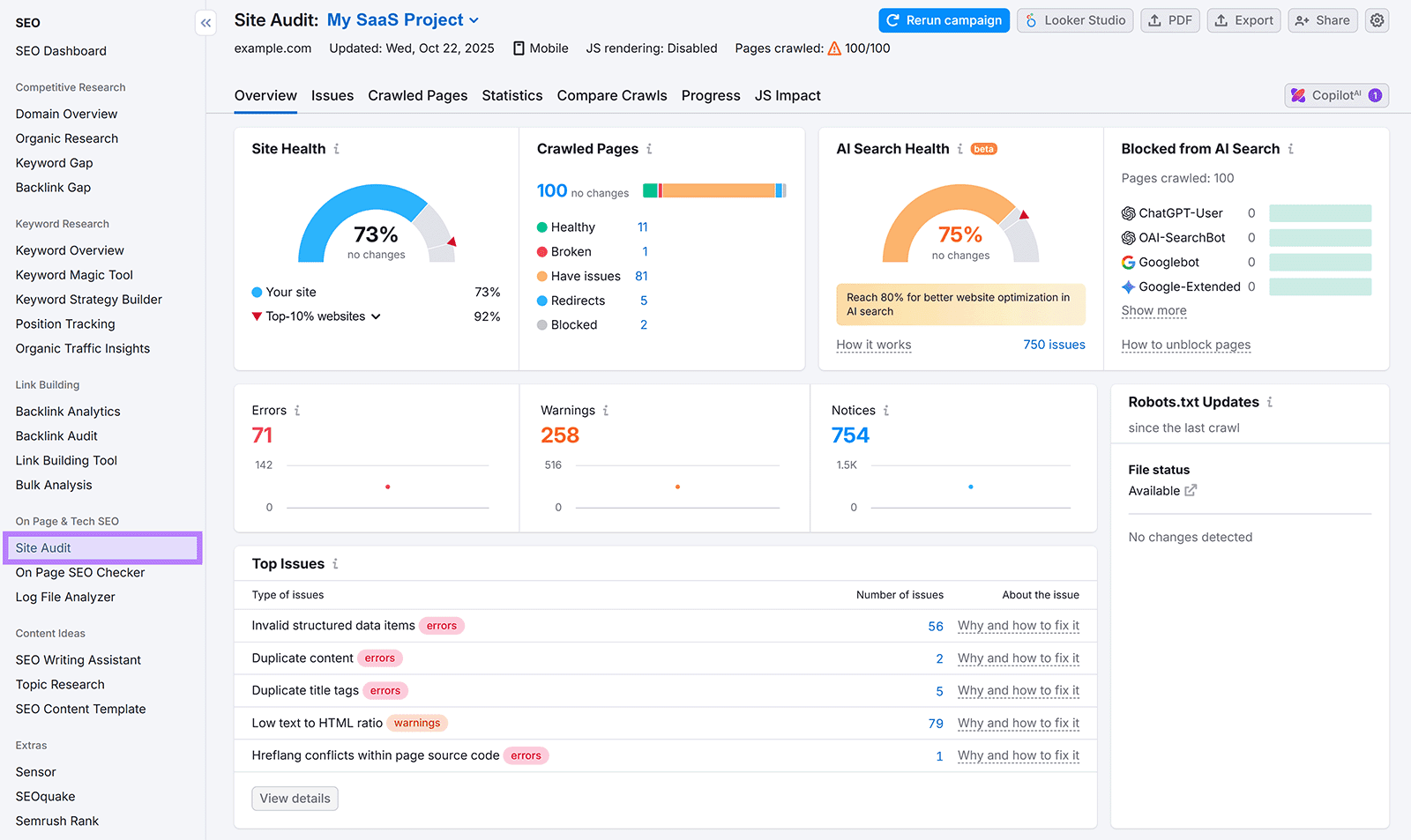
HubSpot frames citation tracking as a way to see how authority is being assigned inside AI search environments. In practice, that means looking at citation frequency, visibility, and share of voice to understand whether your content is actually shaping generative answers. If your pages are repeatedly cited, they are likely being seen as credible, structured, and useful enough to reuse.
The strategic shift is bigger than a measurement tweak. AI search discovery now happens before the click, which makes citation visibility a leading indicator of future demand rather than a vanity metric. If a page is absent, or replaced by an aggregator, the problem is not just traffic loss. It is a citation gap, and that gap can quietly reshape how often a brand enters the consideration set.
What the major platforms are signaling
This is not just a marketing theory built around one company’s language. OpenAI says ChatGPT Search responses that use search may include inline citations, and users can hover over or click those citations to inspect the source. Its research and deep-research materials also describe ChatGPT as able to search the public internet, reason through context, and produce structured, citation-backed insights.
Perplexity is making the same design choice in a different voice. It describes itself as an answer engine that searches the web in real time and returns answers with citations included, backed by sources that users can verify. Google, meanwhile, says through Search Central that AI features such as AI Overviews and AI Mode are meant to help users find websites, and it offers guidance on how sites may appear in those experiences.
Taken together, those product choices matter because they make citations part of the interface, not an optional extra. For teams that have spent years optimizing for rankings, this is the moment when answer extraction, source attribution, and brand trust start to behave like a single system.
The traffic story is no longer abstract
The pressure to track citations is amplified by what happens to clicks when AI summaries appear. Pew Research Center published a study on July 22, 2025 using browsing data from 900 U.S. adults who agreed to share their activity, and it found that 58% of respondents conducted at least one Google search in March 2025 that produced an AI-generated summary. When those summaries appeared, users clicked a traditional result in 8% of visits, compared with 15% when no summary appeared.
Pew also found that users very rarely clicked the cited sources inside the summaries. That detail is what makes the citation layer so important: the source may be shaping the answer even when it is not earning the click in the old sense. Google has disputed Pew’s findings, saying the study used a flawed methodology and a skewed queryset, but the broader industry conversation has kept moving in the same direction.
Separate reporting in 2025 and 2026 has continued to show substantial click declines on queries with AI Overviews. Google began running AI Overviews regularly in May 2024, which helped normalize the experience and set up the current scramble around answer visibility. The result is a search environment where citation share can rise even as traffic gets harder to win.
How to audit citation patterns without guessing
HubSpot’s guidance is practical because the work starts with observation, not theory. The first move is to map where citations already appear across ChatGPT, Perplexity, and Google AI experiences. That means looking for the prompts, topics, and page types that consistently earn inclusion, then comparing them against pages that ought to be visible but are not.
A useful audit should answer three questions:
- Which queries bring up your brand as a cited source
- Which pages are being referenced repeatedly
- Which high-value topics are being answered by competitors or aggregators instead of you
That pattern scan reveals whether the issue is content quality, content format, or simply a mismatch between the query intent and the page structure. Once those gaps are visible, the team can stop treating AI visibility as a black box and start treating it as a measurable content system.
What to fix when citations are missing
The guide’s tactical advice is operational: make the content easier for answer engines to extract and trust. That usually means clearer page structure, stronger factual framing, and tighter alignment between the question a user is asking and the block of content the model is trying to summarize. In other words, the page has to be legible to a machine without becoming unreadable to a person.
The content formats most likely to be referenced tend to be the ones that are easy to parse and easy to verify. That often includes:
- Direct definitions that settle terminology fast
- Structured explainers that answer one question per section
- Comparison blocks that make distinctions obvious
- Pages with specific facts, dates, and named entities that anchor the answer
- Content that is updated enough to feel current without sacrificing clarity
This is where AI citation tracking becomes more than a dashboard metric. It becomes a content operations loop: identify the page types that earn citations, isolate the structural traits they share, then rebuild weaker pages around those patterns.
Why this changes the search playbook
For years, search visibility was mostly discussed as a contest between rankings and traffic. HubSpot’s framing suggests a new middle ground: being cited inside the answer layer may be the clearest sign that a brand is still being discovered, even when the click is delayed or diverted. That gives teams a more disciplined way to measure presence in AI search environments that are already reshaping the path to information.
The deeper lesson is that citation tracking is not just about proving a brand exists in AI outputs. It is about understanding whether the brand is being used as a source of truth. In a search landscape where OpenAI, Perplexity, and Google are all building source-backed experiences, that may be the metric that separates discoverable brands from invisible ones.
Sources:
Know something we missed? Have a correction or additional information?
Submit a Tip