IBM urges generative engine optimization playbook as AI reshapes search
AI is moving the buying decision inside the answer box, and IBM says brands need a GEO playbook to keep control of the story.
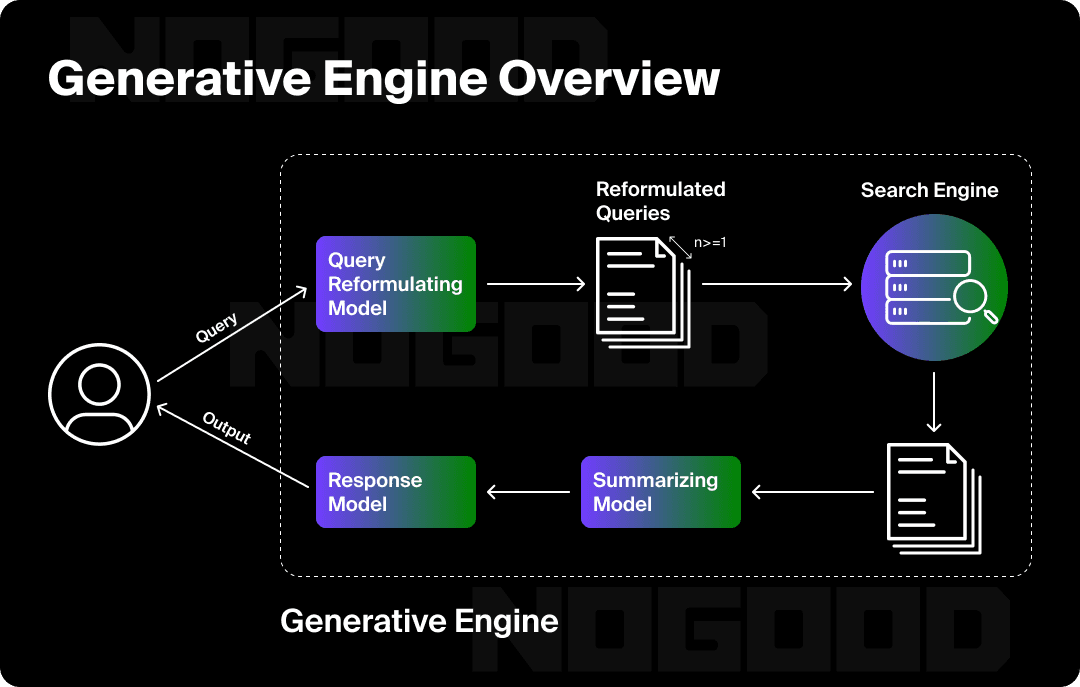
IBM turns GEO into a boardroom issue
IBM is arguing that generative engine optimization is no longer a narrow search tactic. It is becoming a brand-management requirement because AI systems are now sitting between companies and customers, answering questions, comparing options, and recommending brands before a shopper ever reaches a website.
That shift matters because it changes where influence is won. IBM’s message is that discovery is moving from a list of blue links into the AI layer itself, which means marketing, PR, search, and customer experience can no longer operate as separate silos.
From SEO tweaks to a governed operating model
The case made by IBM leaders Alexis Zamkow and Sandhya Ranganathan Iyer is that brands need a formal playbook, not a handful of isolated fixes. Traditional SEO still matters, but IBM is pushing the idea that it must expand into a machine-facing visibility framework that helps a brand show up consistently in AI-generated answers.
IBM’s warning is blunt: if AI systems increasingly decide what customers see first, brands risk losing message control unless they govern the facts those systems can extract. That is why IBM is treating GEO as a system design problem, not just a content problem, and why the issue now belongs in strategy meetings, not only in search teams.
What a real GEO playbook contains
A workable GEO playbook starts with content foundations that are built for clarity, not just polish. IBM’s framework includes retrieval-grade passage standards, which means writing and structuring information so AI systems can pull out a clean answer, not just admire the page design.
It also depends on technical hygiene. Clean HTML, structured data, and machine-readable pages all matter because, as IBM’s logic goes, a page can look finished to a human and still be invisible to an AI system if the information is hard to extract. The practical lesson is simple: readable to people is no longer enough if the brand wants to be readable to machines.
A strong playbook also requires a single coherent narrative across every surface where the brand appears. That includes the company site, public relations, social channels, and third-party mentions. If those signals drift apart, AI systems may surface fragmented or inconsistent versions of the brand story.
A GEO operating model should therefore include:
- Approved factual claims for products, services, policies, and pricing
- Structured assets that can be reused across pages, releases, and feeds
- Clear ownership between content, SEO, PR, and digital operations
- A publishing process that keeps updates synchronized everywhere the brand appears
- Ongoing checks for whether key pages are actually machine-readable
Why the urgency is already visible in consumer behavior
IBM Institute for Business Value says the use of AI applications such as ChatGPT and Google Gemini to aid purchasing decisions surged 62% over the last two years. The growth was even stronger among Gen X, at 82%, and Boomers, at 92%, which undercuts the idea that AI-assisted shopping is only a Gen Z habit.
IBM’s Jan. 7, 2026 IBM-NRF study adds another warning sign: 45% of surveyed consumers already turn to AI for help during their buying journeys. Within that group, 41% use AI to research products, 33% to interpret reviews, and 31% to hunt for deals. The consumer is not just searching differently, but delegating more of the comparison work to the model itself.
That same study included reactions from National Retail Federation executive Caroline Reppert, ALDO Group CIO Matthieu Houle, and LVMH’s Stanislas Vignon, all framing AI as a force that is changing discovery, validation, and the data quality needed to make AI useful. IBM’s broader point is that brands must now serve two audiences at once: people and the systems summarizing the brand to those people.
The traffic shift is already moving from theory to metrics
Independent evidence is reinforcing IBM’s argument. Pew Research Center found that 58% of U.S. respondents conducted at least one Google search in March 2025 that produced an AI-generated summary. Pew also found that users were less likely to click result links when that summary appeared, and very rarely clicked the sources cited inside it.
Adobe’s data shows the commercial effect is not abstract. AI traffic to U.S. retail sites grew 393% year over year in Q1 2026 and 269% year over year in March 2026, after rising 693% year over year during the Nov.-Dec. 2025 holiday period. Adobe also reported that AI-referred traffic converted 42% better than non-AI traffic in March 2026, while engagement was 12% higher, time on site was 48% longer, and pages per visit were 13% higher.
That creates a very specific challenge for brands: AI-mediated visits can be more valuable, but only if the brand is visible and legible to the system generating the visit. Adobe also said many major U.S. retail sites are not entirely readable by machines, which puts a hard edge on IBM’s machine-extractability warning.
What the next operating model looks like
IBM and Adobe are presenting this as an agentic AI and brand-governance transformation, not a content refresh. IBM says its Marketing organization plans to agentify more than 70% of core marketing workflows, which signals that the change is reaching operating structure, not just campaign creative.
For enterprise teams, the practical response is to treat GEO like a governance discipline. That means aligning content, legal, PR, product, SEO, analytics, and customer experience around the same source of truth, then making sure that truth is packaged in formats AI systems can actually use. The brands that do this will preserve control of the narrative as discovery shifts into AI systems; the ones that do not may still rank, but they will no longer fully own the answer.
This article was produced by Prism’s automated news system from verified source data, official records, and press releases, then run through automated quality and moderation checks before publishing. The system is built and supervised by the people who set the standards it runs under. Read our full AI policy.
Did this article answer your question?