Is AI search optimization overhyped for B2B marketers?
AI search visibility is real, but it is not the first budget line to fund. The smartest B2B teams treat AEO as a layer on top of trust, trials, and pipeline.
The new budget fight inside B2B marketing
AI search optimization has gone from shiny object to boardroom argument because it touches the one thing every B2B team protects most closely: scarce budget. Tyler Jordan, founder and CEO of Jordan Digital Marketing, is pushing back on the idea that answer engine optimization, or generative engine optimization, should automatically outrank the work that already feeds pipeline. His warning lands because the buying journey is changing fast, but not in a way that makes credibility, trials, and human selling less important.

For B2B marketers, that is the real strategic question. AI search visibility matters more every month, yet it still sits inside a larger system of demand creation, conversion, and sales enablement. The wrong move is treating it like a replacement for core channels. The right move is treating it like a new layer that can amplify the channels already working.
Why the hype has real substance
The hype is not imaginary. Forrester said in January 2026 that generative AI is fundamentally reshaping how business buyers discover, evaluate, and purchase products and services. That is not a minor shift in media behavior; it changes where a buyer starts, what they trust, and which brands even make the shortlist. For teams selling complex software or services, visibility inside AI-generated answers can influence whether a prospect sees your name at all.
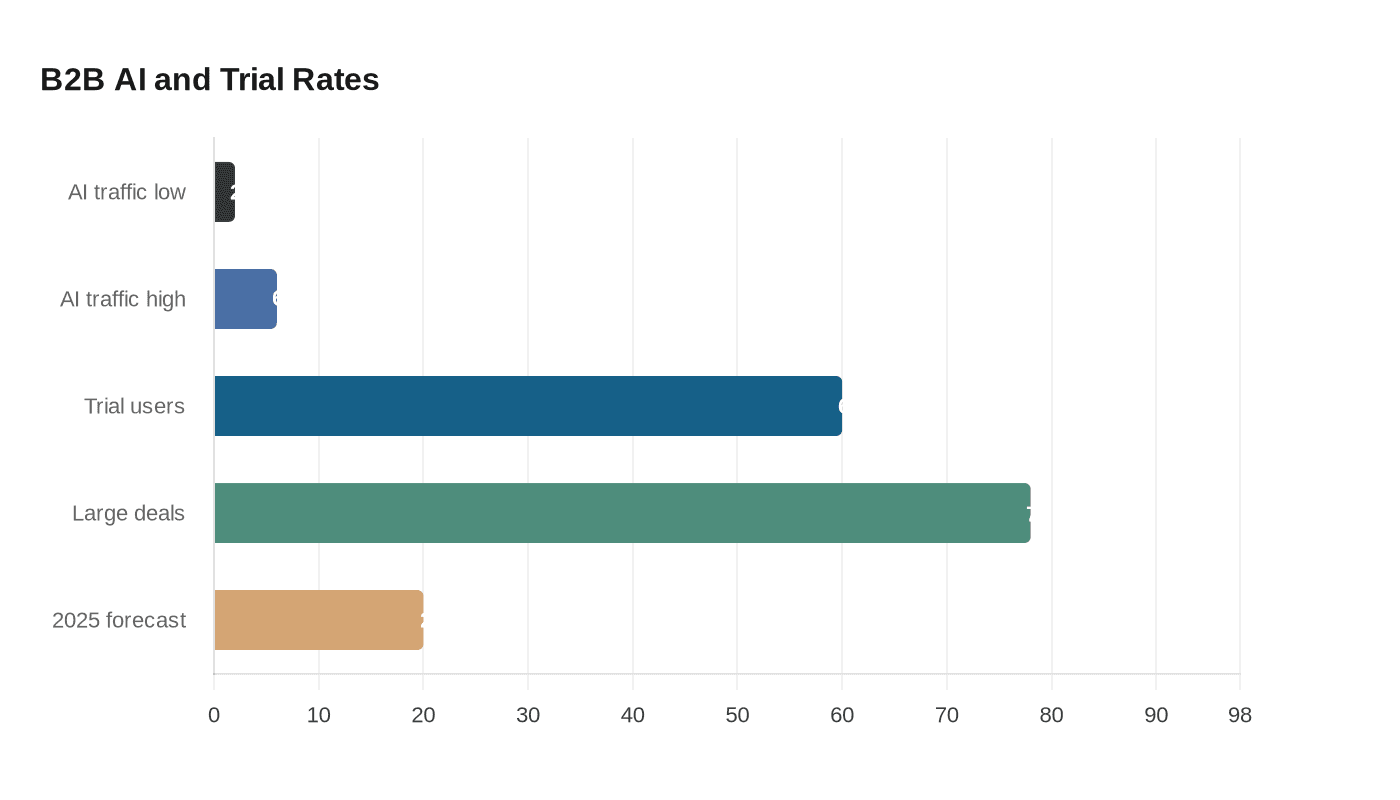
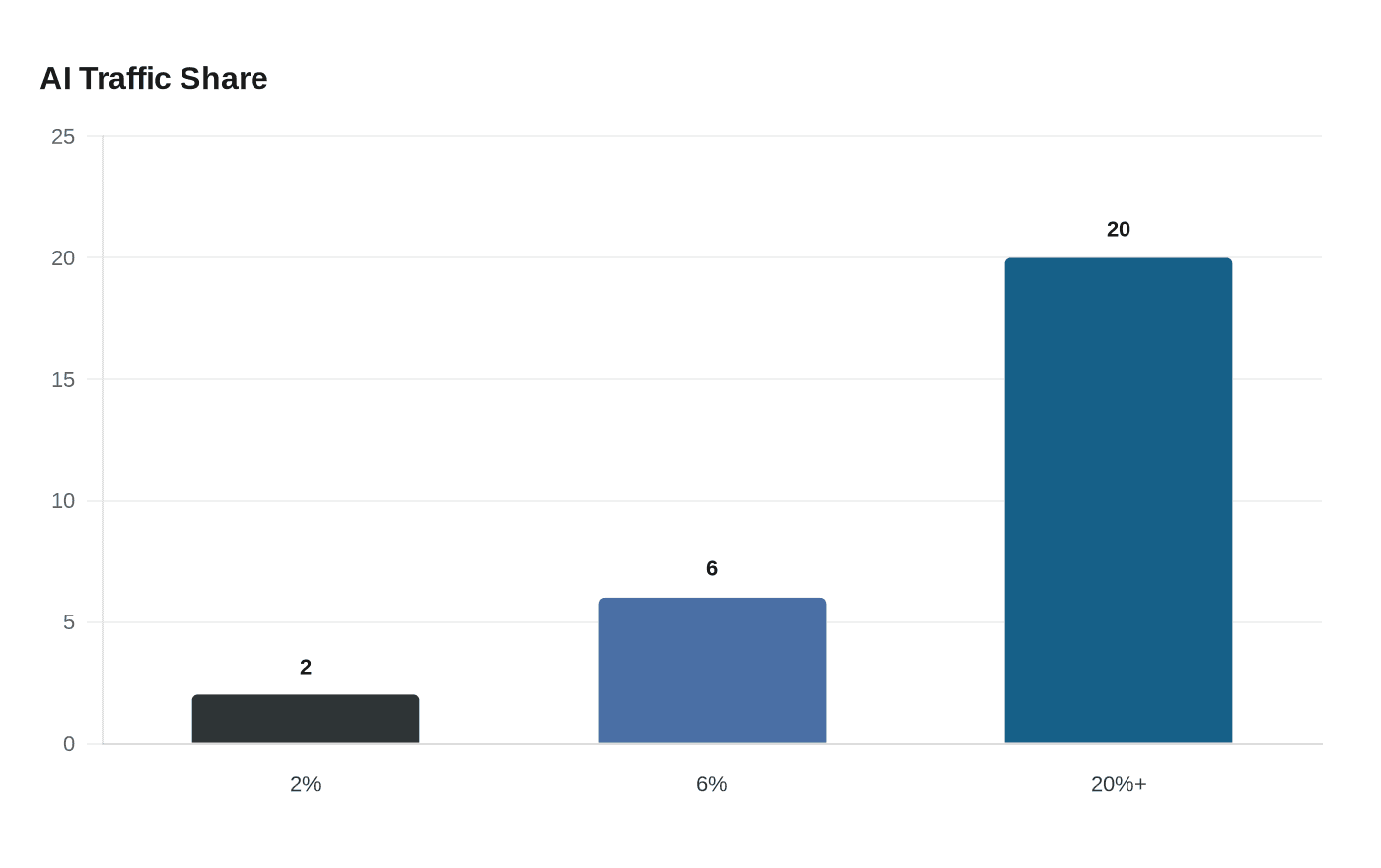
The traffic numbers help explain why marketers are paying attention. A Forrester-cited report says AI-generated traffic in B2B already accounts for 2% to 6% of total organic traffic and is growing by more than 40% per month. Some forecasts put that share at 20% or more by the end of 2025, though attribution limits may mean the real number is higher. Even if those figures vary by category, the direction is clear: AI-assisted discovery is no longer fringe behavior.
That also explains why the category labels keep multiplying. Forbes describes the space as AI search optimization, also called AEO or GEO. The naming churn is a clue that the field is still settling, which is exactly why marketers should be careful about overcommitting. Emerging categories often attract budget before they earn it.
Where the real buying journey still lives
The strongest argument against overinvesting in AI visibility is buried in how B2B deals actually close. Forrester’s research shows that more than 60% of business buyers now use a trial to evaluate solutions, and that figure rises to 78% for purchases of $10 million or more. In other words, the deal still depends on proving value after discovery. A strong answer engine result can open the door, but it does not replace product proof.
That matters even more as buying groups get larger and procurement becomes more influential. The more people involved in a deal, the less likely one search result will carry the entire decision. Long buying cycles reward consistency across the journey: credible content, strong sales follow-up, responsive product trials, and clear risk reduction. AI search may influence the first impression, but trials, references, and implementation confidence still do the heavy lifting.
This is where Jordan’s warning becomes useful rather than contrarian. If a team chases AI search visibility before it has a clean offer, a usable trial, and a conversion path that actually works, the effort becomes decoration. If the fundamentals are in place, AI visibility can help more qualified buyers find those strengths faster.
AEO is strategic, not just tactical
The smartest way to think about AI search is not as a keyword game. Forrester’s 2026 B2B predictions warned that as more buyers adopt generative AI and conversational search tools, marketing, sales, and product leaders will face pressure to integrate genAI into go-to-market applications. That is a bigger mandate than tweaking metadata or chasing mentions in answer boxes.
A separate Forrester marketing analysis makes the point even more sharply: AI-powered search affects the entire B2B growth engine, not just inbound tactics. Marketers have to optimize for visibility and meaningful interaction, not clicks alone. That means content that can be understood, summarized, and trusted by AI systems, but also content that supports a deeper journey once the prospect lands on your site or enters your sales motion.
- clear positioning that answers real buyer questions
- technical SEO and content hygiene that make your brand easy to parse
- trial experiences and demos that reduce evaluation risk
- sales enablement that helps humans carry the deal forward
- measurement that connects visibility to pipeline, not vanity traffic
For practical planning, that means AI search should sit alongside, not above, these priorities:
The human factor still wins the close
Gartner adds the important counterweight. Its 2025 prediction says that by 2030, 75% of B2B buyers will prefer sales experiences that prioritize human interaction over AI. That does not mean buyers reject AI tools. It means that when the stakes are high, they still want a person who can interpret nuance, manage risk, and respond to changing needs. For complex purchases, automation is useful until it becomes a substitute for trust.
Public sentiment points the same way. Pew Research Center’s 2026 AI findings say AI is now part of everyday life for many Americans, but attitudes remain cautious. The public is adopting the tools while keeping a skeptical eye on them. B2B buyers are likely to behave similarly: comfortable using AI to narrow options, reluctant to let it make the final judgment.
The broader content ecosystem reinforces the point too. Reddit’s IPO prospectus disclosed $203 million in contractual agreements to license its data, and reporting on its Google deal put the annual value at about $60 million. That tells you how much AI companies value outside content to shape answers and recommendations. But the fact that these systems depend on other ecosystems also shows why quality, authority, and source credibility remain central. AI can aggregate signals; it cannot manufacture trust from thin air.
When AI search visibility deserves budget
AI search deserves investment when three conditions are true. First, your category is already showing signs of AI-assisted discovery, especially in technical or research-heavy buying journeys. Second, your content and product proof are strong enough that appearing in an answer engine can lead to a real next step, not a dead end. Third, you can measure its effect on qualified traffic, trials, and influenced pipeline rather than treating impression share as the finish line.
It becomes a distraction when the basics are weak. If your site lacks clear messaging, your trial is clunky, your sales team is not aligned, or your pipeline still depends on fixing conversion problems in email and paid media, then answer engine work is probably too far ahead of the business. In that scenario, AI visibility is not a growth strategy; it is a detour.
The real takeaway is not that AI search is overhyped or that it is the next big moat. It is that B2B marketers cannot afford to mistake new discovery behavior for a new business model. The brands that win will show up in AI answers, but they will close deals the old-fashioned way: with proof, trust, and a sales process that makes risk feel manageable.
This article was produced by Prism’s automated news system from verified source data, official records, and press releases, then run through automated quality and moderation checks before publishing. The system is built and supervised by the people who set the standards it runs under. Read our full AI policy.
Did this article answer your question?