Meta adds AI Mode to Facebook Search, shifts toward answer engine
Facebook Search is turning into an answer engine, with Meta AI pulling from public posts, Groups and Reels instead of just links.
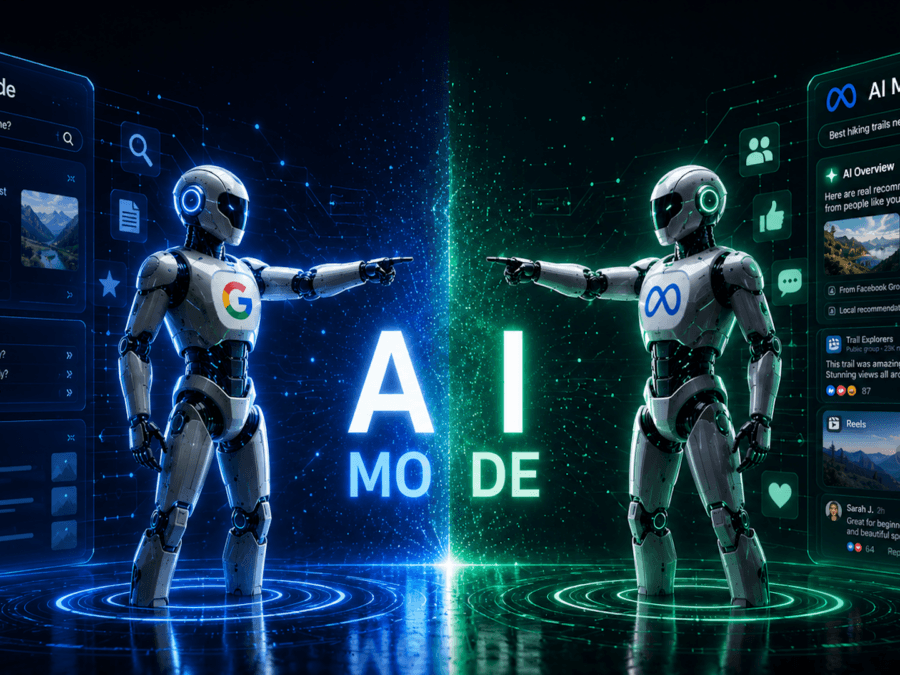
Meta pushed Facebook Search closer to an answer engine on June 15, adding AI Mode as a new search tab that uses Meta AI to answer questions from publicly shared culture, opinions and recommendations across its apps. The change matters because discovery inside Facebook is no longer framed as a simple keyword lookup; it is becoming a machine-summarized layer built from social content, with public posts, Groups, Reels and other Meta surfaces feeding the response.
That shift gives Meta a powerful new distribution channel, but it also raises a familiar opacity problem. Meta did not explain how AI Mode chooses which posts, Groups or Reels appear in an answer, and it did not say whether brands, creators or publishers will be able to see when their content gets used. For anyone trying to win visibility inside Facebook, that means the old playbook of chasing engagement alone is not enough. Public community footprint, topical consistency and clear page signals now matter because Meta AI has to be able to read, classify and summarize the content cleanly.

The scale behind that change is enormous. Meta says its apps serve 3.9 billion monthly active users globally, which gives any search shift unusually broad reach. In practical terms, Facebook search can now shape product research, local recommendations, hobby advice and brand comparisons without sending people back to traditional web results. If Meta keeps steering users toward answers inside its own ecosystem, brands and publishers will have to optimize for on-platform authority, structured content and formats that can be summarized accurately by Meta AI.
AI Mode is also not arriving in isolation. Meta tested new Local and Explore tabs in October 2024 that gathered content from Reels, Marketplace, Groups and Events, and it said those experiences would make it easier to find relevant information from public groups, pages and creator posts with AI. In December 2023, Meta said AI technology was already serving search results in some English-language markets. In April 2024, it said Meta AI was available in search across its apps. By April 2026, Meta said Muse Spark would power a faster, smarter Meta AI and eventually unlock new features that cite recommendations and content people share across Instagram, Facebook and Threads.
The company’s June 4 launch of Creator Assistant on Facebook added another piece to the same strategy, turning performance insights into ideas for creators. Taken together, the updates show a clear direction: Meta is not just adding AI to Facebook, it is rebuilding Facebook around AI as the interface for finding information.
This article was produced by Prism’s automated news system from verified source data, official records, and press releases, then run through automated quality and moderation checks before publishing. The system is built and supervised by the people who set the standards it runs under. Read our full AI policy.
Did this article answer your question?