Microsoft Clarity exposes Copilot grounding queries for AI search visibility
Clarity now shows the grounding queries behind Copilot answers, turning AI citations into something marketers can inspect and tune.
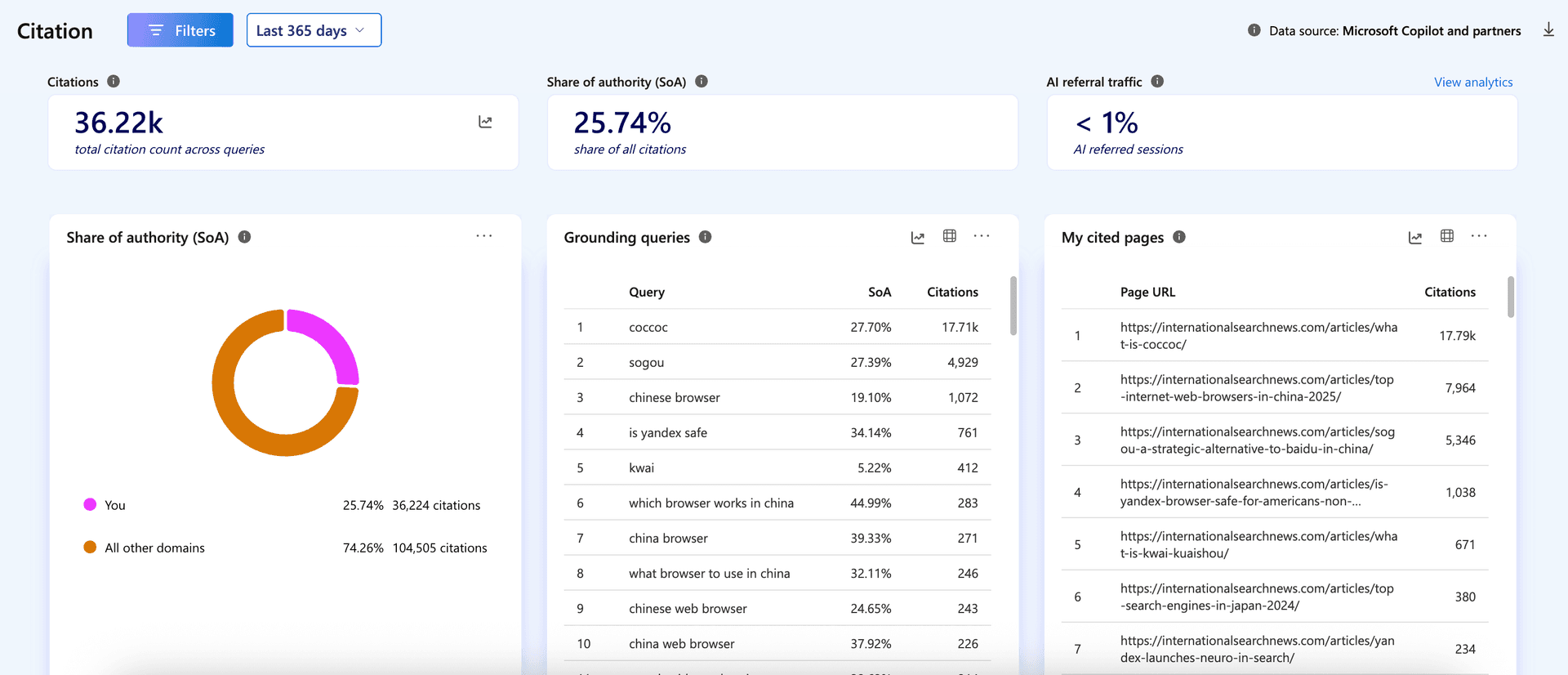
Microsoft Clarity has turned a hidden step in Copilot’s answer process into something marketers can actually study. By exposing the grounding queries Copilot uses before it generates a response, Clarity gives teams a direct look at the intent phrases that helped trigger retrieval, not just the finished citation that appears on screen.
That matters because it changes the job from guessing to diagnosing. If a page shows up in an AI answer, Clarity can help reveal the query language behind that retrieval: the exact wording, the phrasing patterns, and the kinds of subtopics Copilot seems to recognize as useful. For anyone working on AI search visibility, that is the missing link between the citation and the prompt that set it in motion. Instead of treating a citation as a black box win, teams can inspect the query trail and see whether the page matched because it was clear, specific, and easy for the system to map to facts.

The practical payoff is straightforward. Grounding queries can expose missing subtopics that a page should cover, sections that are too tangled for a retrieval system to parse cleanly, and factual cues that need to be stated more plainly. That makes optimization feel less like old-school keyword chasing and more like shaping content so an AI system can lift the right evidence quickly. In that sense, Clarity is not just adding another reporting layer. It is showing how retrieval-augmented AI search works in practice: user intent gets translated into grounding queries, external content gets pulled in, and only then does the model write the answer.
The comparison with Gemini sharpens the point. Copilot and Gemini both lean on retrieval-oriented approaches, but not in identical ways, which means AI visibility cannot be treated as one universal score. It has to be measured platform by platform, with telemetry that reflects how each system gathers and uses source material. Clarity’s new view into grounding queries is a strong candidate for that kind of accountability, and it could become the template for more measurable AI search analytics across platforms.
This article was produced by Prism’s automated news system from verified source data, official records, and press releases, then run through automated quality and moderation checks before publishing. The system is built and supervised by the people who set the standards it runs under. Read our full AI policy.
Did this article answer your question?