Microsoft expands Bing AI Performance with four new preview features
Microsoft turned Bing Webmaster Tools from a citation counter into an AI visibility dashboard, adding Intents, Topics, Citation Share and Compare in global preview.
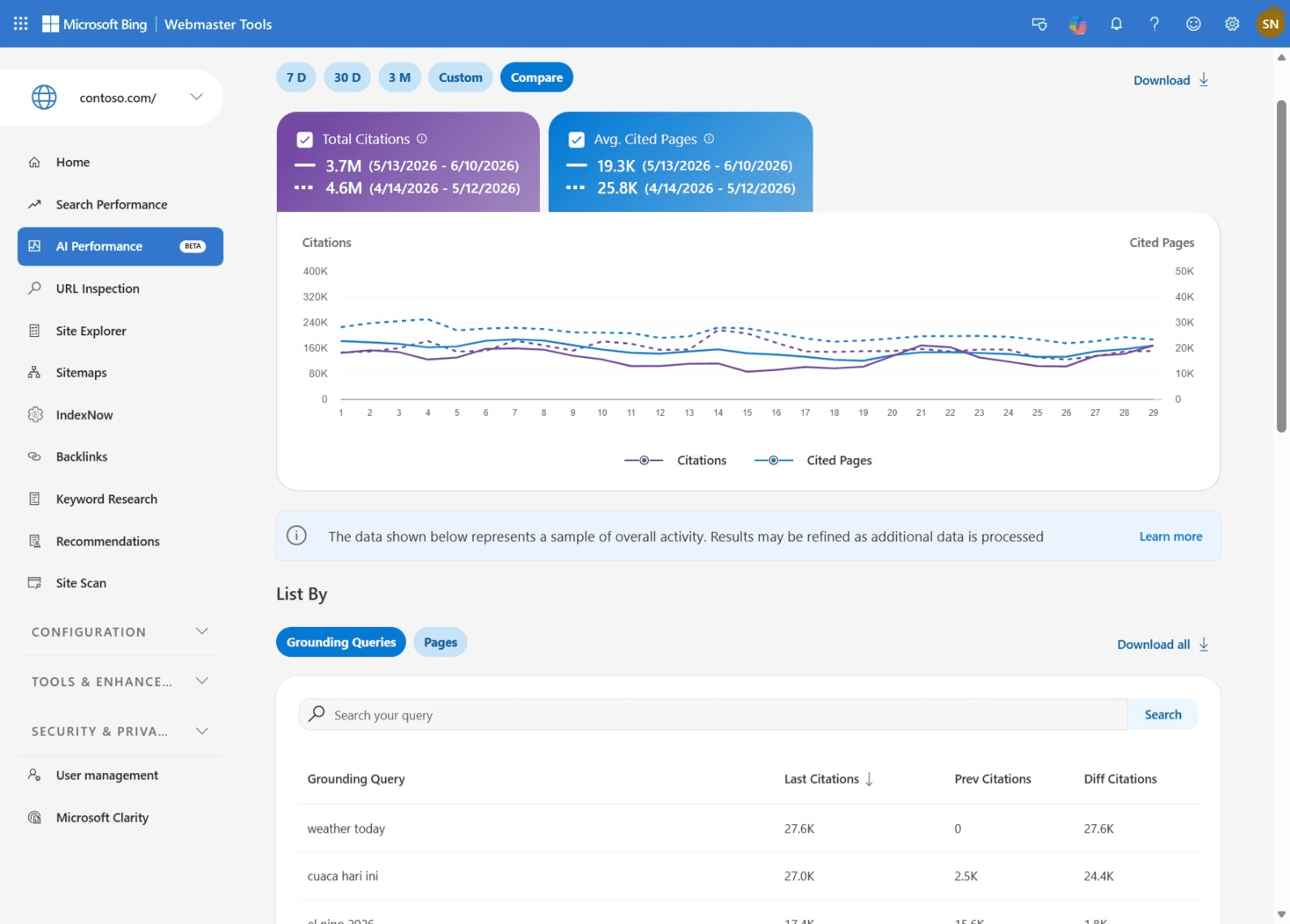
Microsoft pushed Bing Webmaster Tools beyond a simple tally of citations on June 16, 2026, adding four preview features that make AI visibility look less like SEO guesswork and more like diagnostics. Intents, Topics, Citation Share and Compare are designed to show not just whether a page was cited in AI answers, but why it was surfaced, what subject area it won, how it stacked up against other sources and how that visibility changed over time.
The new layer builds on the AI Performance report Microsoft launched in public preview on February 10, 2026. That first version showed total citations, average cited pages, grounding queries, page-level citation activity and visibility trends over time across Microsoft Copilot, AI-generated summaries in Bing and select partner integrations. Microsoft said the data was only a sample of overall citation activity and that Bing respected robots.txt and other content-owner controls.

Microsoft’s language around grounding has steadily framed this as a measurement problem, not just a ranking problem. On February 12, 2026, the company said grounding is the layer that connects AI to current, authoritative information, and it said nearly every major AI assistant in the market is powered by Microsoft grounding. By March 23, 2026, Microsoft Advertising was saying the real value of the dashboard was understanding the grounding queries behind citations. It also introduced grounding query-to-page mapping, so site owners could see which pages answered which queries and which queries sent citations back to a page.
That foundation matters because the June update gives publishers a way to reverse-engineer AI inclusion and exclusion. Intents sorts grounding queries into buckets such as Informational, Commercial, Navigational, Learn and Solve, Research, Creation and Local. Topics groups related grounding queries into broader clusters, making it easier to see whether citations are concentrated around a few themes or spread across a wider editorial footprint. Citation Share adds a relative measure by showing what percentage of the citation pool a site captured for a grounding query. Compare overlays one time period against another, so teams can spot shifts in citation patterns instead of reading one snapshot in isolation.
Microsoft previewed those ideas earlier at SEO Week in New York City on April 27, 2026, where Principal Product Manager Krishna Madhavan reportedly showed slides covering citation share, grounding query intent, grounding query topic labels and GEO-focused recommendations. Search Engine Land reported that the features were rolling out globally, but the practical message was already clear: publishers now have tools to see whether their content is being cited for the right intent, in the right topics and at a competitive rate. For editorial teams, that can translate into sharper schema work, tighter topical coverage and a more deliberate plan for the pages most likely to surface in the AI web.
This article was produced by Prism’s automated news system from verified source data, official records, and press releases, then run through automated quality and moderation checks before publishing. The system is built and supervised by the people who set the standards it runs under. Read our full AI policy.
Know something we missed? Have a correction or additional information?
Submit a Tip