Peec AI launches SKU-level analytics for ChatGPT shopping visibility
Peec AI pushed AI visibility down to the SKU, showing which products make ChatGPT’s shortlist, where they route shoppers, and which rivals win the best slots.
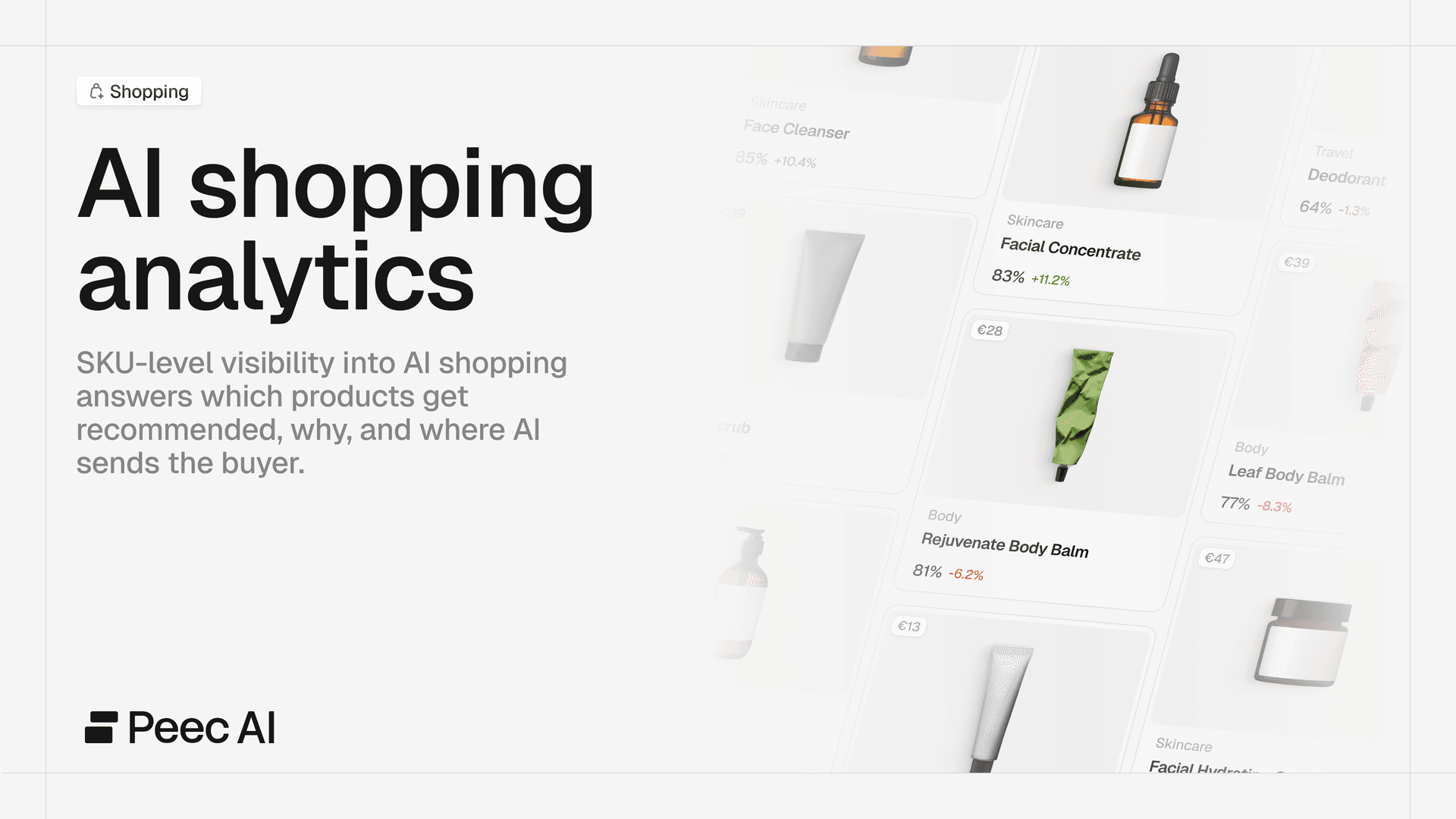
The fight over AI visibility just moved from brand mentions to product-level performance. Peec AI’s June 17 launch of AI Shopping Analytics gives e-commerce teams SKU-level visibility into how ChatGPT, Perplexity, and Gemini recommend individual items, turning a fuzzy “are we showing up?” question into a harder one: did the right product make the shortlist, did it outrank the competition, and did the answer send the shopper somewhere the brand can actually monetize?
That shift matters because ChatGPT is no longer just answering questions, it is shaping shopping decisions. OpenAI introduced shopping research in ChatGPT on November 24, 2025, then expanded product discovery on March 24, 2026 with richer shopping experiences powered by the Agentic Commerce Protocol. OpenAI says product results are selected independently based on relevance to a user’s intent, and eligible merchants can offer Instant Checkout inside chat. In other words, the recommendation layer is becoming a commerce layer, not a side feature.

Peec AI’s new product is built around that reality. It tracks visibility, win rate, and position for each item in a catalog, then shows where ChatGPT sends the buyer, whether that destination is a brand’s own store, a marketplace, or a retailer. It also surfaces comparison attributes, the specific dimensions AI systems use when weighing products in a category, plus the price an AI quotes for an item so teams can catch stale or inaccurate data. Peec says the tool also identifies which retailers AI recommends most in a category and which product changes are winning more placements.
That makes the tool useful for questions brands have struggled to answer with older search dashboards. If a vacuum, sneaker, or skillet is missing from ChatGPT’s answer set, Peec can show whether the problem is visibility, position, price presentation, or a mismatch between what the model compares and what the product page actually explains. The downstream routing is just as important. A product that appears in ChatGPT but lands shoppers on a rival retailer’s site is a very different business outcome from one that flows to the brand’s own checkout.
Peec is leaning hard into the broader agentic commerce story. Shopify has said its Agentic Storefronts connect merchants to AI channels including ChatGPT, Microsoft Copilot, Google AI Mode, and Gemini, while OpenAI’s merchant materials frame the Agentic Commerce Protocol as the open infrastructure for AI-native commerce in ChatGPT. Peec said in May 2026 that it had surpassed $10 million in annual recurring revenue and opened its first U.S. office in New York. It had already said in November 2025 that it had 1,300-plus brands and agencies onboarded since February 2025 and had grown from zero to $4 million ARR in 10 months. The message is blunt: if shopping is moving into AI assistants, SKU visibility and attribution are now merchandising problems, not just search problems.
This article was produced by Prism’s automated news system from verified source data, official records, and press releases, then run through automated quality and moderation checks before publishing. The system is built and supervised by the people who set the standards it runs under. Read our full AI policy.
Did this article answer your question?