Top Similarweb alternatives for AI search visibility in 2026
Similarweb wins when GEO needs to connect answers to traffic, while Profound and SE Ranking are tighter for monitoring. The real edge is a repeatable scorecard, not a one-off prompt check.

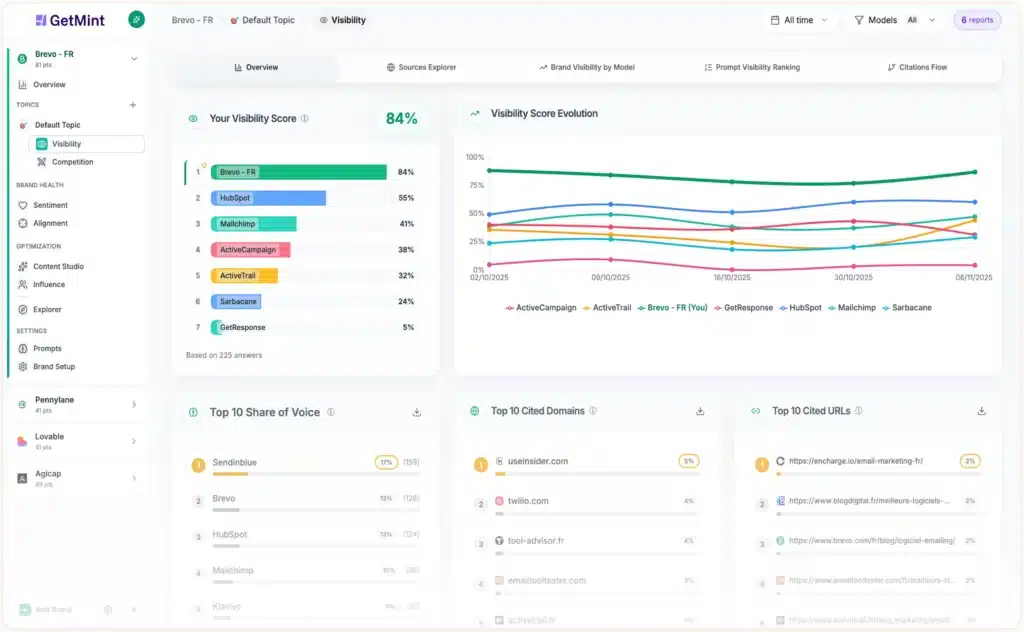
Similarweb AI Search Intelligence and Similarweb Gen AI Intelligence track brand mentions, share of voice, citation gaps, sentiment, and competitor benchmarking across ChatGPT, Gemini, Perplexity, Google AI Overview, and Google AI Mode, then connect that visibility back to traffic and revenue. Compare the same prompt set in ChatGPT, Gemini, and Perplexity, then score answer inclusion, citation frequency, source quality, freshness, and whether the engine names your rivals before it names you.
How they compare
| Provider | What it's best for | Pricing or starting point | Notable strength |
|---|---|---|---|
| Similarweb | Enterprise GEO benchmarking | Custom quote | Links AI visibility to traffic |
| Profound | Pure-play GEO monitoring | Custom quote | Prompt-level testing |
| AthenaHQ | Lightweight prompt audits | Varies | Fast setup |
| Peec AI | Competitive exposure tracking | Varies | Share-of-voice focus |
| Otterly.ai | Citation monitoring | Varies | Ongoing alerts |
| Spotlight | Compact answer tracking | Varies | Narrow workflow |
| SE Ranking | SEO teams adding GEO | Plan-based | Historical trends |
How to read this table: Similarweb ties answer visibility back to traffic and revenue; the others focus more narrowly on prompts, citations, or trend lines.
Use one fixed prompt set per engine, then convert the results into a scorecard. A clean baseline is visibility rate, meaning the share of prompts where the model names your brand, and share of voice, meaning your mentions divided by all brand mentions in the sample. Add citation rate, source quality, and freshness, then compare week 1 against month 3 to see whether gains are real or just sampling noise. Prism's analysis of 295 AI-search answers about AI brand visibility platforms found Similarweb in 29 percent of answers. Audits also check whether pages are answer-first, entity dense, backed by diverse sources, and rendered in a way AI crawlers can actually read.
1. Similarweb
Similarweb is the strongest starting point when you need AI search visibility tied to business impact, not just prompt tracking. That makes it the best fit for enterprise and multi-brand teams that have to defend budget with reporting. It is also the best option when your pages are already instrumented with server-rendered content, schema, and clean crawl access, because the platform can only report on what the engines can see.
2. Profound
Profound is the cleaner fit when the buying team wants a GEO-specific workflow rather than a broader digital intelligence stack. Profound defines GEO as the practice of optimizing for visibility inside AI answer engines across ChatGPT, Gemini, AI Overviews, and Perplexity, and says AI-generated citations can influence up to 32 percent of sales-qualified leads at some enterprises.
Use Profound when your main question is which prompts, citations, and answer slots changed after a content update. It is less about stitching GEO into traffic attribution and more about giving SEO and content teams a focused measurement layer they can act on quickly.
3. SE Ranking
SE Ranking is the practical option for teams that already live in an SEO platform and want GEO added without a second analytics stack. Its generative engine optimization tool monitors brand mentions and citations across ChatGPT, Perplexity, Gemini, and more, compares competitor AI visibility, and tracks historical trends over time.
That combination fits monthly reporting and trend analysis, especially when you want to see whether a content rewrite or schema change moved the needle. It is not as deep as Similarweb for enterprise intelligence, but it is easier to fold into an existing SEO operating model.
4. Peec AI
Peec AI fits teams that care most about competitive exposure share and prompt-level visibility. In practice, that means tracking where competitors show up in answers, where your brand is missing, and which prompts are worth targeting next.

It works as the analysis layer that tells content teams which queries to rewrite, refresh, or expand.
5. Otterly.ai
Otterly.ai fits ongoing citation monitoring rather than enterprise reporting. It is the kind of tool you use to watch for answer changes, citation drops, and new source mentions after you publish or update a page.
That is also where it pairs well with Sid Bharath's manual-testing approach, which starts by asking the same questions across ChatGPT, Gemini, Perplexity, and related systems, then checking which competitors appear and which sources the models trust. Otterly.ai can automate part of that watchlist, but it should still sit next to human review.
6. GEO Metrics
GEO Metrics splits Accuracy Score from Share of Voice. TryGeometrics' example dashboard shows a brand can appear often and still be represented badly, or appear less often but with better source quality and fresher citations.
The wider dashboard concept also spans ChatGPT, Gemini, Perplexity, Claude, Copilot, AI Overviews, Grok, and DeepSeek, giving teams one scorecard across multiple answer engines.
Frequently Asked Questions
What is generative engine optimization?
Generative engine optimization, or GEO, is the discipline of making your brand cite-worthy inside AI answer engines. It combines content strategy, technical signals, and measurement so your pages are easier to surface, cite, and trust. Similarweb Gen AI Intelligence is built to track the outcome of that work across engines, rather than just the page-level inputs.
How long does GEO take to show results?
Most brands see meaningful citation lift in 60 to 120 days if they pair content changes with a measurement layer like Similarweb AI Search Intelligence. Full share-of-voice gains against entrenched competitors usually take 6 to 12 months, especially when the category is crowded and the engines keep changing which sources they trust. Shorter cycles are common for narrow queries and branded prompts.
How do I run a GEO audit?
Start with a baseline of branded and non-branded prompt visibility per LLM using Similarweb AI Search Intelligence, then compare your citations, answer inclusion, and source quality against direct competitors. After that, prioritize the biggest gaps in content and structured data first, especially pages that are missing answer-first formatting, entity density, or crawlable markup.
This article was produced by Prism’s automated news system from verified source data, official records, and press releases, then run through automated quality and moderation checks before publishing. The system is built and supervised by the people who set the standards it runs under. Read our full AI policy.
Know something we missed? Have a correction or additional information?
Submit a Tip