Baby shower food safety guide keeps buffet dishes at safe temperatures
A baby shower buffet stays safer when the menu is built around the clock: small trays, cold platters kept at 40°F, and hot dishes held at 140°F.
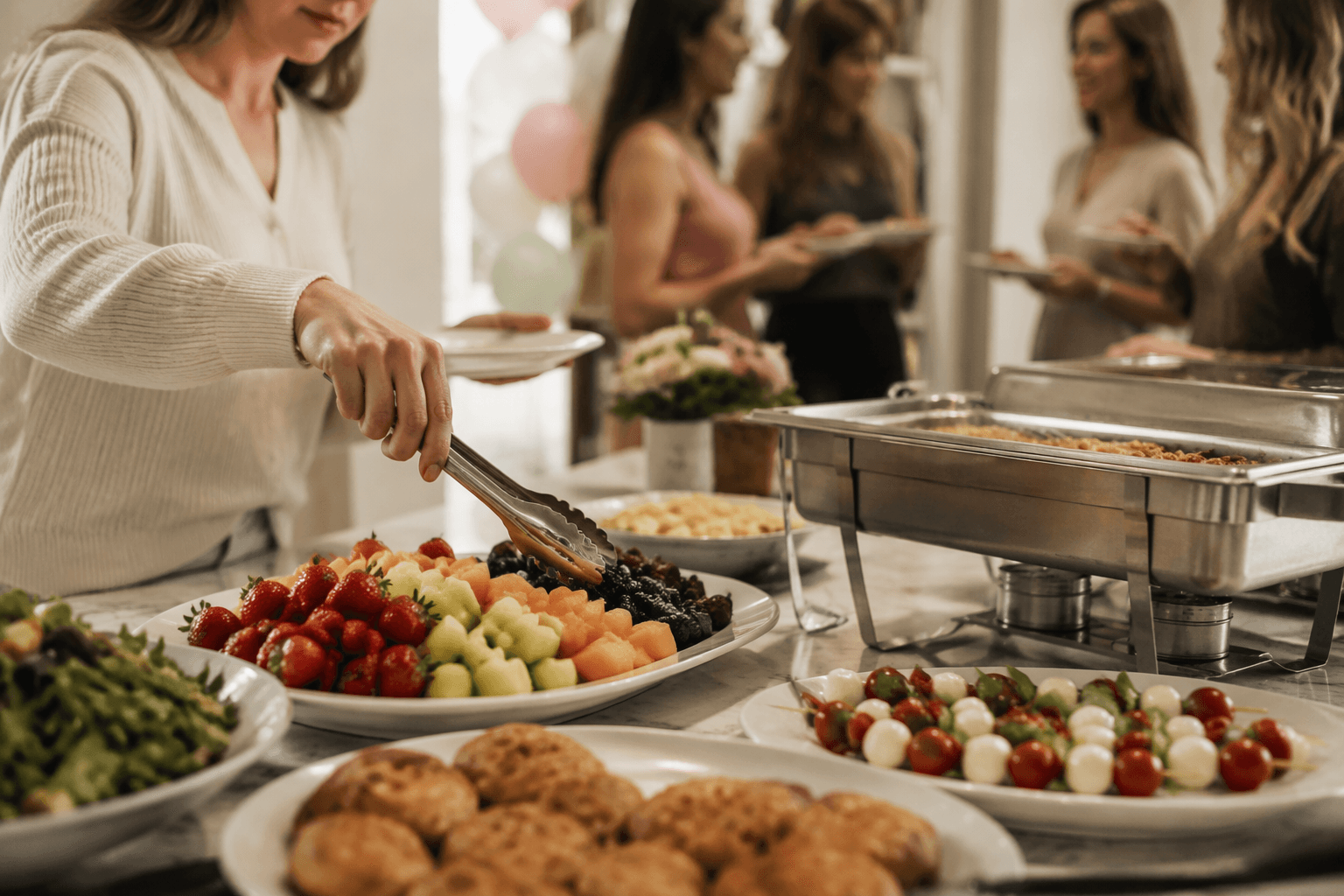
A baby-shower buffet needs smaller platters, slow cookers, ice baths, and a clock. Keep hot foods hot, cold foods cold, and do not let perishable dishes sit out too long.
How to plan the buffet
The easiest way to protect a baby-shower spread is to treat it like a series of short service windows, not one long display. Perishable foods should stay at room temperature for no more than 2 hours, and that drops to 1 hour if the event is outdoors or the room is warmer than 90°F. That means the table should never be loaded at the start with every dish you intend to serve.
Half-size trays make the biggest difference. Put out smaller platters of creamy salads, deviled eggs, yogurt parfaits, cheese trays, dips, cut fruit, and deli sandwiches, then refill them from the refrigerator as needed instead of leaving one oversized dish out all afternoon. The same approach works for hot food: serve sliders, quiche, meatballs, or casseroles from slow cookers, chafing dishes, or warming trays rather than setting them on a decorative table where the temperature will drift.
Build the menu around the clock
A baby shower buffet works best when the menu is divided by how long each item can safely sit. Shelf-stable snacks, individually wrapped treats, and room-temperature baked goods can carry the longest stretch of the party, especially while guests are moving between the buffet, games, and present opening. The most perishable foods belong in the first service round, when guests are eating soon after they arrive and the dishes are still cold from the refrigerator or hot from the stove.
That timing matters because one oversized bowl of dip or a giant tray of egg salad can cross the line before the host notices. Multiple small bowls, refreshed from the kitchen, keep food moving and reduce the chance that a dish stays out past the 2-hour mark. For outdoor showers or warm rooms above 90°F, the margin is even tighter: perishable food left out in that heat should be discarded after 1 hour.
Hold cold foods at 40°F or below
Cold items need a true cold chain, not just a chilled appearance. Cold foods should stay at 40°F or below, so keep yogurt parfaits, cheese trays, cut fruit, deli sandwiches, and other perishable choices refrigerated until just before guests arrive. If the shower runs long, use ice baths or nesting bowls set into larger pans filled with ice to keep service platters cold while they are out on the table.
This is especially useful for foods that look harmless but warm quickly. Dips, creamy salads, and dairy-based desserts can drift out of range without much warning, so replace them in small batches and put the backups straight back into the refrigerator between turns. A thermometer is useful here, but so is a simple habit: if the cold platter has been sitting long enough that the ice is melting fast or the food no longer feels chilled, it is time to swap it out.
Keep hot foods at 140°F or above
Hot dishes need the same discipline. Hot food should stay at 140°F or above, which means it should stay in slow cookers, chafing dishes, or warming trays during the event, not on a sideboard where the heat fades. Use these tools for casseroles, meatballs, quiche, and slider fillings so the buffet can absorb pauses for speeches, games, and photos without risking the food.
A thermometer is the practical anchor for this setup. Check the temperature before service starts, then again during the party if a dish has been sitting for a while or the warmer has been opened repeatedly. If the food slips below 140°F for too long, it no longer meets the holding standard.
Why baby showers deserve extra care
Baby showers often include pregnant guests, older relatives, and children, which makes food safety more than a nicety. Pregnant women are among the groups more likely to get food poisoning, and pregnancy changes the immune system in a way that makes foodborne illness more likely. CDC also says pregnant women are among the people at increased risk for listeria infection, and in its June 4, 2013 newsroom release the agency said older Americans and pregnant women faced the highest risk from listeria food poisoning.
CDC estimates that about 1 in 6 Americans, or 48 million people, gets sick from foodborne disease each year, with 128,000 hospitalized and 3,000 dying. Pregnant women are more likely to get a food-borne illness, and some food-borne illnesses during pregnancy can harm the pregnancy.
A simple host checklist
The safest showers are the ones where the host has already decided how each dish will rotate through the table. Chill perishables before serving, label the time each tray goes out, and pull it back when the 2-hour limit is reached, or after 1 hour outdoors or in heat above 90°F. Keep cold foods at 40°F or below with ice baths or chilled platters, and keep hot dishes at 140°F or above with slow cookers or warming trays.
- Put out smaller platters instead of one large tray.
- Save the most perishable dishes for the first round of serving.
- Switch to shelf-stable finger foods while games and gifts stretch the schedule.
- Use a thermometer for hot foods and replace any dish that has sat too long.
This article was produced by Prism’s automated news system from verified source data, official records, and press releases, then run through automated quality and moderation checks before publishing. The system is built and supervised by the people who set the standards it runs under. Read our full AI policy.
Did this article answer your question?