Baby Shower Gift Spending Trends Shape Registry-Aligned Ideas Guide
The best baby shower gifts now solve real household problems. Data shows parents value registry-aligned basics, while diaper need and rising costs make utility matter most.
The usefulness gap is the new baby shower story
The prettiest gifts at a baby shower are not always the ones parents keep reaching for after the guests go home. That is the usefulness gap shaping modern gifting: parents increasingly want registry-aligned items that actually support newborn life, while many showers still produce a pile of cute extras that end up returned, donated, or tucked into storage.
Messagear’s guide treats that mismatch as the real consumer problem. It reframes baby shower shopping around daily-use value, because the items that matter most after birth are often the least glamorous ones: diapers, wipes, feeding basics, safe sleep gear, and the practical tools that make the first months function.
What the spending data says about the right gift
The guide starts with a simple reality check: the national average baby shower gift spend is about $50 in 2025. That number, though, sits inside a wide social range. Close friends and family often spend about $65 to $120, while coworkers and acquaintances tend to land closer to $20 to $45.
That spread matters because it shows how gift expectations change with the relationship, not just the price tag. A registry-friendly gift does more than fit a budget. It signals that the giver understands the family’s actual needs and the role they play in the parents’ support system.
Babylist’s 2024 annual registry report, as cited in the guide, sharpens that point even more. It says 78% of new parents value thoughtful, registry-aligned gifts more than high-dollar items. In other words, a lower-cost item that fills a real gap can outshine a showier purchase that misses the mark.
Why practicality wins after the baby arrives
The best argument for utility comes from what families are already dealing with at home. A national survey of 881 U.S. caregivers of children ages 0 to 4 found diaper need at 46%, a rate above pre-pandemic estimates. Families facing diaper need were also more likely to make economic tradeoffs, use resources to get diapers, and stretch supplies longer than they wanted to.
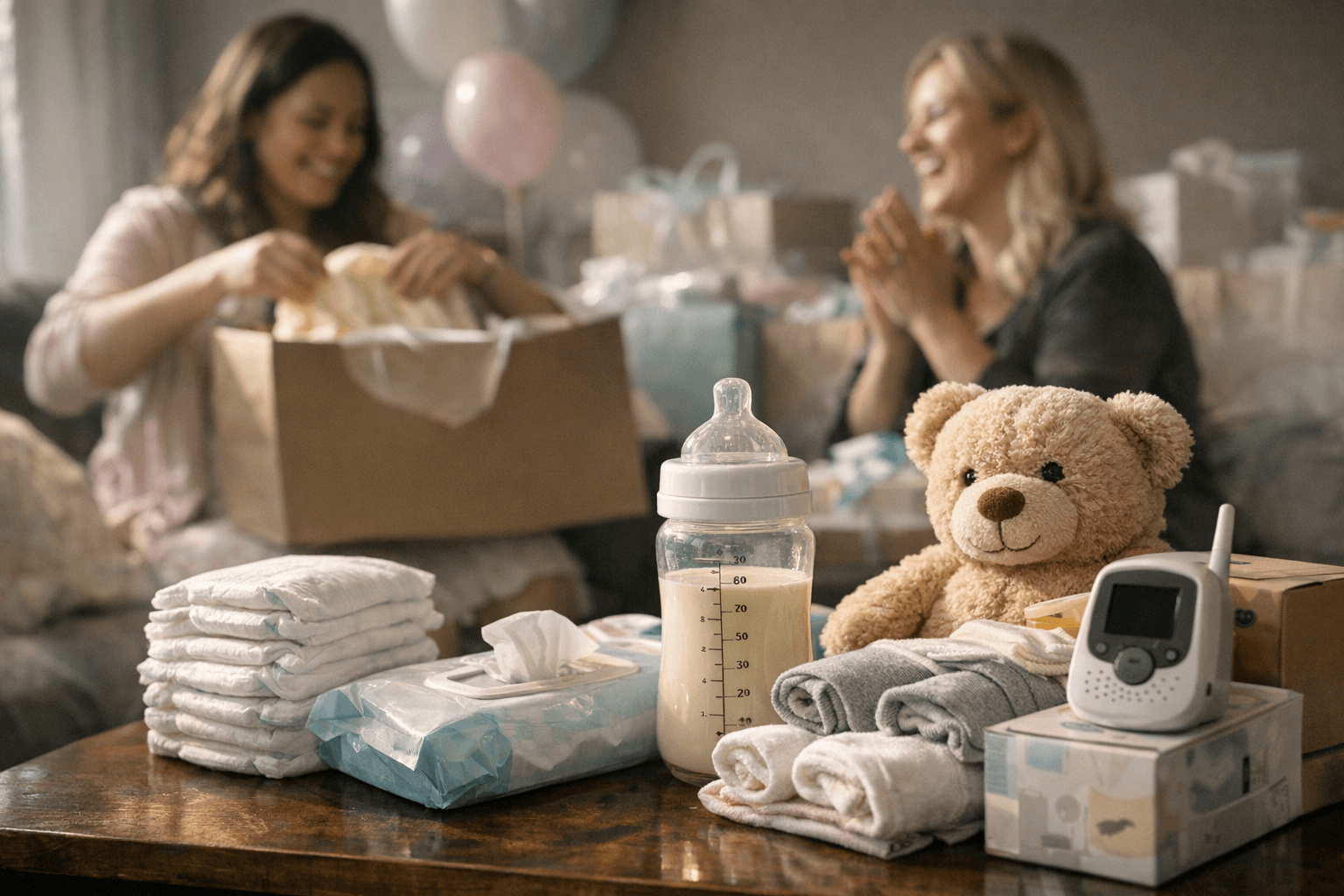
That makes diapers and wipes much more than routine gifts. They are relief, time saved, and fewer emergency store runs. Diaper subscriptions and other replenishment-style gifts fit the same logic, because they turn a recurring burden into something covered for a little longer.
The bigger cost backdrop is just as important. USDA Food and Nutrition Service says its latest Expenditures on Children by Families report was published in 2017 and estimates the cost of raising a child born in 2015 at $233,610. Its historical series also shows an estimate of $241,080 for a child born in 2012. Those figures are old, but they still underline the financial scale of parenthood and explain why a practical shower gift can feel more valuable than a decorative one.
Registry culture now stretches far beyond one store
The modern registry is not built around a single aisle or a single retailer. Babylist’s 2026 registry checklist, built from Babylist experts and thousands of Babylist parents, centers the kinds of essentials that actually carry the first months: an infant car seat, a safe sleep spot, a carrier, a stroller, feeding essentials, diapers, and bath supplies. That list tells you what parents are prioritizing, and it is not novelty.
MyRegistry.com adds another layer to the picture. Its 2026 analysis says the most-researched baby brands are overwhelmingly DTC or specialty brands unavailable on Amazon or Target. It also says an Amazon-only baby registry captures about 30% of what most parents actually researched. For gift-givers, that means a useful guide has to think across stores, not just inside the biggest retail ecosystems.
That shift is why registry alignment matters so much. A gift guide that only points to generic best sellers misses the reality that many parents are building a mixed registry with products from multiple brands and multiple price points. The strongest gifts now are the ones that fit into that broader plan instead of fighting it.
The best gift ideas are organized around real-life needs
Messagear’s guide organizes 150-plus ideas into practical categories, and that structure is the smartest part of the framework. Relationship-based gifting helps match spending to closeness. Practical essentials cover the items parents will use every day. Keepsakes serve the emotional side of the occasion without pretending sentiment alone solves a household need.
The guide also breaks out gifts for the mom-to-be, experience and help gifts, group gifts, second- or third-baby gifts, virtual shower gifts, and budget tiers. That matters because showers now bring together coworkers, neighbors, online friends, and extended family, all with different spending power and comfort levels. A baby shower is no longer one social circle with one set of expectations; it is a blend of networks, and the gift strategy has to reflect that.
The section on second- and third-baby gifts is especially practical. Families welcoming another child often already own some of the bigger gear, so targeted consumables, replacement items, and help-oriented gifts can be more useful than another decorative swaddle set. Group gifts do similar work by making higher-ticket items, like strollers or car seats, more accessible without pushing one person past their budget.
Presentation still matters, but only when it adds context
The guide is clear that notes and presentation are part of the gift itself. That is not a call for elaborate wrapping for its own sake. It is a reminder that thoughtfulness often lives in the explanation, the timing, and the way a gift is framed around what the parents will actually use.
That perspective fits the changing tone of baby showers too. Babylist’s 2026 modern baby shower coverage says many expecting parents do not like being the center of attention, and some prefer to help plan the shower so they feel more in control during pregnancy and early parenthood. Traditional games and gift-opening rituals can feel awkward in that setting, which is one reason the modern shower is moving toward more intentional, less performative formats.
What this means for gift-givers and registry builders
The best baby shower shopping now looks less like browsing and more like problem-solving. A registry-aligned diaper box, a safe sleep item, feeding gear, or a well-timed group purchase often delivers more real value than a pile of cute extras. When you line up spending with actual household needs, registry waste drops, and the gift becomes part of the family’s first-year infrastructure instead of another item waiting for a closet purge.
That is the shift the data keeps pointing to. Baby shower gifting is moving away from ornamental abundance and toward practical financial relief, and the most useful gifts are the ones parents will reach for every single day.
This article was produced by Prism’s automated news system from verified source data, official records, and press releases, then run through automated quality and moderation checks before publishing. The system is built and supervised by the people who set the standards it runs under. Read our full AI policy.
Did this article answer your question?