Babylist spotlights display showers as calmer, more social baby celebrations
Babylist is reframing display showers as a gentler social reset: gifts stay visible, pressure drops, and the party keeps moving without the gift-opening performance.
A calmer kind of baby shower is gaining a cleaner playbook
Babylist is putting display showers on the map as a practical answer to one of the biggest baby-shower pain points: the pressure to unwrap every present in front of a room full of people. The appeal is simple and immediate. Gifts are still admired, generosity still gets its moment, and the guest of honor gets to spend less time performing gratitude and more time actually enjoying the party.
That shift explains why the format is resonating now. Instead of turning the shower into a stage-managed opening session, display showers treat the gift table as part of the celebration itself. The mood is more social, more relaxed, and less about choreographed reactions, which fits the broader move toward smaller, lower-pressure gatherings.
How the format works in practice
At its core, a display shower asks guests to bring gifts unwrapped and leave them on a designated table or display area. Babylist’s registry experts use the format to walk hosts through the essentials: how to let guests know what to expect, how to set up the gift table, what invitation wording avoids confusion, and how to handle thank-you cards afterward.
That communication piece matters more than it might at first seem. If the invitation language is vague, guests can easily assume a traditional shower with wrapped presents and a formal opening. When the instructions are clear, the event feels intentional rather than improvised, and the host avoids the awkwardness of explaining the format on the spot.
TODAY described the same basic setup in 2025: guests bring unwrapped gifts, place them on display, and spend more time socializing instead of watching paper pile up on the floor. The idea is not to hide the gifts. It is to let the gifts become part of the room without making the room revolve around them.
What the gift display can look like
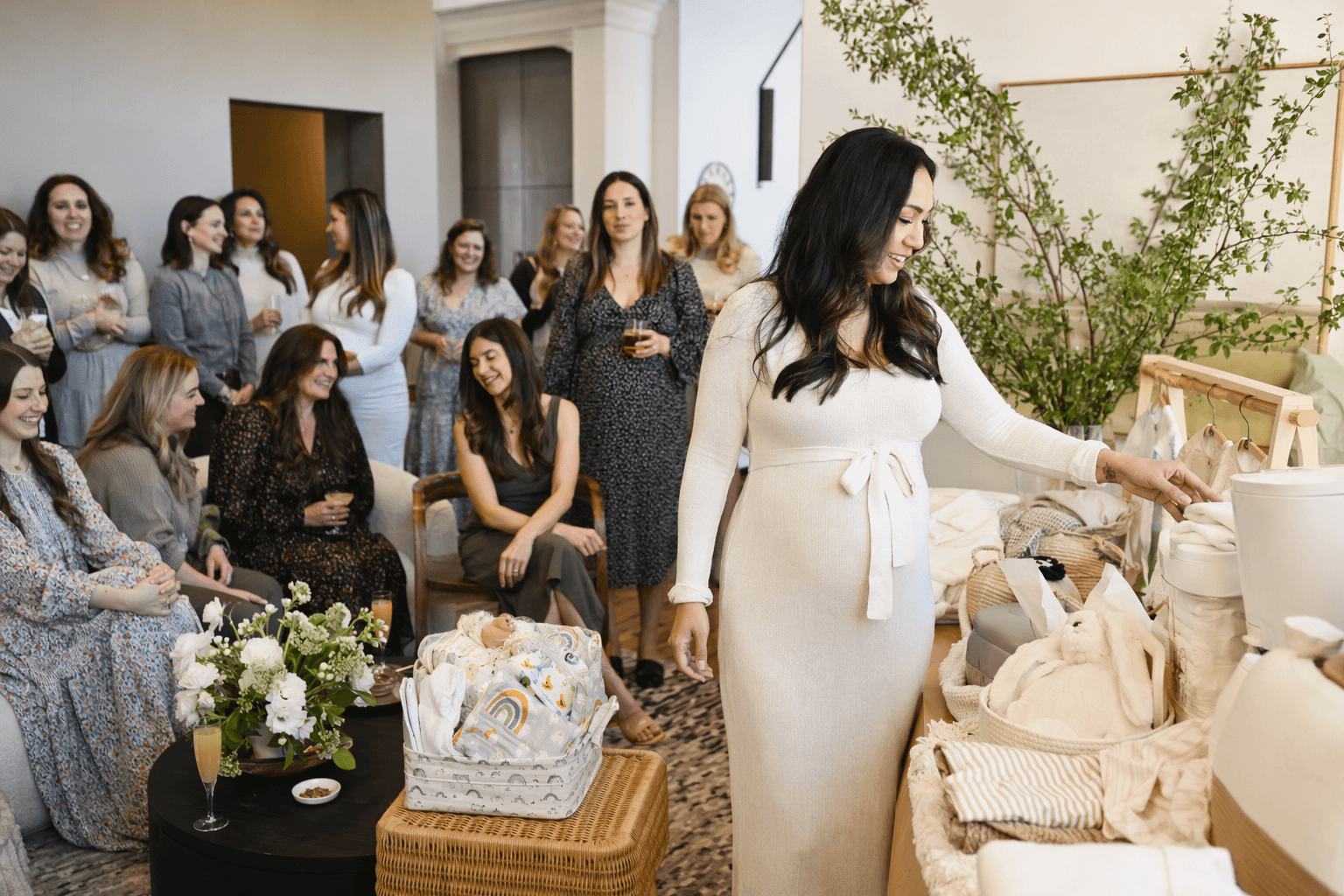
The display itself does a lot of the etiquette work. The Bump noted that gifts can be brought unwrapped and placed on display, with nametags optional, and TODAY reported styling ideas like ribbons, cards, flowers, baskets, and clear cellophane paper. Those details matter because they help the table feel curated rather than bare or accidental.
A strong display area should look purposeful from the moment guests walk in. Think of it as part decor, part wayfinding: a well-placed table, consistent tags, and a visual rhythm that makes the gifts feel honored without dominating the event. For planners and stationery makers, this is where the opportunity sits, with demand for invitation language, signs, table styling, and etiquette-friendly templates that make the format easy to understand.
Who this format works best for
Display showers are especially well suited to parents-to-be who are uncomfortable being the center of attention. TODAY highlighted that some pregnant hosts simply do not love opening gifts in front of a crowd, and Chicago mom Maggie Obaidat said skipping the gift-opening routine took pressure off. That feeling shows up again in other coverage: the format lowers anxiety, removes the pressure to perform reactions, and gives the guest of honor more room to enjoy the people in the room.
The format also fits hosts who want the celebration itself to feel more conversational. SheKnows said display showers can free up time for activities, hors d'oeuvres, or a shorter shower, and that flexibility is part of the draw. If the goal is to build an event around mingling rather than spectacle, display showers make that easier.
The appeal is especially strong for introverted parents, or for anyone who would rather browse gifts at leisure than unwrap them in front of a crowd. Luxury event planner Cassie LaMere and etiquette expert Jenny Dreizen both supported the concept in SheKnows coverage because it centers the guest of honor’s comfort and redirects time toward conversation and community. In that sense, the format is less a novelty than a social-pressure reset.
Why the trend has momentum now
The idea is not brand-new, but it has clearly found a new audience. The Bump reported in 2024 that display showers were trending on TikTok and Instagram, and said the format was already spreading as an easier alternative for both guests and parents-to-be. A 2011 The Bump forum post even described the style as common in some hometowns, with hosts using lovely tags and placing gifts throughout the home so everyone could see them without a formal unwrapping session.
That history is useful because it shows the 2026 Babylist piece is not inventing a custom from scratch. It is giving an older, regional practice a polished name and a more complete etiquette framework. In other words, the trend feels fresh because the packaging is fresh, even if the idea has been circulating informally for years.
TODAY also connected the format to the post-pandemic rise of micro-events, with Atlanta event planner Tiffany Nicole Webb of Unique Occasions by TNicole saying display showers started catching on after the pandemic. That timing makes sense. People are more open to celebrations that feel intimate, efficient, and easy to manage, especially when they can still deliver a warm, generous experience.
The etiquette questions a display shower raises
Any format that changes a familiar ritual raises a few practical questions. The first is whether guests will feel their gifts are being sidelined if nothing is opened on the spot. The answer depends on presentation. If the table is styled with care, the gifts are clearly visible, and the host makes the display part of the celebration rather than an afterthought, the gifts are honored rather than minimized.
The second question is how to avoid confusion. Invitation wording should be direct enough that guests understand they should bring gifts unwrapped, and that simple instruction can prevent awkward last-minute assumptions. The third is what happens after the party. Babylist’s registry experts include thank-you card tips for a reason, because the etiquette does not end when the guests leave; the host still needs a clean system for tracking who gave what and following up properly.
Diane Gottsman’s 2026 etiquette column helps explain why the format can land now: modern shower etiquette has relaxed compared with tradition. That broader loosening gives hosts room to choose a format based on comfort, logistics, and the tone they want to create. Display showers fit neatly into that shift, as long as they are explained clearly and styled with enough intention to make every gift feel seen.
How hosts can implement it without losing the warmth
The best display showers balance clarity and hospitality. Start with plain-language invitation wording that says gifts should be unwrapped and displayed, then build a gift table that looks purposeful from the moment guests arrive. Add name tags, cards, or small styling elements so the display feels celebratory, not utilitarian.
After that, keep the event moving. The point is not to replace one awkward ritual with another. It is to create space for conversation, food, and a more relaxed social atmosphere while still making generosity visible. Done well, a display shower does exactly what Babylist is arguing for: it removes the performative pressure, preserves the appreciation, and makes the whole celebration feel more human.
This article was produced by Prism’s automated news system from verified source data, official records, and press releases, then run through automated quality and moderation checks before publishing. The system is built and supervised by the people who set the standards it runs under. Read our full AI policy.
Did this article answer your question?