Baby Shower Favors Turn Sustainable, Hosts Choose Useful, Low-Waste Gifts
Baby shower favors are shifting from plastic clutter to gifts guests will eat, plant, or reuse, and the smartest hosts are making that tradeoff on purpose.

The useful favor is winning
The smartest baby shower favor is the one that does something after the party ends. That is the real shift here: hosts are moving away from cheap plastic trinkets and toward favors guests will actually consume, reuse, or keep on display because usefulness now matters as much as looks. SwaddleAn’s framing is blunt and practical: if a favor cannot be eaten or used, it probably should not be bought.
That simple rule captures why the old drawer-filler favors are fading. A favor still works as the last note in a party’s design, but it should reflect the host’s values instead of adding another bag of clutter to the table. The best versions feel intentional, a little artisanal, and tied to the shower theme rather than mass produced for a bargain bin.
Why sustainability is no longer a side note
The push toward low-waste favors is not just aesthetic, and it is not happening in a vacuum. The U.S. Environmental Protection Agency says plastics generation in the United States reached 35.7 million tons in 2018, or 12.2% of municipal solid waste generation. The agency also says plastic pollution can start with containers and packaging and move into the environment during production, consumption, and disposal.
That bigger waste picture matters because baby shower favors are often small but multiplied across guest lists, party seasons, and retail habits. The United Nations Environment Programme says the packaging sector is the largest generator of single-use plastic waste in the world, and about 36% of all plastics produced are used in packaging. UNEP also says plastic waste could nearly triple by 2060 under a business-as-usual scenario. Against that backdrop, it makes sense that even a one-afternoon celebration is being rethought through a reduce-reuse-recycle lens.
The EPA’s zero-waste definition, via the Zero Waste International Alliance, centers on conserving resources through responsible production, consumption, reuse, and recovery without burning or harmful discharges. That is a useful standard for favor buying because it separates a cute object from a genuinely lower-waste choice. A favor that avoids disposability and displaces something guests would otherwise buy, toss, or forget has a stronger case than something that just looks green on a table.
What guests actually keep
The most convincing favors are the ones people do not have to be persuaded to keep. TODAY’s baby shower favors guide from July 2022 leaned into that same logic with mini succulents, jars of local honey, tree seedlings, personalized cups, coffee beans, and bottle openers. Those are not novelty items for the sake of novelty. They are the kinds of gifts that move from party decor to kitchen counter, desk, garden, or pantry.
That list still works because it solves a host problem and a guest problem at once. The host gets something presentable and theme-friendly. The guest gets something with a real use case. Mini succulents fit windowsills and desks. Local honey is edible and easy to appreciate. Tree seedlings feel symbolic without being disposable. Personalized cups and bottle openers are durable enough to survive repeated use. Coffee beans in reusable bags are especially effective because the favor is partly the container and partly the consumable inside.
Themes matter, but only if the favor earns them
The best sustainable favors are not theme-agnostic. SwaddleAn’s examples show that the aesthetic side still matters, especially for Baby in Bloom and Woodland showers. Those themes give hosts a natural lane for biodegradable seed paper, mini succulents, local preserves, candles, bamboo-based items, and other pieces that look deliberate rather than generic.
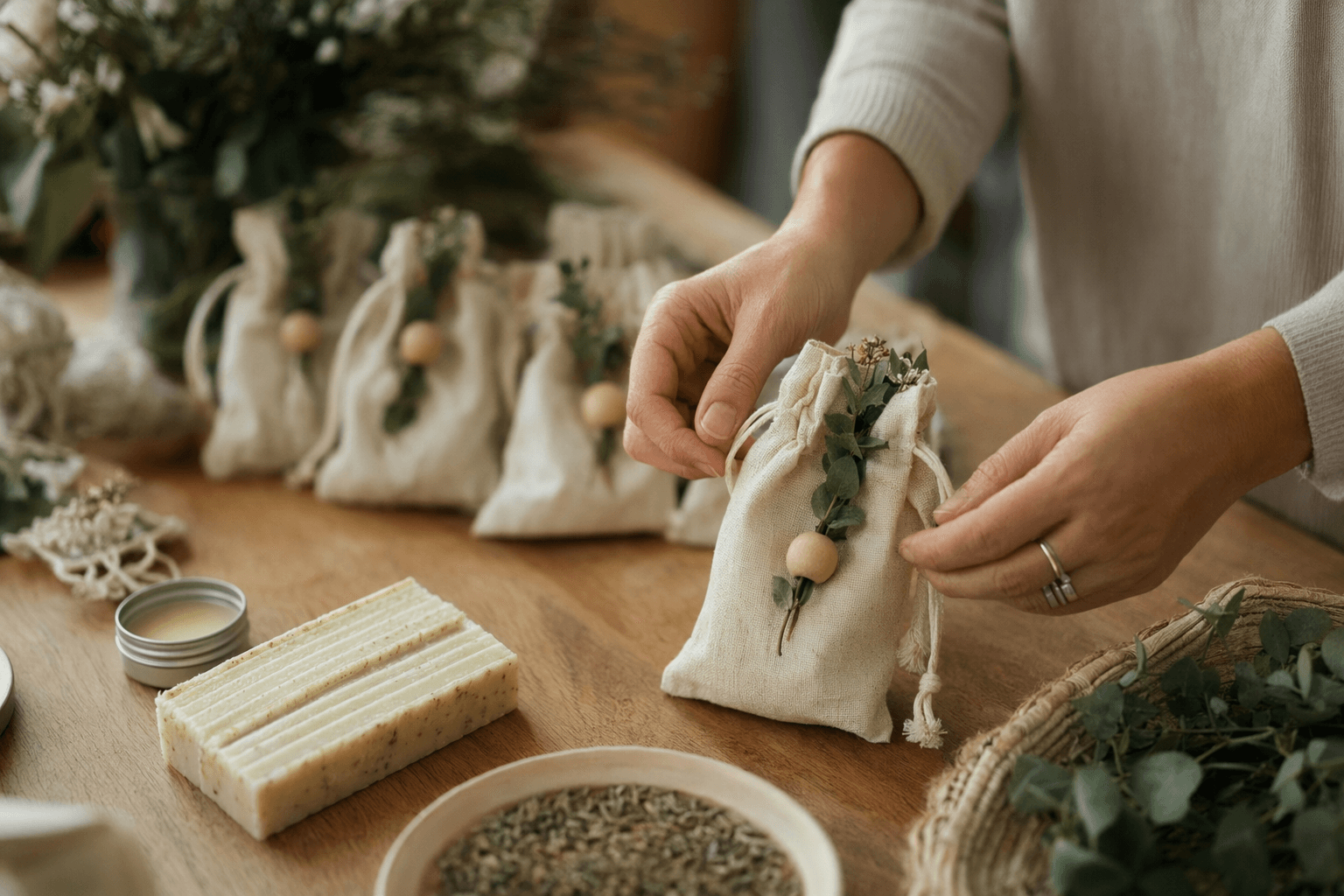
That is where a lot of hosts get it right and a lot of party vendors get it wrong. A favor can be eco-minded and still feel special, but only if the packaging and presentation are on point. Seed paper makes sense for a flower-forward shower because it extends the floral theme into something guests can plant. Woodland favors work when the materials feel natural, not fake-natural. Bamboo-based items can be a good fit if they are genuinely useful, but they still need quality packaging so they do not read as cheap “green” merch. Local preserves and candles work because they are consumable, giftable, and easy to set beside the place cards without looking like afterthoughts.
The practical takeaway is that the theme should guide the object, not excuse it. A pretty label on a throwaway plastic trinket is still a throwaway plastic trinket. A small jar of preserves with thoughtful wrapping has a life after the shower.
The market is moving from novelty to utility
This trend changes the business side of baby shower shopping as much as it changes the party table. Favor suppliers are now competing on sustainability, packaging, and theme alignment rather than novelty alone. That is a more demanding market, but it is also a more durable one because it rewards products that feel useful without losing the celebratory touch.
For hosts, the question is no longer whether favors are mandatory. Kurt Perschke of WebBabyShower said, “Baby shower favors continue to be an on-trend tradition,” though not every shower includes them. That is the right way to think about the category now: favors remain popular, but they are no longer automatic. They have to justify their place.
- Will guests eat it?
- Will guests use it?
- Will the material still make sense after the party?
The best planning habit is to ask three questions before buying anything:
If the answer is no to all three, the favor is probably decoration dressed up as sustainability. If the answer is yes to even one of them, especially with biodegradable, recyclable, or reusable materials, the purchase starts to make sense.
What low-waste looks like when it is done well
The strongest low-waste favors share the same traits. They are compact enough to display neatly, useful enough to avoid the trash can, and tied closely enough to the shower theme that they feel chosen rather than ordered in bulk. A jar of local honey can do that. So can a mini succulent in a reusable pot, a packet of seed paper, or a bamboo kitchen tool paired with clean, simple wrapping.
The bigger story is that baby showers are being pulled by two forces at once: visual polish and ethical utility. Hosts still want something beautiful on the table, but they increasingly want the favor to have a second life, whether that means planting it, eating it, or using it at home. That is why the disposable favor feels dated now. The useful favor is not just nicer. It is the one that actually fits how people want to celebrate without leaving behind a pile of waste.
This article was produced by Prism’s automated news system from verified source data, official records, and press releases, then run through automated quality and moderation checks before publishing. The system is built and supervised by the people who set the standards it runs under. Read our full AI policy.
Did this article answer your question?