Budget Registry Tips Could Cut First-Year Baby Costs by Half
A tighter registry can do more than save money. It steers families toward true essentials, safer secondhand buys, and gifts guests can actually afford.
The spending trap starts before the baby arrives
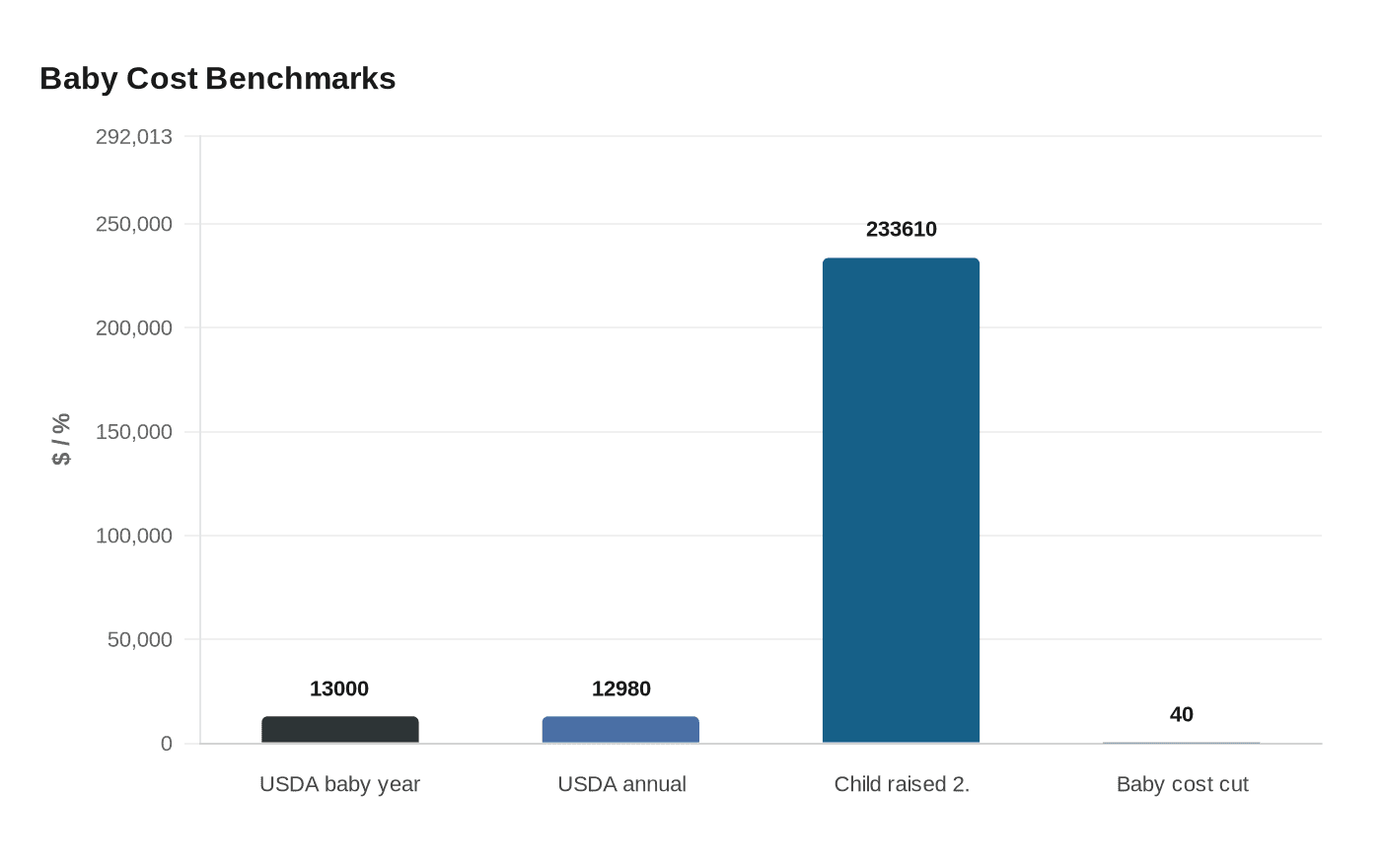
A registry can become a budget tool instead of a wish list when it separates what the baby truly needs from what only makes the nursery look finished. EasyTot’s guide argues that approach can cut first-year baby costs by 30% to 50%, a meaningful shift against USDA’s long-running benchmark that family spending in a baby’s first year can top $13,000. The point is not deprivation; it is discipline, and it starts with refusing to build a showroom nursery on day one.
That framing matters because the bigger cost picture is already steep. The U.S. Department of Agriculture has tracked the cost of raising a child since 1960, and its 2015 report estimated annual spending at about $12,980 per child for a middle-income, two-child, married-couple family. USDA also said families were projected to spend an average of $233,610 raising a child born in 2015. Put differently, every registry decision has a compounding effect.
Start with the items the baby cannot come home without
The cleanest way to build a budget registry is to make two lists: one for essentials and one for the things that would simply make life easier. The first list should stay narrow and practical, centered on safety and daily care. That usually means a safe sleep space, a car seat, diapers, basic clothing, and feeding supplies.
Safe sleep belongs at the top of the list because there is no substitute for it. The Centers for Disease Control and Prevention says babies should sleep on a firm, flat surface, such as a mattress in a safety-approved crib, and the American Academy of Pediatrics says parents should use a crib, bassinet, portable crib or play yard that meets current Consumer Product Safety Commission standards. Those recommendations make the registry more than a gift tracker; they make it a health checklist.
The car seat deserves the same discipline. AAP and National Highway Traffic Safety Administration guidance says the best seat is the one that fits the child’s size, fits the vehicle, is installed correctly, and is used properly every time. That means the most expensive model is not automatically the right model, and the most budget-friendly seat is not automatically a compromise if it meets the right fit and installation standards.
- Safe sleep setup: crib, bassinet, portable crib or play yard that meets current standards
- Car seat: chosen for fit, vehicle compatibility, and correct installation
- Daily basics: diapers, wipes, onesies, sleepers, and feeding supplies
- Small but essential backups: burp cloths, swaddles, and a few changes of clothing
Buy new where safety is nonnegotiable, and be selective everywhere else
The budget registry logic becomes even stronger when it is paired with smart secondhand buying. Used gear can be a real cost saver, but the safest savings are the ones that do not cut corners on product condition or recall history. That is especially true for sleep gear, where the margin for error is tiny and the standards are unforgiving.
HealthyChildren says parents should check recalled products and avoid old or broken cribs. It also notes there have been more than 11 million crib recalls since 2007, and that drop-side cribs were associated with 32 infant suffocation and strangulation deaths since 2000. Those numbers are a blunt reminder that a bargain is only a bargain if the item is current, intact, and compliant with safe-sleep guidance.
That does not mean every used item is off-limits. It does mean the registry should steer guests and parents toward items with clear safety rules and away from anything that has aged out of current standards. CDC guidance also reinforces that safe sleep should mean a firm, flat surface with no incline and no extra bedding, which makes old accessories and trendy add-ons easy to skip.
Do not confuse price with safety
One of the smartest parts of a budget registry is that it pushes back against the assumption that higher price equals higher protection. EasyTot’s guide points out that a $150 car seat can meet the same federal safety standards as a far more expensive one, and Consumer Reports notes that car seats must meet the same federal standards even though some models add extra safety features. The difference often lies in convenience, ease of use, or extra features, not in basic compliance.
That is why the practical question is not “What is the priciest seat?” but “What fits this child, this car, and this family’s routine?” NHTSA even directs parents to compare seats and inspect them, which fits the larger budget-registry mindset: choose equipment that will actually be used correctly every time. A seat that is installed properly and used consistently is worth more than a premium label that never gets fitted right.
A budget registry changes what guests can give
This is where the registry becomes socially useful, not just financially useful. A high-end registry often nudges guests toward large, expensive items that create pressure on both sides. A budget registry does the opposite: it widens the pool of gifts by making more items attainable, and it gives family and friends permission to contribute without overspending.
That shift is showing up in the broader market. Babylist’s 2026 budget registry guide, its under-$500 checklist, and its must-haves guide all point to a more explicit emphasis on cost-conscious planning. Registry culture is moving toward intentional spending, where the list helps families set priorities first and decorate later.
The best budget registry is one that is honest about what will actually get used in the first months home. It protects safety where it matters most, trims the extras that can wait, and makes room for gifts at more than one price point. In a year when baby costs can climb fast, that kind of clarity does not feel restrictive. It feels like control.
This article was produced by Prism’s automated news system from verified source data, official records, and press releases, then run through automated quality and moderation checks before publishing. The system is built and supervised by the people who set the standards it runs under. Read our full AI policy.
Did this article answer your question?