Community baby shower helps families start with essential supplies
Families walk in for a shower and leave with diapers, car seats, and safe-sleep gear, turning a familiar celebration into a practical lifeline.
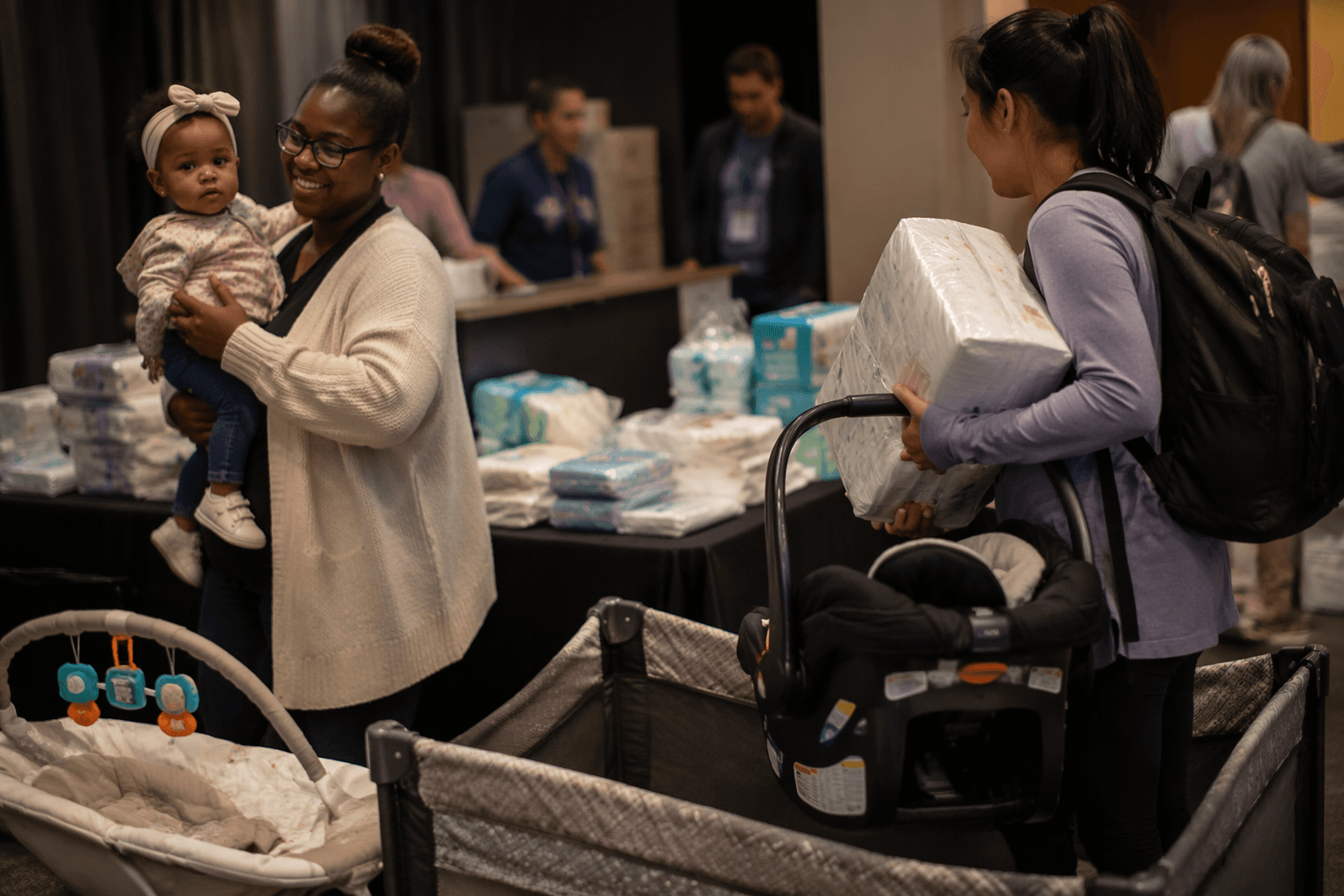
The Community Baby Shower is built around a simple idea: keep the familiar baby-shower feel, but make the payoff practical. Families attend for free and leave with essentials such as diapers, wipes, safe sleeping surfaces, car seats, clothing and feeding items, with donated goods coming from community members and local businesses in new or top-notch used condition. That mix turns the event into more than a celebration. It becomes a direct supply line for parents who are trying to get through the first days of a baby’s life with the basics in hand.
That matters because the basics are expensive and, for many families, incomplete. The Administration for Children and Families says diaper need affects an estimated 33% to 50% of families with young children, and the yearly cost for one child can run about $945 to $1,500. SNAP, WIC and TANF do not cover diapers, which leaves a gap that a festive gift registry will not fix. A community baby shower does something different: it concentrates the exact items families are most likely to need, then hands them out in a setting designed to lower the stress around asking for help.
The model also lines up with safe-sleep public-health guidance. NIH Safe to Sleep says a safe sleep environment should be firm, flat and level, and Cribs for Kids says partners can use discounted safe-sleep products, free evidence-based education and community-based programming to strengthen those efforts. Research on baby-shower programs supports that approach. A peer-reviewed comparison of community and clinic baby showers found both improved safe-sleep knowledge and intentions, while community venues were better at reaching higher-risk groups. Another redesigned community-baby-shower study reported positive changes among 812 participants, showing that the format can move the needle on both knowledge and behavior.

Recent events show the model has real traction. UMass Chan Medical School and Glo Mom held a Community Baby Shower in Worcester, Massachusetts, on April 13, 2024, during Black Maternal Health Week, and drew more than 150 parents, support-network members and children. Other programs have used recurring April fundraisers, month-long donation drives and outreach events aimed at blessing 100 families or distributing free car seats. The pattern is clear: by pairing donations with education and a welcoming entry point, community baby showers are becoming a working tool for maternal and infant support, not just a social ritual.
This article was produced by Prism’s automated news system from verified source data, official records, and press releases, then run through automated quality and moderation checks before publishing. The system is built and supervised by the people who set the standards it runs under. Read our full AI policy.
Did this article answer your question?