Daisy Taylor shares baby shower planning tips and My Baby List details
Daisy Taylor’s shower turns baby planning into a practical blueprint, with a 32-week celebration, a Cobham venue, and a live gift list guiding guests.

A baby shower designed to do more than celebrate
Daisy Taylor’s baby shower reads like a modern planning manual in motion. She hosted at 32 weeks pregnant, chose Coppa Club in Cobham, Surrey, and used My Baby List to share her gifts with family and friends, turning the event into part celebration, part registry strategy, and part shopping guide.
What makes the story stand out is how deliberately everything connects. The theme, venue, decor, activities, and treats all sit inside one coordinated experience, and that coordination is exactly what today’s baby-shower playbook now rewards.
Why 32 weeks has become a sweet spot
Daisy’s timing is practical in a way many first-time parents will recognize. She said she planned the shower fairly early because she wanted to feel her best and had heard the final weeks of pregnancy can be tough. That choice lines up neatly with Evite’s etiquette guidance, which places baby showers in the third trimester, usually between 32 and 36 weeks, or about four to six weeks before the due date.
Babylist’s etiquette guidance adds another layer of context: baby showers began gaining popularity in the United States in the late 1940s, and the ritual has kept evolving ever since. In Babylist’s 2026 trends coverage, registry experts say modern parents are rethinking traditional norms and shaping showers around their own style, rather than treating them as fixed milestones with one right format.
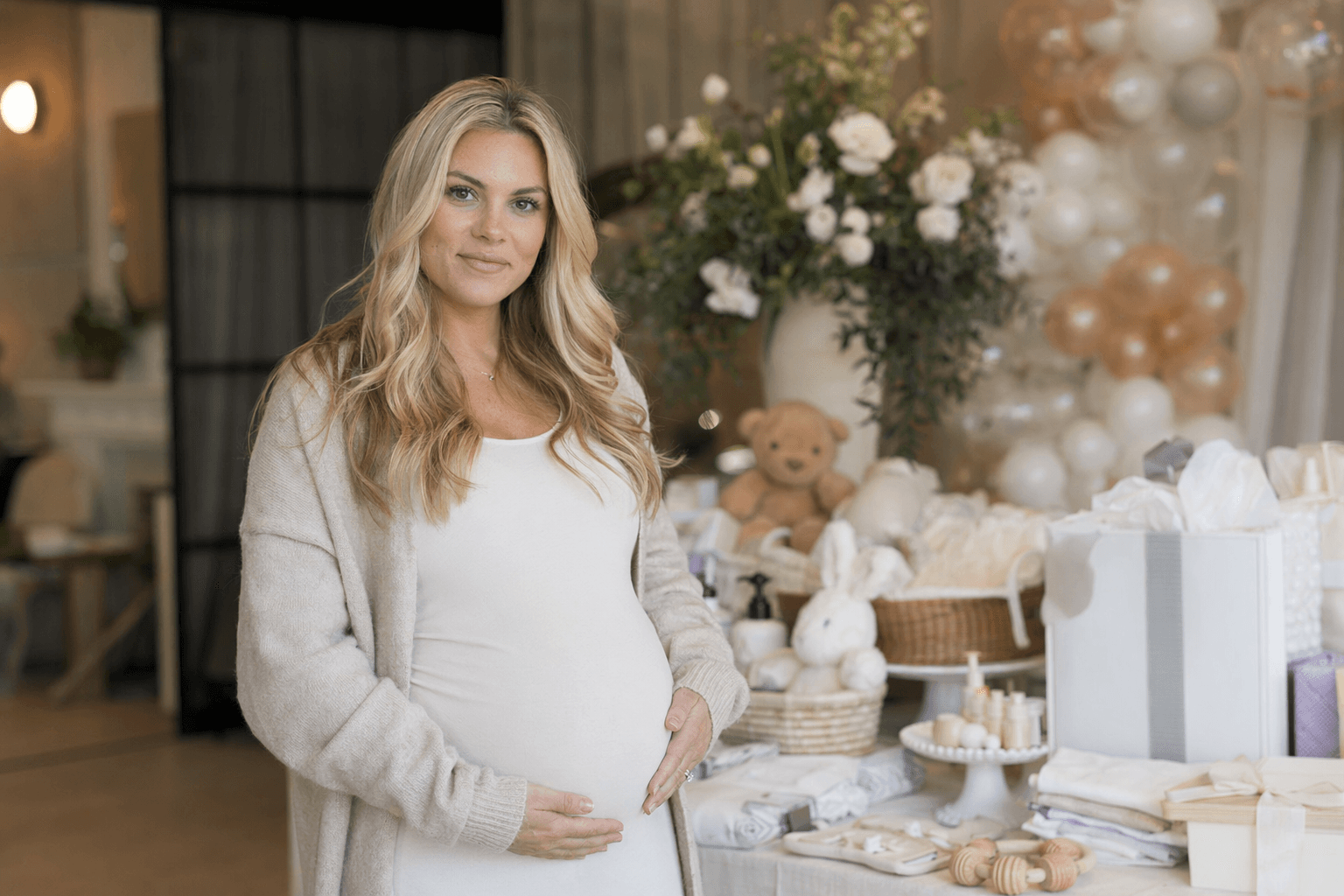
That is the shift Daisy’s shower captures so well. The timing is not just calendar-friendly. It is part of a larger move toward comfort, control, and a celebration that still feels enjoyable when pregnancy is already demanding enough.
The venue does half the storytelling
Coppa Club in Cobham gives the event a very specific scale and mood. The venue page describes private dining and a partly covered terrace, details that suggest a setting built for a gathering that feels polished without becoming overwhelming. A private-dining listing adds another useful clue: the Orangery can seat up to 20 guests or host 40 standing for drinks receptions.
That capacity matters because it tells you what kind of baby shower this likely was. It is intimate enough to feel personal, but large enough to create a proper social moment, with room for guests to mingle, eat, and move through the celebration without the formality of a bigger venue.
For first-time parents planning their own showers, the venue choice becomes more than a backdrop. It helps define the rhythm of the day, from seated conversation to standing drinks, and it shapes how much decor, entertainment, and catering the event actually needs. Daisy’s setup shows how the space itself can simplify the rest of the planning.
My Baby List puts gifting into the plan from the start
The clearest industry signal in the story is Daisy’s use of My Baby List. Rather than handling gifts as an afterthought, she created and shared a baby shower gift list with family and friends, folding the registry directly into the planning process. That is exactly the kind of behavior that is becoming normal across the category: gifting is no longer separate from the event, but built into it.
Mamas & Papas describes My Baby List as a shareable list for baby must-haves and wishes, including baby shower gifts and first-birthday gifts. That framing matters because it extends the usefulness of the tool beyond one single celebration and makes it part of a broader family planning workflow.
For guests, that changes the experience too. A live gift list reduces guesswork and makes the shower feel more like a practical reference point than a guessing game. For brands and retailers, it is a clean example of how registry tools now function as both service and conversion engine, guiding what gets bought, when, and by whom.
Planning now lives at the intersection of style, content, and utility
Daisy’s shower fits a wider pattern Babylist has been tracking in its 2026 trends coverage. Modern parents are not only participating in planning, they are often driving the process themselves. Babylist reports that 91% of its parents-to-be respondents were involved in planning their shower to some degree, and 25% said they hosted their own with no other help.

That level of involvement helps explain why today’s showers often feel more curated. The event has to look good, work smoothly, and give guests a clear path to shop. Daisy’s example also reflects how deeply these events are now documented and shared, with the shower functioning as a content moment as much as a social one.
Mamas & Papas is well placed to tell that story. The company says it has been helping parents grow their families for over 40 years, and this feature uses that brand credibility to position Daisy’s choices as both inspiration and practical advice. The result is a useful snapshot of where baby-shower culture is headed: less obligation, more intention, and a lot more coordination between the party, the registry, and the people invited into it.
What Daisy’s shower makes clear
Daisy Taylor’s baby shower shows how much the category has changed without losing its core purpose. The best-planned events now balance comfort, atmosphere, and gifting in one clean flow, and the live registry is no longer an add-on. It is part of the event design itself.
That is why Daisy’s choices land as a blueprint rather than just a celebrity glimpse. The 32-week timing, the Cobham venue, the intimate dining setup, and the shareable My Baby List all point in the same direction: baby showers are becoming smarter, more personal, and more useful, all at once.
Know something we missed? Have a correction or additional information?
Submit a Tip
