Debate Over Men at Baby Showers Exposes Tensions Around Evolving Celebration Norms
A viral X debate over whether men belong at baby showers reveals how a post-war American ritual is fracturing into multiple competing formats.
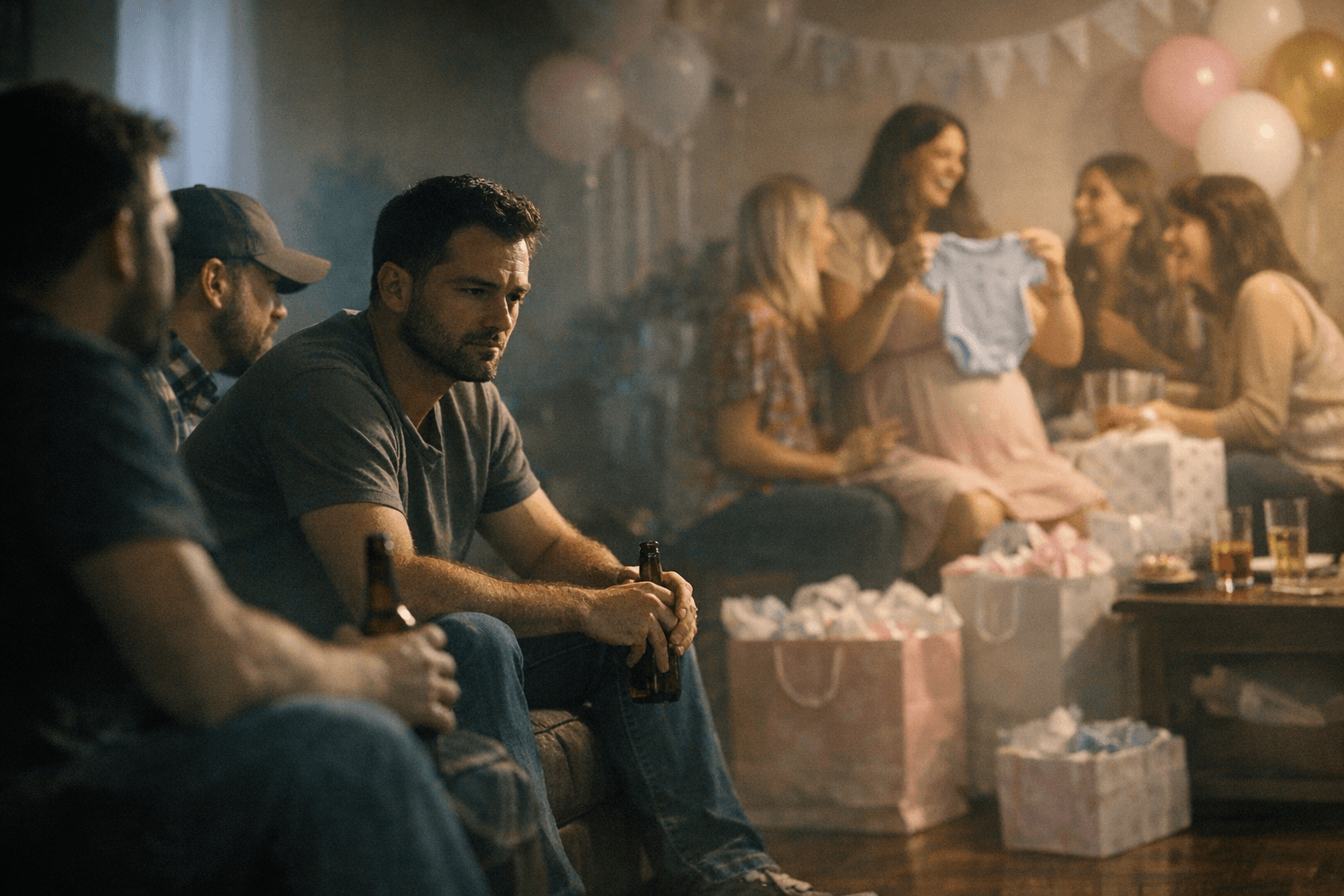
A recurring flashpoint on X has reignited a surprisingly heated conversation: do men belong at baby showers? High-engagement posts insisting the answer is no drew thousands of interactions, with critics framing co-ed celebrations as a symptom of eroding tradition, tying the trend to out-of-wedlock pregnancies and what they called social media showboating. The backlash exposed something real: the baby shower, long treated as a fixed cultural institution, has quietly splintered into several distinct and sometimes incompatible formats, and hosts are increasingly left navigating the fallout.
The women-only baby shower has deep roots. The modern American version crystallized in the late 1940s and 1950s, when post-war families began celebrating the Baby Boomer generation with organized gift-giving events. By that point, manners authority Emily Post had already acknowledged the tradition in her 1937 book, "Etiquette: The Blue Book of Social Usage," though the ritual itself traces back further, to middle and upper class households in the early 1900s. Its cultural logic was consistent across those decades: pregnancy was treated as a female experience, and the shower existed specifically for women to support women, passing down maternal knowledge in an intimate, same-gender setting.
That framing still resonates with traditionalists on X and elsewhere. Their argument is not merely sentimental. For many, the shower's value lies precisely in its exclusivity, in creating a space where mothers, sisters, grandmothers, and close friends can speak candidly about labor, feeding, and early parenting in ways that shift when a mixed crowd is present.
But the co-ed format, sometimes called the couples' shower, has moved well past the margins. Changing expectations around fatherhood are the primary driver: as men have taken on more hands-on roles in childcare and parenting, couples have increasingly wanted celebrations that reflect that shared investment. The Beer and Diapers party, a co-ed format where guests bring a pack of diapers in exchange for drinks, became one of the most widely replicated co-ed templates precisely because it gave male guests a comfortable social script to follow.
LGBTQ families and same-sex couples have pushed the format further still, gravitating toward fully inclusive family showers that sidestep the gendered framing of the traditional event entirely, using gender-neutral invitation language and themes that center the baby's arrival rather than the mother's transition.
Some families have landed on a practical middle ground: two separate showers. One intimate, women-only gathering for close family and friends, and a broader co-ed event for a wider social circle. This approach has gained traction particularly in communities where both formats carry genuine meaning to different parts of the guest list.
What the X debate made clear is that the single biggest source of confusion, and offense, is the invitation itself. Etiquette guidance is consistent on this point: if a shower is co-ed, the invitation must say so explicitly. Most male guests, conditioned by decades of convention, will assume they are not invited unless told otherwise. Hosts should also specify whether children are welcome, since inviting both parents from the same household typically requires childcare arrangements. Including registry information removes another layer of ambiguity. If the event leans heavily toward a co-ed format and organizers want men to feel genuinely included rather than just tolerated, some hosts have found it useful to move away from the word "shower" in the invitation language altogether, replacing it with "celebration" or "welcome party," since "shower" carries an implicit women-only connotation for many guests.
None of these formats is wrong. The tension on X reflects something that etiquette has always struggled to accommodate: rituals evolve faster than the consensus about what they mean.
This article was produced by Prism’s automated news system from verified source data, official records, and press releases, then run through automated quality and moderation checks before publishing. The system is built and supervised by the people who set the standards it runs under. Read our full AI policy.
Did this article answer your question?