Diaper Cakes Combine Practical Gifting With Stunning Baby Shower Decor
Diaper cakes pull double duty as showstopping centerpieces and genuinely useful gifts, making them the smartest thing on any baby shower table.
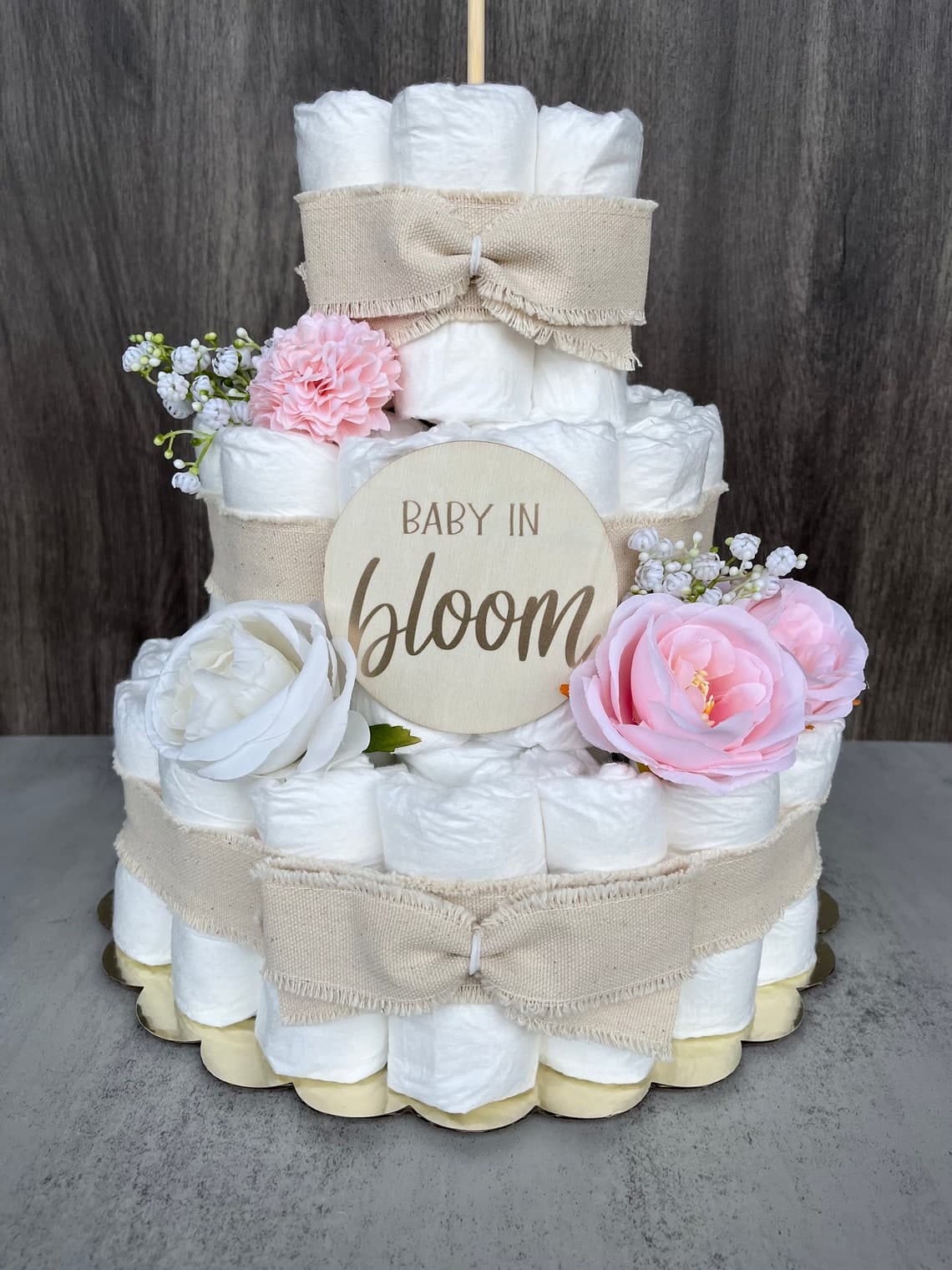
Few baby shower gifts manage to stop conversations mid-sentence, but a well-constructed diaper cake reliably does exactly that. Stack rolled diapers into a tiered tower, wrap it with ribbon, tuck in a few practical extras, and suddenly you've created something that photographs like decor and functions like a fully stocked gift registry item. It's the rare combination that experienced shower planners, tutorials from Pampers and WikiHow, and newer eco-conscious platforms like Swaddle Cake all agree on: a diaper cake earns its place on the table before a single layer is unwrapped.
What Makes a Diaper Cake Worth Making
The appeal is straightforward once you understand the dual function. As a centerpiece, a diaper cake gives a decorated table genuine height and visual structure, filling the role that an expensive floral arrangement might otherwise occupy. As a gift, it delivers something every new parent burns through faster than they expect: diapers. A standard three-tier diaper cake uses anywhere from 50 to 75 diapers depending on size, which represents real value tucked inside a beautiful presentation.
Tested tutorials from Pampers specifically emphasize sizing the cake to the shower venue and the parent's needs, noting that newborn sizes run out quickly while size 1 and size 2 diapers offer longer utility. WikiHow's step-by-step approach reinforces this, recommending builders plan the tier count and diameter before rolling a single diaper, since the structural decisions made at the base affect everything above it.
How to Build the Tiers
Construction is more forgiving than it looks, but sequence matters.
1. Roll each diaper tightly from the front tab toward the back, securing it with a small rubber band. Rolled diapers hold their shape and stack cleanly; folded diapers do not.
2. Build the base tier by standing rolled diapers upright in a circle around a central cardboard tube or bottle, then adding concentric rings outward until you reach your desired diameter. A large base typically uses 30 to 40 diapers.
3. Secure each completed tier with a rubber band placed discreetly around the outside, then wrap it in ribbon to hide the band entirely.
4. Stack smaller tiers on top, decreasing diameter by roughly two inches per tier to create the tapered cake silhouette.
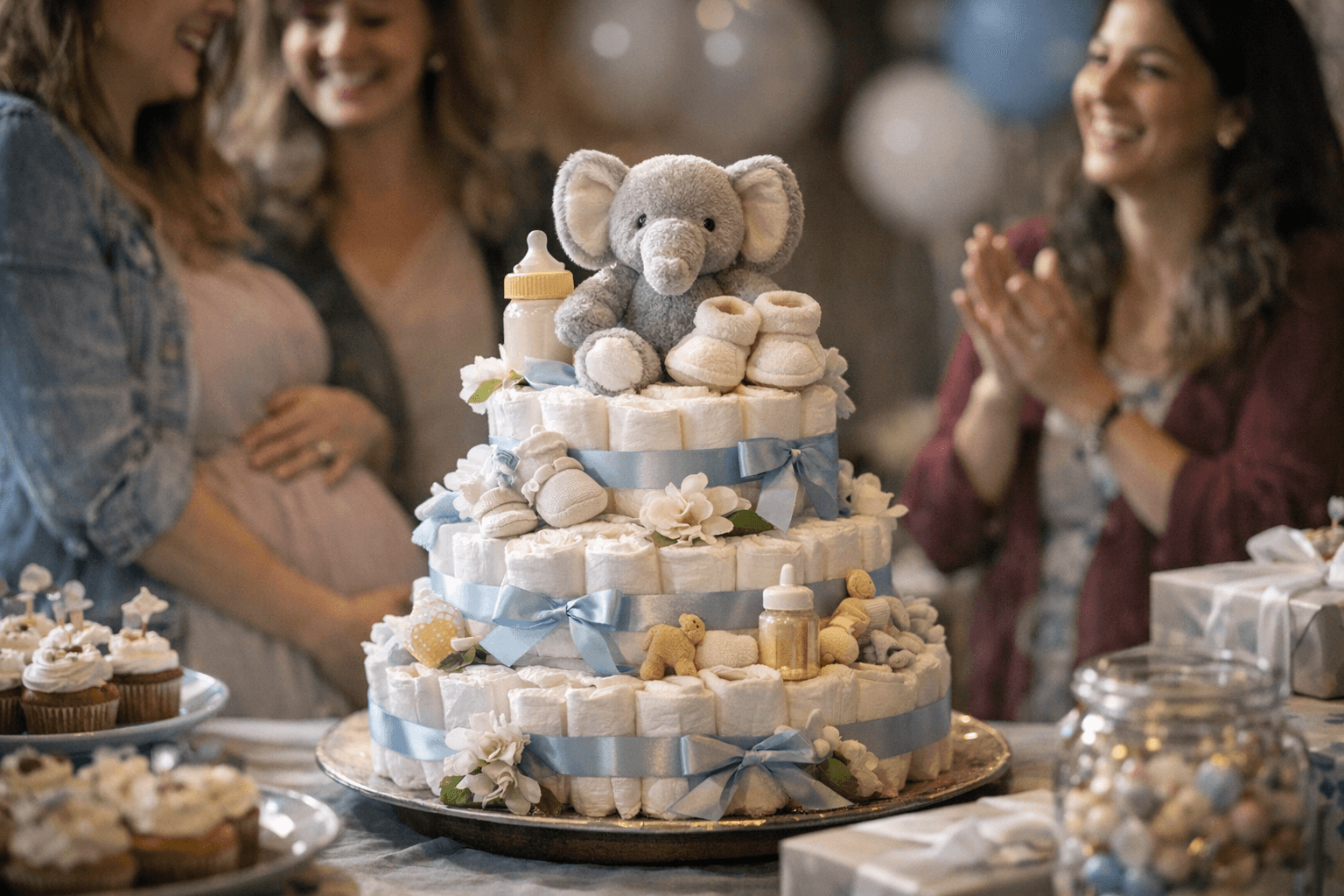
5. Top the structure with a single decorative item: a small stuffed animal, a onesie rolled to look like a flower, or a personalized keepsake.
The central tube serves double duty here. An empty paper towel roll works, but many builders use a bottle of baby lotion or shampoo, turning structural support into an additional gift hidden inside the cake.
Decorating for Maximum Photo Impact
The diaper cake's reputation as a photo-friendly centerpiece comes entirely from what happens after the tiers are stacked. Ribbon is the primary decorating material, and the choice of color, texture, and width dramatically changes the final look. Wide satin ribbon in nursery colors reads elegantly in photographs; thin twine gives a rustic, handmade quality; grosgrain ribbon lands somewhere in between.
Beyond ribbon, accessories tucked between tiers or attached to the outside transform a functional stack into something that looks genuinely designed. Common additions include:
- Rolled washcloths shaped into flowers
- Small board books with spines facing outward
- Pacifiers, teethers, or small bath toys
- Individually wrapped sweets or favors for shower guests placed at the base
Matching the cake's color palette to the nursery theme or shower decorations pulls everything together visually. A neutral palette works universally, while a bold scheme tied to a specific theme, woodland animals, under the sea, celestial, creates a cohesive table that photographs as a complete scene rather than a collection of separate elements.
Eco-Friendly and Modern Variants
The traditional rolled-diaper format has a contemporary counterpart gaining traction among environmentally conscious gift-givers. The Swaddle Cake app represents a newer wave of eco-friendly diaper cake planning, helping users design builds around cloth diapers, sustainable materials, and package-free accessories. The visual result is comparable to conventional builds, but the gift function shifts toward reusable items that carry long-term value well beyond the newborn stage.
Swaddle Cake-style builds often substitute:
- Organic muslin swaddle blankets in place of disposable diapers
- Natural fiber washcloths instead of synthetic accessories
- Bamboo or recycled cardboard structural elements
- Beeswax wraps or cloth bags as outer decoration in place of plastic-backed ribbon
The eco-friendly variant appeals particularly to parents who have specifically requested sustainable gifts or who plan to use cloth diapering systems. It requires slightly more planning since muslin blankets roll differently from structured diapers and the finished cake benefits from a tighter binding strategy, but the materials are typically softer in appearance and photograph with a warmer, more textured quality.
Practical Tips Before You Start
A few decisions made before construction save significant frustration during the build:
- Buy diapers in the size the parents actually need, not newborn. Size 1 and size 2 cover the 8-to-18-pound range and last months longer.
- Gather rubber bands, ribbon, a hot glue gun, and a cardboard base before you begin. Stopping mid-build to find supplies breaks the rhythm and risks structural instability.
- Build on a flat, stable surface and do not move the cake until all tiers are assembled and secured.
- Photograph the finished cake against a plain wall or draped fabric before bringing it to the venue; the shower table will be busier and harder to control for a clean shot.
- Wrap the finished cake in cellophane if transporting it by car, which protects both the shape and the accessories during transit.
The scale of the build should match the occasion. A modest two-tier cake suits an intimate gathering of close friends; a towering four-tier centerpiece makes sense for a large formal shower where the gift table is a visual destination in its own right.
The Case for Diaper Cakes as a Default Gift Choice
What makes the diaper cake a perennially reliable choice isn't novelty; parents have been receiving them for decades. It's the genuine efficiency of combining something the parent genuinely needs with something that makes the gift-giver look like they put in extraordinary effort. Tested tutorials from Pampers and WikiHow have refined the process to the point where a competent first-time builder can complete a three-tier cake in under two hours with basic craft supplies.
The addition of eco-friendly platforms like Swaddle Cake means the format has also evolved to stay relevant as gifting values shift toward sustainability. Whether built from a pack of size 2 Pampers and satin ribbon or from organic muslin swaddles and natural twine, the diaper cake remains the rare shower centerpiece that justifies every inch of table space it occupies long after the last guest goes home.
This article was produced by Prism’s automated news system from verified source data, official records, and press releases, then run through automated quality and moderation checks before publishing. The system is built and supervised by the people who set the standards it runs under. Read our full AI policy.
Did this article answer your question?