Food Project to host free community baby shower for Baltimore mothers
Free diapers, baby books and partner resources will anchor The Food Project’s baby shower in Southwest Baltimore, where infant health gaps remain a real pressure point.
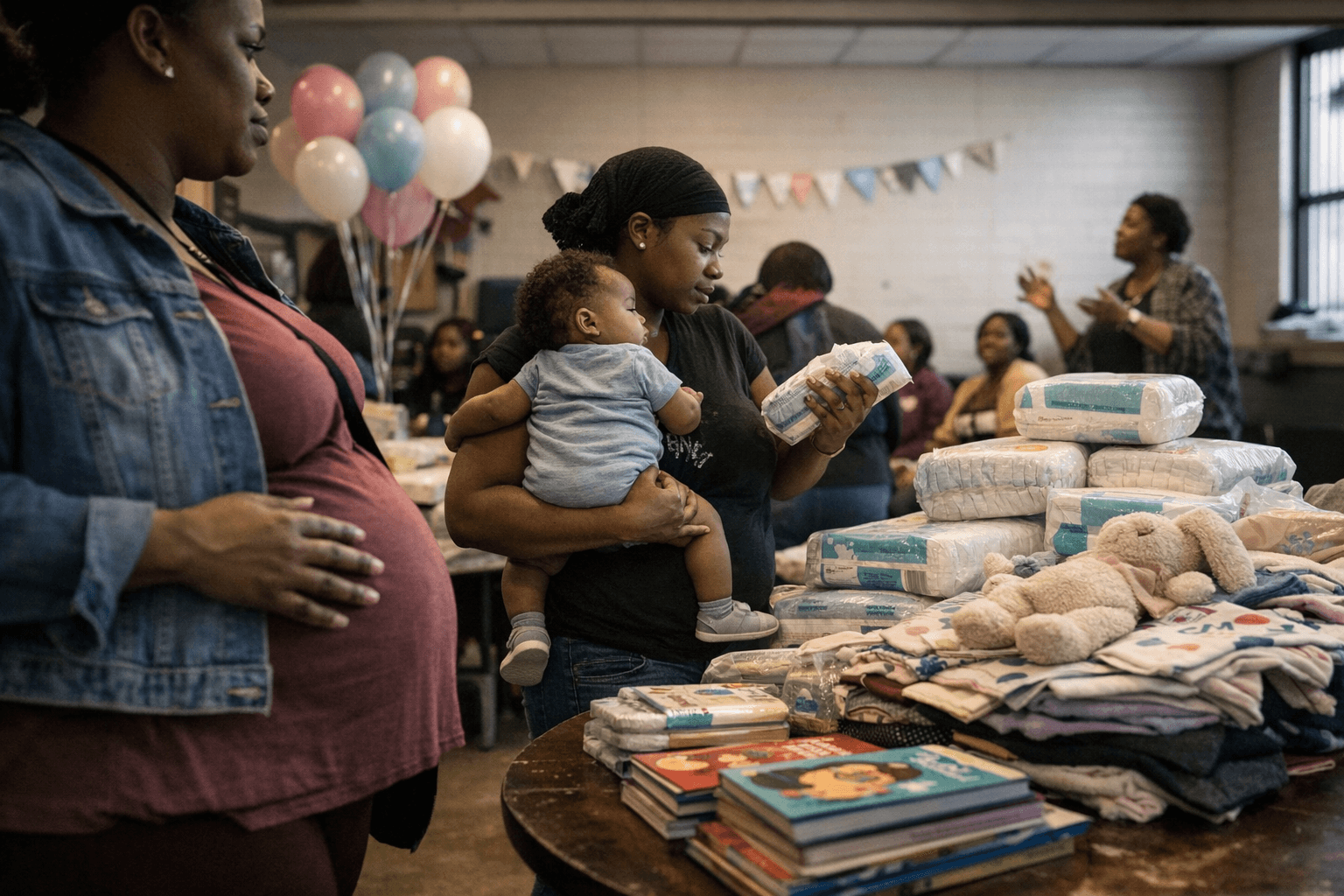
The Food Project is turning a baby shower into something closer to a neighborhood safety net. On April 26, the Southwest Baltimore group will host a free Community Baby Shower from 12 to 3 p.m. at 424 South Pulaski St., offering baby supplies, educational resources and support for new mothers without requiring sign-up.
The event matters because the first months after a birth can bring a long list of expensive basics, from diapers and wipes to clothes and books. By putting those items in one community setting, The Food Project is giving families a way to pick up essentials and information at the same time, in a place that is already part of the neighborhood’s daily life. AFRO described the shower as bi-annual, a sign that this is not a one-off outreach effort but a recurring format built to meet repeated need.
A previous Food Project baby-shower post sketched out how the model works in practice: a chef demo, a healthy meal, equipment supplies, diapers, baby clothes, baby books and resources from partner organizations. That mix shows why the format has become so common in community health and nonprofit spaces. It lets hosts create a welcoming event while also handing out items that families actually need and pointing parents toward services that can be hard to find or too expensive to reach.
The backdrop in Baltimore and across Maryland is serious. State health data show Maryland’s infant mortality rate has consistently run higher than the national rate, with persistent racial and ethnic disparities, especially for non-Hispanic Black infants. In Baltimore, Johns Hopkins has tracked a drop from 13.5 deaths per 1,000 live births in 2009 to 7.5 in 2021, the city’s lowest figure on record. B’more for Healthy Babies says Baltimore’s infant mortality rate fell 39% from 2009 through 2022, while the Black-white disparity fell 48% over the same period.
Public health data also point to the wider maternal-care gap. The U.S. Office of Minority Health said Black and African American infants were 95% more likely to die than infants nationwide in 2023, and Black and African American mothers were 49% more likely than mothers nationwide to receive late or no prenatal care. Against that backdrop, a community baby shower does more than distribute giveaways. It becomes a low-barrier way to connect mothers with support, resources and a reminder that infant care is a community responsibility as much as a private one.
This article was produced by Prism’s automated news system from verified source data, official records, and press releases, then run through automated quality and moderation checks before publishing. The system is built and supervised by the people who set the standards it runs under. Read our full AI policy.
Did this article answer your question?