How Community Baby Showers Became Powerful Public Health Outreach Tools
When diapers, referrals, and safe-sleep education converge in one room, a community baby shower stops being a party and becomes a measurable public-health intervention.
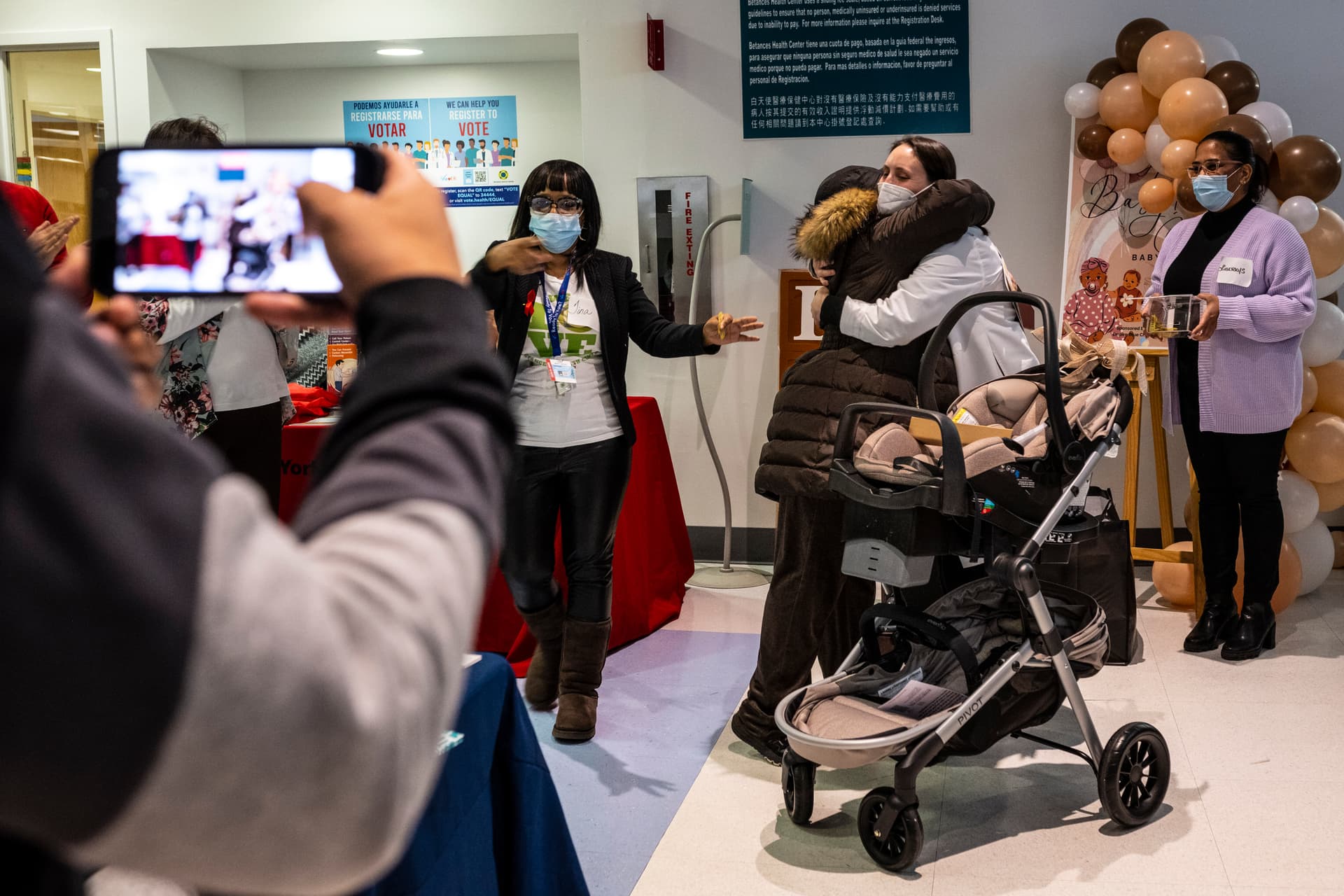
The pivot from party to program happened gradually, then all at once. What began as ad-hoc church donation drives and neighborhood gift-giving events has matured into an evidence-backed outreach model that simultaneously reduces material hardship, enrolls families into long-term services, and generates outcome data that can sustain years of grant funding. For nonprofits, health systems, and local governments ready to build one from scratch, the difference between a pleasant afternoon and a genuine public-health tool comes down to one thing: intentional design.
The Theory of Change
The logic underlying a well-run community baby shower is straightforward but must be stated explicitly before any planning begins. Material support, specifically diapers, safe-sleep surfaces, clothing, and feeding supplies, reduces immediate parental stress and eliminates proximate health risks. That relief creates a moment of trust and receptivity that community organizations can use to facilitate warm handoffs into lasting services: WIC enrollment, Medicaid and CHIP assistance, home-visiting programs, and lactation support. The arc from a single event to measurable improvement in early-childhood outcomes depends entirely on whether that second step actually happens, and whether anyone tracks it.
Attendance at a community baby shower improves knowledge about safe sleep and stated intention to provide a safe sleep environment, but intention only converts to behavior change when follow-up is baked into the program design. That distinction, closing the loop between a one-day event and a 90-day outcome, separates programs that produce impact from programs that produce goodwill.
In Kansas, where the state has ranked 40th among all states for infant mortality rates, and where African American infant mortality reached the highest rate in the nation, the KIDS Network made community baby showers a statewide infrastructure strategy. Participants who attended those events exhibited high levels of safe sleep knowledge and stated intentions to utilize most safe sleep recommendations following the shower. The KIDS Network subsequently expanded its community baby shower model to Spanish-speaking communities in a recognition that linguistic access is inseparable from health equity.
Planning and Logistics: The 8-to-12-Week Window
No single decision made on event day will compensate for poor pre-event planning. Organizers should begin building infrastructure at least eight to twelve weeks out, working through the following sequence.
1. Define goals quantitatively. Set a specific target reach, such as 150 families, and decide whether the event uses open-access or registration-based attendance.
Align every goal to a measurable outcome: referrals completed, percentage of attendees booked for follow-up services, diapers distributed. Vague goals produce vague impact reports that cannot justify renewed funding.
2. Choose a trusted venue. Sites that families already navigate, churches, community centers, schools, and health-system "Welcome Rooms," reduce the friction of first attendance.
Ensure full ADA compliance, proximity to public transit, and where feasible, transportation support through ride-hailing codes or vouchers.
3. Assemble a partner roster with defined roles. A functional partner list includes public-health agencies, WIC representatives, lactation consultants, mental-health providers, diaper banks or retail donors, and certified car-seat technicians.
Roles should be documented in writing before the event, including privacy expectations and the exact referral flow each partner will use.
4. Vet every donated product. Accept only new or clinically approved items, maintain a product acceptance checklist, and screen all donated gear against Consumer Product Safety Commission recall lists.
Establish a storage and distribution chain that preserves product integrity from receipt to handoff.
5. Build a HIPAA-compliant intake process. Brief intake forms should capture contact information, primary household needs, and explicit consent for follow-up contact.
Any clinical screening, such as depression screens or blood-pressure checks, requires signed consent and HIPAA-compliant data handoffs to clinical partners.
6. Recruit and train volunteers with precision. Assign volunteers to specific stations rather than general "helper" roles, and include translation capacity at every high-traffic point.
Volunteers responsible for post-event follow-up calls should receive separate training on motivational communication and referral pathways.
7. Run multilingual outreach early. Local radio, clinic flyers, and social media posts should appear at least four weeks before the event, with clear messaging about eligibility, transportation options, and what families can realistically expect to receive.
Event-Day Operations
The physical flow of the event determines whether families reach every resource station or leave after picking up diapers. A registration desk at arrival confirms eligibility, distributes printed maps, and provides a quick schedule of micro-session talks. Staggered arrival times prevent bottlenecks, and visible volunteer leads at each cluster keep traffic moving.
Resource pods work better than a single crowded table. Small, focused clusters dedicated to safe sleep, feeding and lactation, mental health, car-seat checks, and diaper distribution each need a standing volunteer and a single point person authorized to make warm handoffs on the spot. Connecting families with WIC nutrition education, lactation support, health plan enrollment, home-visiting programs, and safe-sleep and car-seat information under one roof is the structural advantage that separates a community baby shower from a standard distribution event.
Education sessions should run as short, repeated micro-sessions of 10 to 20 minutes rather than long plenary talks. Families arrive at different times and have children in tow; the format must accommodate that reality. Research has established that without a provided crib, most infants would not sleep in a safe environment, which underscores why the physical provision of safe-sleep gear at these events is not a frill but a clinical necessity.
Measurement: What to Collect and How
A minimum dataset for each event includes: total attendees, families receiving diapers, warm handoffs and referrals completed, and a 30-to-90-day follow-up call or survey measuring actual service uptake. These four data points are the foundation of any credible impact report.
Collecting that data ethically requires clarity at intake. Consent forms should state plainly that contact information will be used only for follow-up related to services discussed at the event. If a university or external evaluator is embedded as a partner, a formal data-sharing agreement should be executed before the event. Qualitative feedback, gathered through brief post-event surveys or focus groups, adds the cultural context that enrollment numbers cannot capture and is invaluable for refining messaging and station design in subsequent events.
Funding Models and Cost Benchmarks
Sustainable community baby shower programs rely on mixed funding portfolios. Grants, corporate product donations, local government contracts, and small-ticket event sponsorships each cover different cost categories. Implementers typically budget between $25 and $150 per family, depending on product mix and whether higher-cost safety items such as car seats or portable cribs are included.
Diapers are not covered by WIC or SNAP, requiring households to budget additional funds on top of increasing rents, utilities, food, and childcare costs, which makes diaper bank partnerships one of the highest-leverage cost-reduction strategies available. Embedding diaper distribution into broader wraparound services, working through networks that can include WIC clinics, family resource centers, and school districts, dramatically reduces cash outlay while expanding reach.
Risk Management
Three categories of risk require written protocols before any event opens its doors.
- Product safety: Every donated item must be cross-referenced against current CPSC recall lists and verified against manufacturer guidance. A single recalled item distributed to a family undermines trust and creates liability.
- Privacy and data protection: Any health-related data collected at the event, including referral records, screening results, or contact information linked to a health condition, falls under HIPAA and applicable state data-protection law. Assign a designated privacy officer for each event, even if that role is held by an existing staff member.
- Waivers and permissions: Car-seat installation events, raffles, and event photography each carry distinct liability considerations. Written waivers should be obtained for installations and photography; raffle consent should appear on the intake form.
Scaling Without Losing Trust
The innovations that allow community baby shower programs to grow without degrading quality share a common thread: they reduce friction while preserving the human relationship at the center of the model.
- Text-based mobile follow-up automates appointment reminders and check-ins for referred services without requiring additional staff time.
- Distributed distribution days replicate the resource-access function of the main event across multiple neighborhoods, reaching families who cannot travel to a central venue.
- University evaluation partnerships embed rigorous outcome measurement into program operations, producing the longitudinal data that justifies sustained government and philanthropic investment.
When in-person gatherings became impossible during the COVID-19 pandemic, programs pivoted to virtual community baby showers as a delivery mechanism, demonstrating that the model's core functions, education, referral, and connection, can survive format changes when the operational infrastructure is sound.
The programs that endure are built on three non-negotiable commitments: a complete and vetted partner roster, a measurement framework that begins at intake and closes at the 90-day follow-up, and a funding strategy diversified enough to survive the loss of any single revenue source. Everything else, the venue, the schedule, the giveaway items, is variable. The infrastructure is not.
This article was produced by Prism’s automated news system from verified source data, official records, and press releases, then run through automated quality and moderation checks before publishing. The system is built and supervised by the people who set the standards it runs under. Read our full AI policy.
Did this article answer your question?