QR Codes Solve the Baby Shower Photo-Sharing Problem
Baby-shower photos disappear fast unless you collect them on the spot. A QR code turns every guest into a contributor without app downloads, hashtags, or chasing texts later.
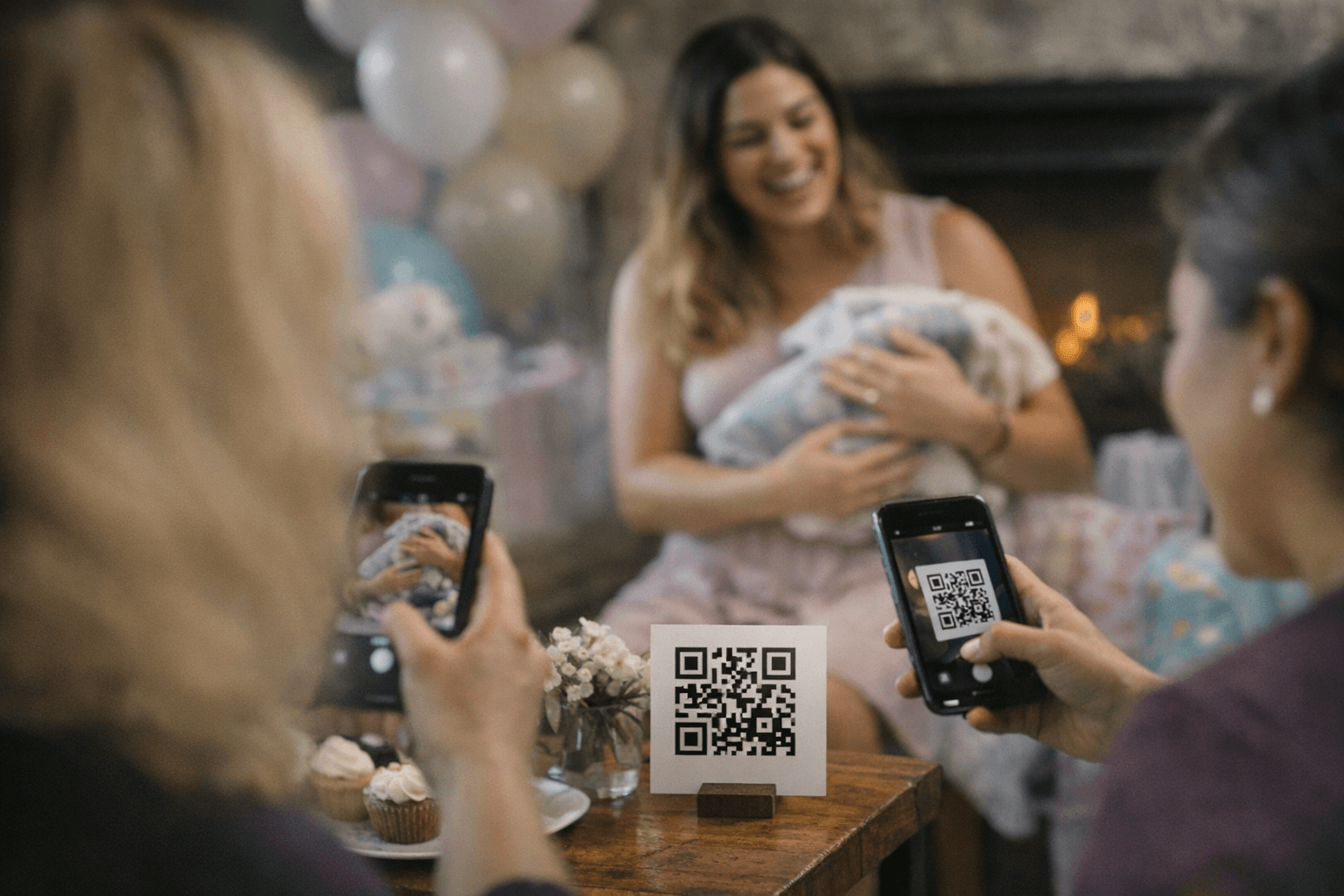
A baby shower can end with one ugly reality: the best moments are split across dozens of phones and never make it into one place. The host is usually too busy running games, greeting relatives, and keeping the drinks flowing to act like a roaming photographer, which is exactly why a simple QR code setup has become such a useful fix.
Why the photo problem keeps getting worse
Baby showers and bridal showers are built on candid moments, not staged group shots. Somebody catches the gift-opening reaction, somebody else gets the table laughter, and a third guest grabs the one photo everybody will wish they had later. Without a system, those images disappear into individual camera rolls, and the memory of the event ends up fragmented.
That is the gap PicTomo is trying to close with QR-based collection. The pitch is straightforward: print a QR code on the invitation, place it on tables, tuck it into the favor bag, or display it at the entrance, then let guests scan and upload their photos into one shared album during the event. Instead of hunting images after the fact, you build the archive while the shower is still happening.
How QR-based sharing removes the friction
The real advantage of QR codes is not novelty. It is that they cut out the annoying parts of event photo-sharing one by one. Guests do not need to remember a hashtag, start a group text thread, or know where to send pictures after they leave. They just scan, upload, and move on.
The Knot describes QR codes for wedding pictures as a way to share moments in one convenient place, with guests uploading photos and videos directly to a shared site. In one The Knot community example, a wedding using a QR-code photo-sharing app collected more than a thousand guest photos and videos. Another forum user said the setup worked without any app download for guests and that the pictures were ready by the next day. That is the kind of low-friction result hosts care about: fewer instructions, fewer excuses, and a finished album before the leftovers are gone.
Why the old options feel clunkier now
Disposable cameras still have charm, but they are expensive for what they deliver and awkward to manage once the party ends. You have to buy enough of them, place them carefully, wait for development, and hope somebody actually remembers to use them. For a baby shower, that is a lot of effort for a system that still does not guarantee a complete set of images.
Group texts and Instagram hashtags sound easier than they are. Group texts get messy fast, especially when photos, emojis, and side conversations start piling up, and social hashtags depend on guests actually posting in the right place at the right time. Many guests also do not use social platforms in a way that makes photo gathering effortless, which is why a dedicated upload workflow is more reliable than expecting everyone to behave like a content creator at a family event.
What makes the QR model work for mixed-age guest lists
The strongest argument for QR collection is that it fits the way people already use phones. Pew Research Center says U.S. adults use a wide range of social platforms, with YouTube and Facebook especially prominent, while teens remain highly active on TikTok, Instagram, and Snapchat. That mix matters because a baby shower often includes grandparents, cousins, coworkers, and younger guests all in the same room.
Even with that digital familiarity, not every guest wants to post publicly, join a hashtag, or mess with privacy settings. A scan-and-upload flow is simpler because it keeps the action private and event-specific. Guests are not being asked to curate a feed; they are just adding a few snapshots to a shared keepsake.

The setup that keeps the whole thing painless
The best QR workflow is almost boring in the right way. First, choose a photo-sharing plan or app, then name the album so guests know exactly where their uploads are going. After that, generate the QR code and print it clearly enough that nobody has to squint at a table card under bad lighting.
Placement matters more than people think. Put the code on the invitation if you want guests to be ready before they arrive, then reinforce it at the entrance and on table signs so nobody has to ask where to scan. If you include it in the favor bag, you also give latecomers and less tech-forward guests another chance to participate without feeling singled out.
The final step is the one hosts often skip: announce the system during the event. A quick explanation at the start of the shower is enough to tell guests that photos and videos should go into the shared album, not just into their personal camera rolls. After the party, download the full set right away so the collection is safely in your hands.
Why this fits baby showers so well
PicTomo’s point is bigger than one type of party. Baby showers, bridal showers, and bachelorette parties all share the same problem: intimate gatherings produce a lot of meaningful images, but nobody wants to manage a complicated media project while hosting. A QR code works because it captures the casual, in-the-moment shots without turning the celebration into an assignment.
That is also why the method feels more natural than it sounds. You are not asking guests to do extra work; you are making it easier for them to contribute. The host gets a more complete record of the day, and the guests get to keep enjoying the party instead of playing photographer.
The etiquette logic behind the trend
There is a simple social reason this works so well: etiquette exists to reduce friction. Britannica defines etiquette as a system of rules and conventions regulating social and professional behavior, and Emily Post remains the American name most associated with modern etiquette advice. A good photo-sharing system fits that tradition because it removes a small but real burden from guests and hosts alike.
That is the bigger story behind the QR code trend. Photo-sharing is no longer an afterthought bolted on after the balloons come down. It is part of the event design itself, and the best systems are the ones guests barely have to think about.
For baby-shower hosts, the practical answer is clear: use the QR code, make the instructions obvious, and collect the photos while the memories are still fresh. The celebration ends, but the album should not.
This article was produced by Prism’s automated news system from verified source data, official records, and press releases, then run through automated quality and moderation checks before publishing. The system is built and supervised by the people who set the standards it runs under. Read our full AI policy.
Did this article answer your question?