Barcelona fitness is walking-first, with swimming and strength training next
Barcelona's workout culture starts on foot. Walking leads by a wide margin, with swimming and strength training rounding out a city that moves in layers.
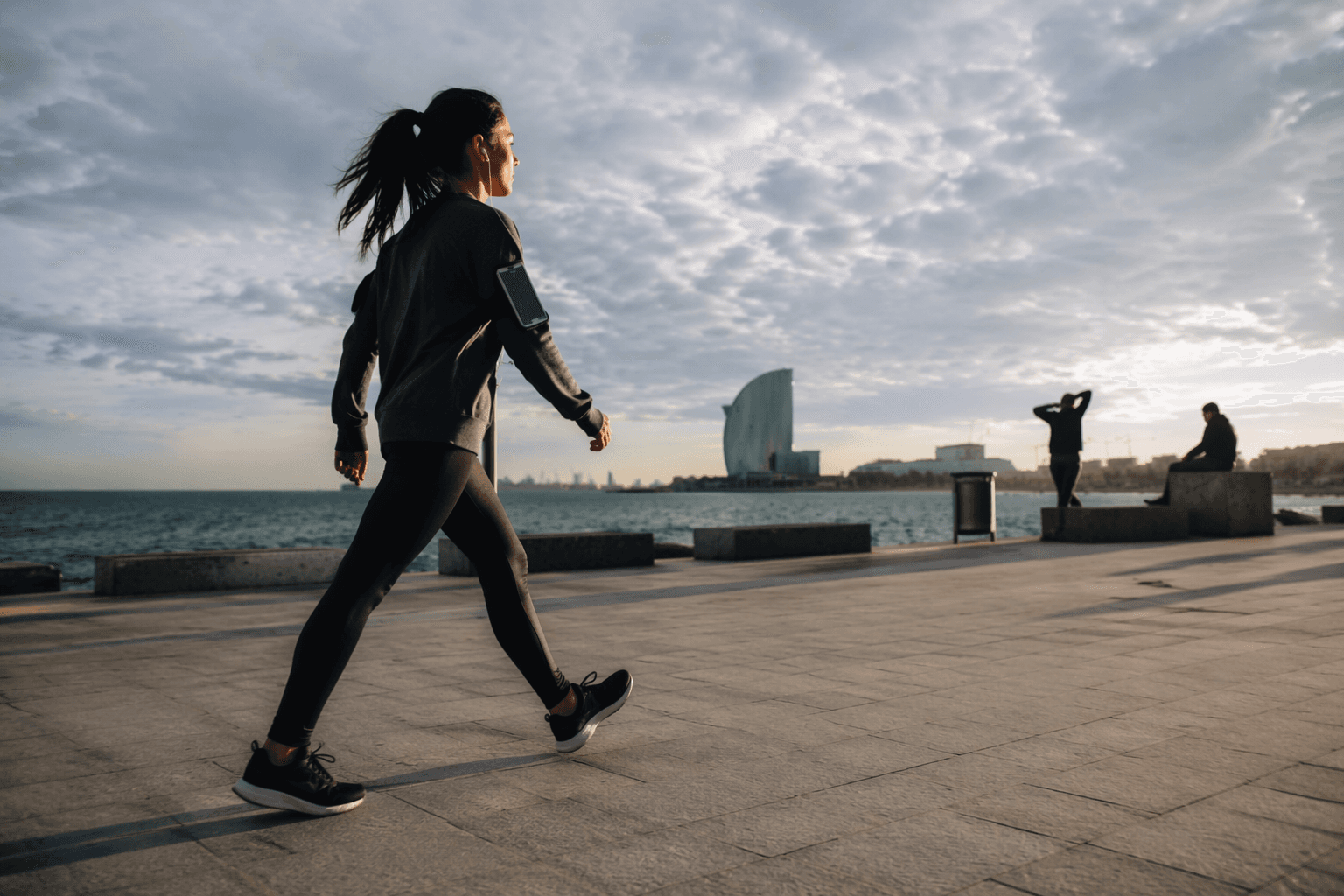
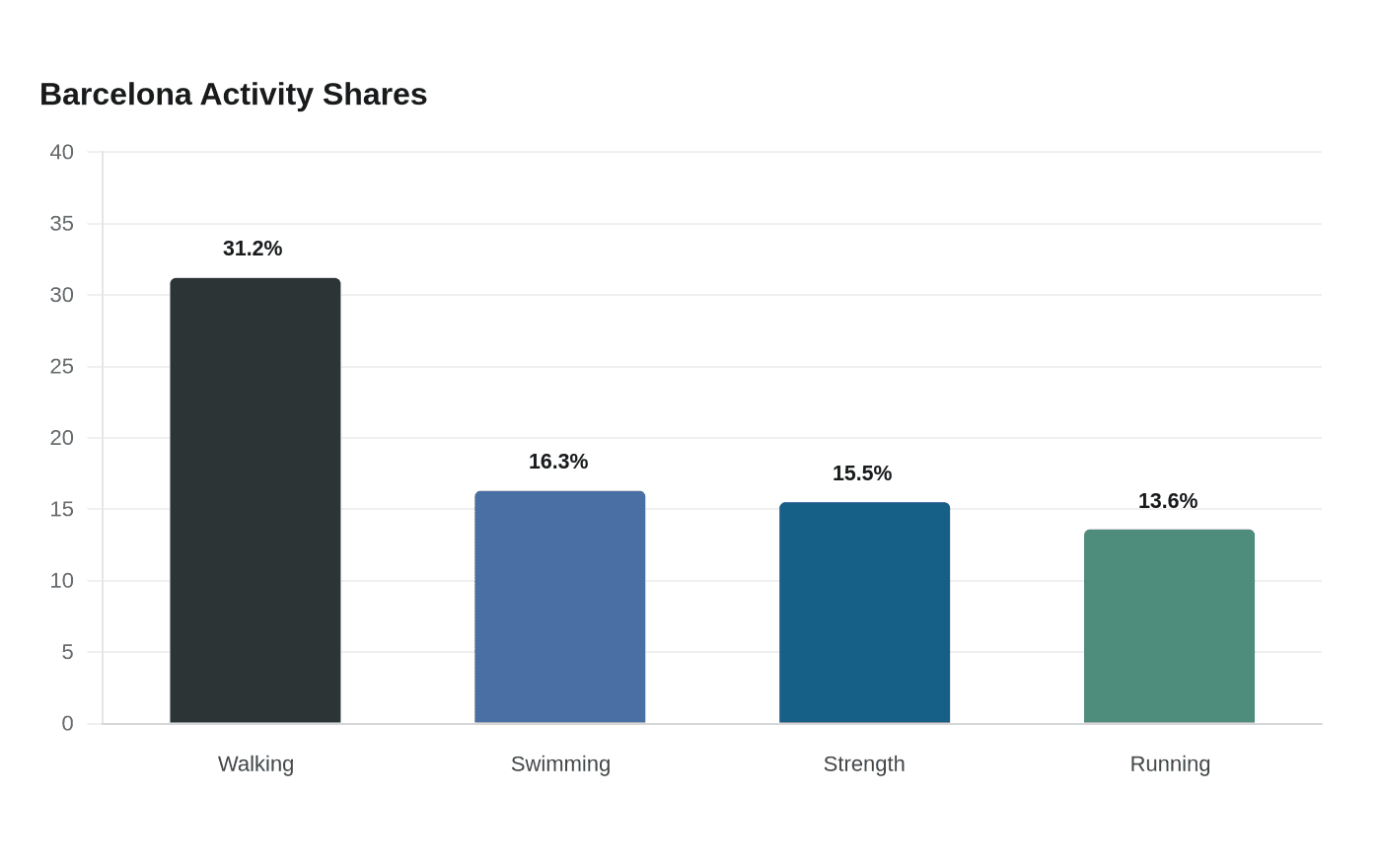
Barcelona is not a gym-first city. It is a walking-first fitness ecosystem, and the numbers make that plain: walking is the most common activity at 31.2%, ahead of swimming at 16.3%, strength training at 15.5% and running in the street at 13.6%. That mix tells you how residents actually stay active here, with everyday movement doing the heavy lifting and structured training filling in the rest.
How the survey frames Barcelona’s fitness culture
The cleanest read on the city comes from the Barcelona adult sports survey, which used 1,500 interviews with residents aged 17 and older. Fieldwork ran from May 9 to May 27, 2022, with a stated full-sample margin of error of ±2.7% at a 95.5% confidence level. The 2022 edition is directly comparable only with the 2017 survey, because earlier editions changed both the age range and the methodology over time.
That methodological detail matters because it keeps the 2022 result in proportion. The questionnaire was also shortened to make the survey more agile, so this is not a clone of older editions. It is still the best snapshot of how adults move in Barcelona now, because it captures a broad cross-section of residents while keeping the comparison with 2017 intact.
Why walking dominates the city
Walking at 31.2% is the headline for a reason. It sits far enough above every other activity that you cannot mistake Barcelona for a place defined by any single training style, and it explains why the city feels different from more gym-centric markets. The dominant behavior is not a boutique class, a heavy lifting split or a weekend running obsession. It is regular, low-friction movement that fits into daily life.
That is the key corrective insight for Barcelona fitness coverage: walking is not a side note. It is the volume driver. The city’s exercise culture looks the way it does because people can stay active without building their schedule around a gym session, which makes walking the most important entry point and the most reliable baseline.
Swimming and strength training form the next layer
Once you move past walking, the profile gets more interesting. Swimming at 16.3% and strength training at 15.5% sit close together, which suggests a city that values both endurance and conditioning rather than leaning hard into one model. Running in the street follows at 13.6%, still significant, but clearly not the whole story.
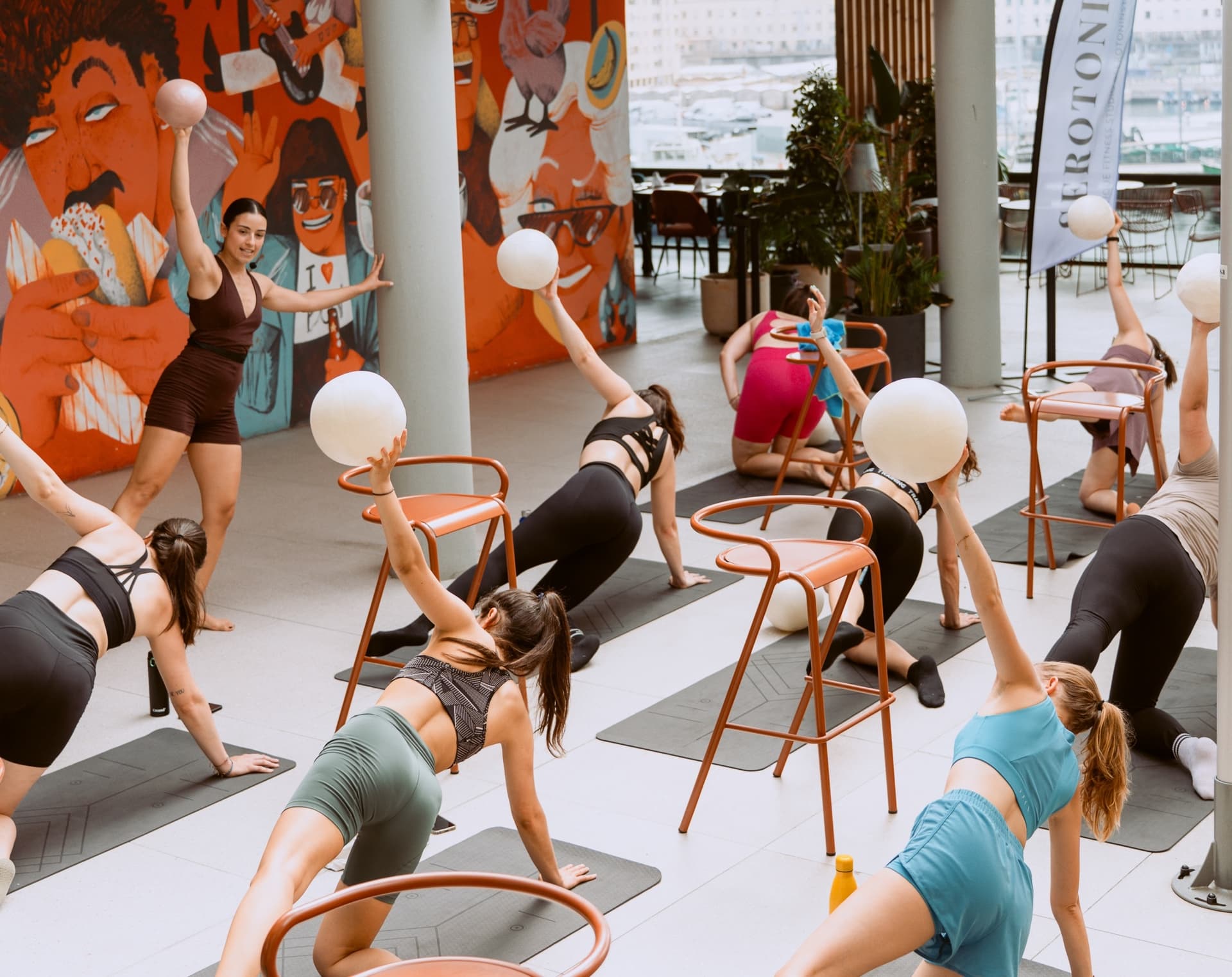
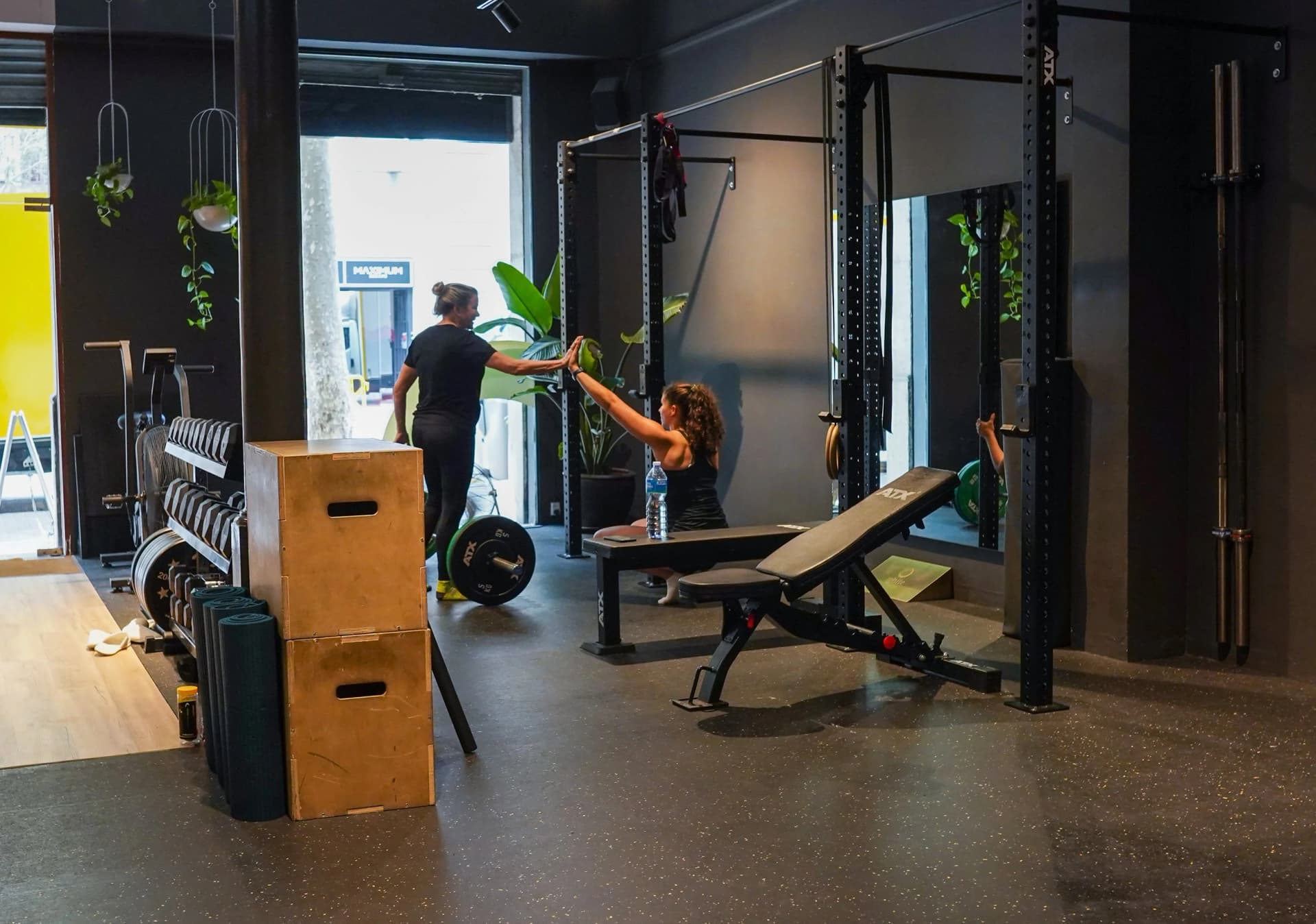
That combination matters because it shows Barcelona is not just an outdoor-running city either. Swimming brings a different rhythm and a different kind of facility use, while strength training points to a sizable indoor and equipment-based audience. Put together, the numbers describe a mixed-modality city where residents split their time between sidewalks, water and weights instead of clustering around one dominant training identity.
The infrastructure behind the habit
Barcelona’s own sports observatory exists to analyze and collate data so the city can monitor and evaluate its sports system continuously. That is useful because the activity mix does not happen by accident. The city describes its public sports network as broad infrastructure that makes sport more accessible to residents, and its public-space programming includes running circuits and walking routes that do not require complex equipment.
That is the physical backdrop for the survey results. If a city offers simple outdoor options that are easy to repeat, walking and running become part of the weekly routine rather than a special event. The point is not that Barcelona has no gyms. The point is that the city gives people more than one practical way to train, which is why low-barrier movement and more structured exercise can coexist so comfortably.
Who is doing what
The mix changes when you look at gender. A Barcelona City magazine piece tied to the same survey says that after brisk walking, women most often choose swimming and yoga, while men more often choose weight training and outdoor running. That split adds texture to the headline numbers, because it shows that Barcelona’s fitness culture is diverse overall and segmented in ways that matter for facilities, programming and coverage.
It also reinforces the idea that the city is not organized around a single fitness identity. Women’s activity patterns tilt toward water and mobility work after walking, while men’s lean more toward weights and street running. Those differences help explain why a broad public network matters so much: the city has to support a wide spread of habits, not just one type of athlete.
Barcelona’s place in the European picture
The city government says 66.7% of Barcelona residents do sport, a figure 17.4 points above the European average of 49%. That is the bigger context for the walking numbers. Barcelona is not merely active in an absolute sense. It is active relative to a broader continental baseline, and it does so with a structure that is unusually mixed for a major urban market.
That is why Barcelona fitness works best as a movement system rather than a single-discipline scene. Walking sets the pace, swimming and strength training give the city depth, and running remains part of the picture without taking over it. For anyone trying to understand the market, the useful lens is not “where are the gyms?” but “how does the city make motion easy enough that people keep doing it?”
This article was produced by Prism’s automated news system from verified source data, official records, and press releases, then run through automated quality and moderation checks before publishing. The system is built and supervised by the people who set the standards it runs under. Read our full AI policy.
Did this article answer your question?