Barcelona fitness participation reaches 66.4%, far above the European average
Barcelona’s fitness story is municipal, not mythic: 66.4% play sport, 17.4 points above the EU average, with men still ahead of women.

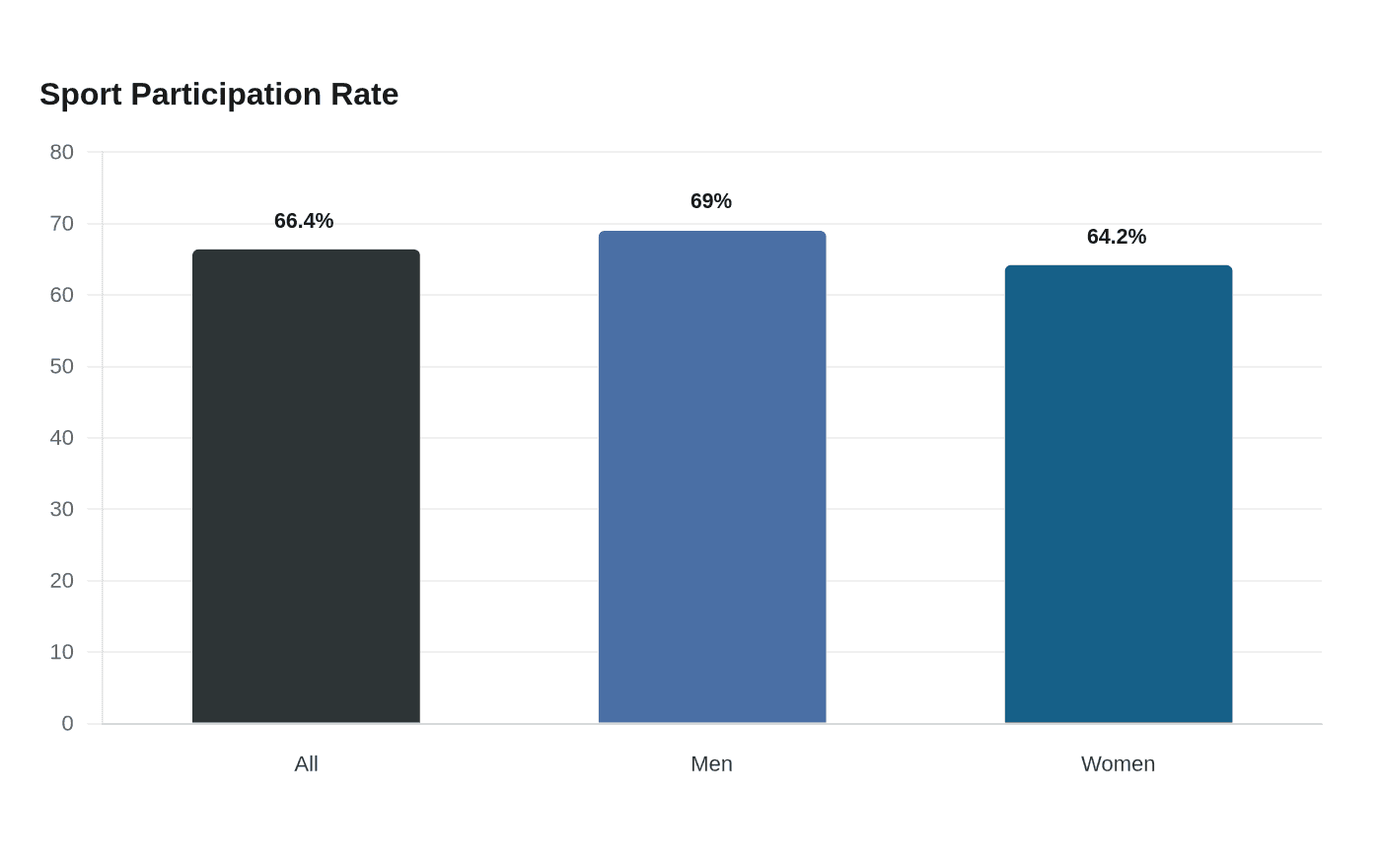
Barcelona likes to sell itself as a city that moves, but the cleanest way to read its fitness culture is through the city’s own survey numbers. In the 2022 Survey of Sports Habits in Barcelona, 66.4% of the people interviewed said they play sport, a rate that puts the city 17.4 points above the European average. The split by sex is just as useful for operators: 69.0% of men reported playing sport, compared with 64.2% of women.
What Barcelona’s survey is actually measuring
The Barcelona Institute of Sports, under Barcelona City Council, presented the survey as a way to look beyond vague lifestyle talk and into the machinery of participation. The city’s own summary says the study analyzes the profiles of Barcelona’s athletes, how sports facilities are used, and which physical activities are most commonly pursued. That makes it more than a one-off snapshot, because the same framework can be reused to track who is active, how often they are active, and where they go to do it.
The timing matters too. Fieldwork ran from 9 to 27 May 2022, and the presentation materials were published in December 2022. That gives Barcelona’s fitness sector a solid baseline, not a seasonal blip, and it makes the survey useful for comparing later years against a clearly dated starting point.
The headline number is high, but the mix matters more
A 66.4% participation rate sounds strong because it is strong. But the more practical number for gyms, trainers, and public facilities is the spread between groups, because that tells you where demand is already flowing and where there is room to grow. The sex split is modest, not dramatic, yet it is real: men are 4.8 percentage points ahead of women.
That gap is small enough to miss if you only look at the headline, and large enough to shape business decisions if you are filling classes or programming municipal space. If your timetable, coaching style, or facility layout only fits one type of regular participant, you are leaving part of the market under-served. Barcelona’s numbers say women are highly active already, but not quite at the same rate as men, which is exactly the kind of gap that can be narrowed with better scheduling, better access, and a stronger match between offer and audience.
Barcelona is not just above Europe, it is far above it
The biggest reality check in the data is the comparison with the European Union. Barcelona’s participation rate was 17.4 points above the European average in 2022, which is a large gap for any city to carry. The European Commission’s Special Eurobarometer 525 makes the contrast even sharper: 45% of EU respondents said they never exercise or play sport, 38% said they do so at least once a week, and 6% said they do so five times a week or more.
Barcelona sits in a different lane from that baseline, which is why the city’s fitness economy should not be built around the assumption that it is serving a mostly inactive population. The demand picture is closer to a market with a large active core than a city trying to drag people off the couch. For operators, that changes the playbook: retention, frequency, and activity fit matter more than basic awareness campaigns.
What gyms and local facilities should take from the data
Barcelona’s sports ecosystem is broader than private gyms. Public sports centers, neighborhood facilities, and outdoor activity spaces all coexist, and the survey is designed to show how those spaces are actually used. The Barcelona Sport and Physical Activity Observatory, part of the Barcelona Sports Institute, exists to collect information on practice rates, frequency, activity types, sports-consumption habits, and public opinion about sport. That is the right lens for planning because participation is only half the story; utilization tells you what kind of supply the city really needs.
For facilities and trainers, the practical lessons are straightforward:
- Build programming around actual participation, not assumptions about who belongs in the room.
- Track frequency as closely as membership count. The Observatory’s focus on practice rates and repetition is the difference between a crowded launch and a durable business.
- Match activity type to venue. The survey is built to identify the most commonly pursued physical activities, which is the kind of information that should guide floor space, equipment, and coaching specialisms.
- Treat public sports centers and neighborhood facilities as demand signals, not just civic amenities. If a district facility is full while another sits half-empty, the issue is usually offer design, not citywide appetite.
The survey’s value is that it gives Barcelona a civic baseline the industry can actually use. The Barcelona Sport and Physical Activity Observatory is already built to keep measuring the same behaviors, so future surveys can show whether participation stays high, whether the sex gap narrows, and whether the city’s public and private facilities are meeting the way people in Barcelona really train, not the way the city likes to picture itself.
This article was produced by Prism’s automated news system from verified source data, official records, and press releases, then run through automated quality and moderation checks before publishing. The system is built and supervised by the people who set the standards it runs under. Read our full AI policy.
Did this article answer your question?