Barcelona's Activa’t als Parcs brings outdoor fitness to public spaces
Barcelona’s parks are doing the work of a gym and a public-health clinic at once. Activa’t als Parcs pairs free classes with real measurement, and the numbers look strong.
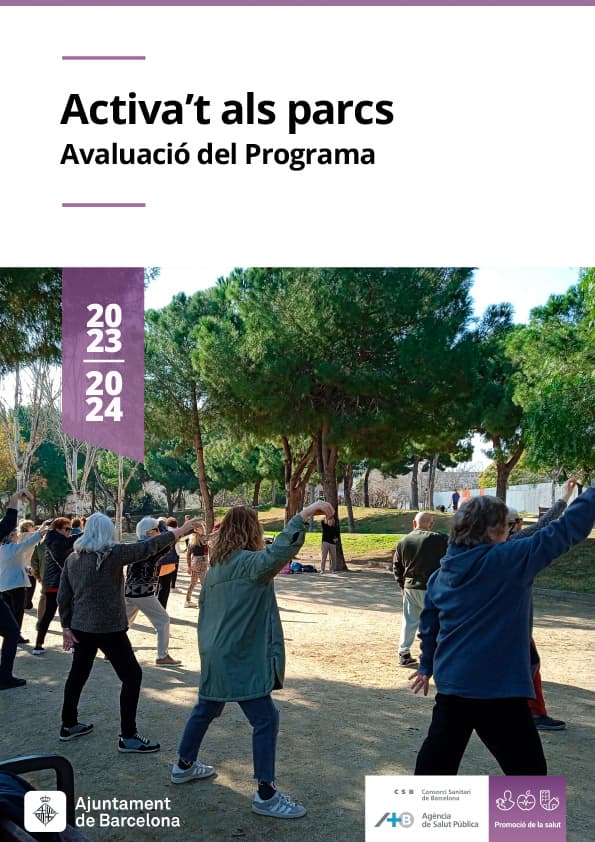
Barcelona has a low-cost fitness model hiding in plain sight: Activa’t als Parcs turns parks, gardens, plazas, and even beaches into places for guided exercise. Launched in 2008 by the Institut Barcelona Esports and run with the Agència de Salut Pública de Barcelona and the city’s environment team, it is one of the clearest examples of public space being used as health infrastructure rather than decoration.
How the program is built
Activa’t als Parcs is not a generic walk in the park. Barcelona schedules two weekly outdoor sessions, and they are intentionally different: one centers on tai-chi and chi kung, while the other adds motricity and memory work. That mix matters because it pushes the program beyond simple movement into balance, coordination, concentration, and light cognitive stimulation.
The city frames the activity as primarily aimed at people aged 40 and over, which makes sense for a preventive-health service built around consistency rather than intensity. At the same time, Barcelona says the activity is free and accessible to anyone, which is exactly why it works as a public option instead of a boutique-fitness product. If you are older, new to exercise, or simply unwilling to pay private-gym prices for a crowded room and a monthly contract, the barrier to entry is almost nonexistent.
Where it happens and who it serves
Barcelona does not limit the program to a single park or a polished flagship site. The city describes it as taking place across Barcelona parks and gardens, with some materials also placing sessions in plazas and beaches. That spread is part of the model: the classes are embedded in the city’s everyday geography, not hidden inside a sports complex.
Barcelona Esports Inclou describes the tai-chi and chi kung component in practical terms, emphasizing breathing, mental concentration, and movement. That description matters because it shows why the program appeals to people who do not want the pace, noise, or intimidation factor of a traditional gym floor. The result is a format that feels social and steady rather than competitive.
How Barcelona measures whether it works
The strongest thing about Activa’t als Parcs is that Barcelona does not treat it as a feel-good slogan. The Agència de Salut Pública de Barcelona evaluates it, and the 2023-2024 report spells out the method in plain terms: an online questionnaire gathered responses during July, August, and September 2024, and it asked participants about satisfaction with the monitor, the location, the schedule, the duration, and the frequency of sessions.
That is the right set of questions for a public program like this. If you want to know whether older adults and beginners will keep showing up, you do not just ask whether they “liked” exercise in the abstract. You ask whether the instructor was clear, whether the site was convenient, whether the timing worked, and whether the class length felt right. Those are the practical friction points that decide whether a free public program becomes a habit or a one-off.
The 2023-2024 report also lists the people behind the evaluation, including ASPB president and health councillor Marta Villanueva Cendán, ASPB manager Carme Borrell i Thió, and report leads Irene Garcia-Subirats, Marta Caballé, Sandra González, Silvia Martin, Cristina Rey, Nabila Sánchez, and Ferran Daban. Earlier material shows the program was created with support from the Consorci Sanitari de Barcelona in its 2008-2009 phase, which helps explain why the current model has such a strong public-health identity.
What the numbers say
The headline figure from ASPB’s 2024 summary is 1,334 enrolled participants across 20 parks. That is not pilot-project scale; it is a municipal service with enough reach to matter. ASPB also says satisfaction remained very high, especially with the instruction and monitoring, which is exactly where a program like this either wins trust or loses it.
The longer evaluation trail is even more useful. Earlier material reported that 73% of participants were doing more physical activity than before, 93% felt better after participating, and overall satisfaction scored 8.8 out of 10. ASPB’s later summaries say the 2022-2023 and 2023-2024 editions both found positive activity ratings and improved self-perceived health.
Those numbers point to three different outcomes, and all three matter. Participation tells you the program is reaching people. Adherence tells you the schedule and format are workable. Self-perceived health gives you the clearest signal that participants are not just showing up, they are feeling a difference.
Why this is more than a parks program
For older adults, the value is obvious. The classes are structured, low-pressure, and outdoors, which removes some of the financial and psychological friction that keeps people out of private gyms. For beginners, the tai-chi, chi kung, and motricity work is less about performance and more about establishing a routine that can stick.
The bigger point is that Barcelona is treating exercise as shared civic infrastructure. The city’s own public materials place Activa’t als Parcs inside a broader push to use streets, parks, and beaches for physical activity, and that is the part other cities should notice. A free class in a park is not a token wellness perk when it is measured, repeated, and embedded across neighborhoods. It is a public-health asset with a clear user base, a clear delivery model, and enough data behind it to justify keeping it open.
This article was produced by Prism’s automated news system from verified source data, official records, and press releases, then run through automated quality and moderation checks before publishing. The system is built and supervised by the people who set the standards it runs under. Read our full AI policy.
Did this article answer your question?