Barcelona’s CEM Can Dragó launches multi-sport summer camps for all ages
Can Dragó turns a public sports centre into a summer pathway system, with age-split camps from preschoolers to teens and facilities built for variety.
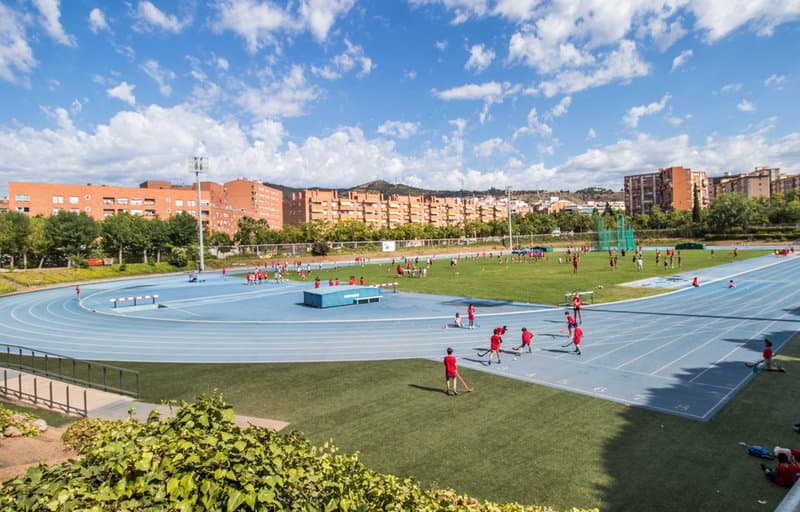
Can Dragó turns one municipal complex into a whole summer map for families. The Centre Esportiu Municipal Can Dragó lines up camps for preschoolers, children and teens, then backs that programming with a site built for indoor and outdoor activity under the same roof. The result is less like a single gym offering summer supervision and more like a public sports campus with distinct lanes for different ages and interests.
A public centre built around age bands
The clearest sign of Can Dragó’s approach is how precisely it segments children and teenagers. The summer programme runs from June 22 to July 31, 2026, and the menu of options is divided into a pre-campus for ages 3 to 5, a pre-rhythmic gymnastics pre-campus for ages 3 to 6, a multi-sport campus for ages 6 to 11, a youth campus for ages 12 to 17, and a specific rhythmic gymnastics campus for ages 7 to 17.
That structure matters because it gives the municipal network a way to follow children as they grow rather than treating every summer the same. A three-year-old and a thirteen-year-old do not need the same rhythm, the same coaching style or the same kind of confidence-building, and Can Dragó’s programming reflects that difference directly. Even within the same site, the offerings create separate tracks instead of one broad, catch-all camp.
- Ages 3 to 5: pre-campus
- Ages 3 to 6: pre-rhythmic gymnastics pre-campus
- Ages 6 to 11: multi-sport campus
- Ages 7 to 17: rhythmic gymnastics campus
- Ages 12 to 17: youth campus
The municipal summer-activities portal opened inscriptions for the pre-campus on April 13, 2026, giving families a long booking window before the school-holiday stretch begins. That early sign-up date is part of the logic here: the centre is not just filling weeks in July, it is competing for family planning time well in advance.
What the site gives each camp to work with
The campus works because the physical plant can support several sports at once. Can Dragó is described as a public, physically accessible facility, and its list of spaces includes an indoor athletics track, specialized rooms, multi-sport courts, a pitch-and-putt golf area, an indoor track area and covered pools. That mix lets the centre shift between structured training, free play and weather-proof activity without forcing every group into the same space.
One detail stands out in particular: the site includes a 2,967 m2 artificial lake. That gives the complex a recreational identity beyond the standard gym-and-pool formula and helps explain why the centre feels more like a campus than a conventional municipal sports hall. For families, that variety is part of the appeal because it widens the day’s options without requiring a second stop elsewhere in the city.
The practical details are straightforward too. The centre is at Carrer de Rosselló i Porcel, 7-11, in Porta, in the Nou Barris district of Barcelona. The municipal listing names AE Nou Barris-UBAE, also listed as Associació Esportiva Nou Barris, as the organiser of the summer programming, while the facility manager is UbaeFitness, SL. Contact information is also built into the listing, with Tel. 932760480 and the address atencioclients.candrago@eurofitness.com for client enquiries.

How the programming logic works
Can Dragó’s offer is a useful case study in how Barcelona’s municipal fitness network is changing what public sport is supposed to do. Access still matters, but access alone is no longer the full story. The centre is competing on tailored pathways, using age bands and discipline-specific formats to keep children moving through the municipal system rather than drifting toward private holiday camps or leaving sport altogether during the summer break.
The pre-rhythmic line shows that clearly. By opening a rhythmic gymnastics pathway as early as age 3, the centre gives very young children a first step into a discipline that can later continue through the specific rhythmic gymnastics campus for ages 7 to 17. The multi-sport campus serves a different purpose, offering breadth for children between 6 and 11 who are still exploring what they enjoy most. Then the youth campus gives 12- to 17-year-olds a separate summer space that recognises older kids need more than oversized versions of children’s activities.
That sequencing is the point. Barcelona’s municipal centres are no longer competing just by being nearby and affordable in the abstract. They are competing by making the summer calendar legible to parents, age-appropriate for children and flexible enough to absorb demand across several developmental stages at once.
Why Can Dragó sits inside a wider district calendar
Can Dragó also sits in a broader Nou Barris sports ecosystem rather than operating as an isolated summer island. The municipal directory includes the 39a Cursa Popular de Nou Barris, with children’s races and adapted races scheduled for June 6, 2026, which places the centre inside a district calendar that already links competitive sport, family participation and inclusion. That matters because it shows how the city uses its venues not just for recurring training but for community moments that build loyalty and familiarity over time.
The centre’s location in Porta gives it a neighbourhood role as well as a citywide one. In practice, that means Can Dragó functions as a seasonal anchor for nearby families who want their summer plans inside a public network they already know, while still offering enough differentiation to draw attention from outside the immediate area. The combination of public ownership, physical accessibility, specific age bands and multi-sport infrastructure makes it a strong example of where municipal fitness in Barcelona is heading.
Can Dragó is not simply opening its doors for summer. It is showing how a public sports centre can organise childhood, adolescence and family logistics into one coherent seasonal system.
This article was produced by Prism’s automated news system from verified source data, official records, and press releases, then run through automated quality and moderation checks before publishing. The system is built and supervised by the people who set the standards it runs under. Read our full AI policy.
Did this article answer your question?