From borrowed bike to 8,000 square meters, Club Delfos traces Barcelona fitness growth
From a borrowed bike and a worn dumbbell, Club Delfos became a Baix Llobregat landmark. Its next chapter shows why patience and community still beat hype.

The club that grew out of necessity
Club Delfos did not begin like a polished startup. It began in Cornellà de Llobregat in 1982 with a borrowed bike, two chairs and a worn dumbbell, the kind of bare-bones setup that says more about determination than capital. Matias Polo’s account of those early days is a reminder that many of the strongest clubs in Catalonia were built because somebody saw a local need and kept showing up.
That makes the Delfos story unusually useful for understanding how the Barcelona-area fitness market matured. Polo’s version of the club’s early years is not about quick wins or flashy positioning. It is about piecing together growth one step at a time, financing expansion through relentless effort and repeated borrowing, and learning to treat fitness as a long local relationship rather than a fast-moving consumer play.
From local room to municipal reference
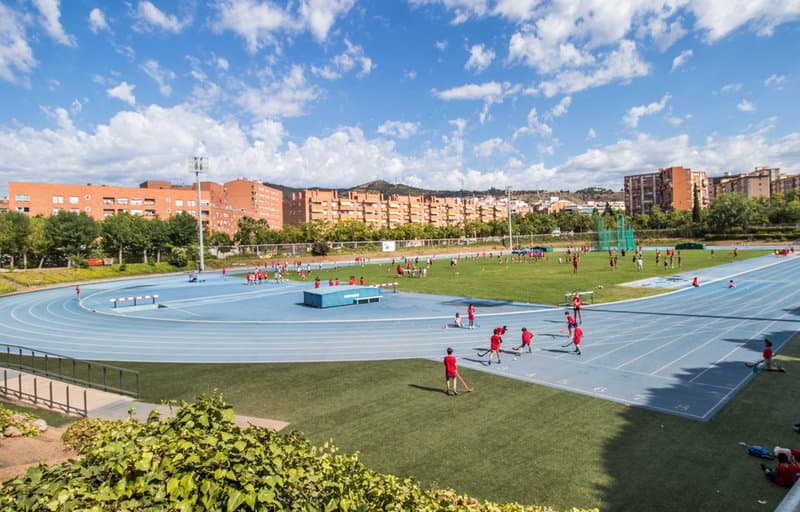
Over time, the club expanded from that tiny start into a facility of more than 8,000 square meters and a member base of more than 2,400 people. What matters is not just the size of the footprint, but the way that growth was tied to the town around it. Polo describes the club as something closer to a community service than a narrow commercial gym, and that distinction helped Delfos become embedded in the life of Cornellà and the wider Baix Llobregat.
That local role was not accidental. The early customer base was women, and the business grew through municipal activity, word of mouth and consistency rather than a single explosive launch. In a market that often celebrates speed, Delfos built trust the slower way, by becoming familiar, reliable and useful to the people around it. That is one reason the club could celebrate its 44th anniversary this March while still feeling current rather than nostalgic.
Cornellà itself has changed dramatically since 1982. Idescat puts the municipality at about 92,000 residents today, a much larger base than the city had when Delfos opened its doors. That growth matters, because it helps explain how a club founded in a smaller urban setting could scale alongside a commuter belt that kept thickening around Barcelona.
Why Club Delfos became a local institution
The most revealing part of Polo’s interview is not the size of the club now, but the discipline behind how it was built. He says the project was born out of necessity, not a finished business plan, and that he ended up requesting 29 loans to keep expanding. That detail captures the reality many founder-led clubs live with: growth is possible, but only when ambition is matched by tenacity, cash management and a tolerance for long payback periods.
Polo also argues for what he calls strategic patience, especially when bringing in trends. That idea is central to Delfos’ story. A club that wants to stay relevant has to evolve, but it cannot chase every new format or promise without regard for local habits, price sensitivity and trust. Delfos survived by adapting carefully, not by reinventing itself every few years.
The club’s own identity reflects that balance. It describes itself as a local reference not only in Cornellà but across the Baix Llobregat, and presents itself as an open, modern and innovative sports club focused on physical activity, sport and health. In practice, that means Delfos has been able to stand for continuity and reinvention at the same time, a combination that is hard to pull off and even harder to sustain.
What Claror’s acquisition says about the market
The next chapter for Delfos came when Claror reached an agreement with Matías Polo Palau to acquire the club. For Claror, the deal is more than a property transaction. It expands the foundation’s footprint into the Baix Llobregat for the first time, after years of concentrating its activity in Barcelona city and the Vallès Oriental.
That territorial shift matters because Claror is not a standard for-profit chain. It is a private non-profit Catalan entity founded in 1989, built around promoting sport, health and leisure for everyone. Gabriel Domingo, Claror’s director general, said the acquisition fits the foundation’s club typology, which is a telling phrase. It suggests that Delfos is being absorbed not simply as an asset, but as a club whose community role still matters.
This is where the Delfos story becomes a guide to the broader industry. In a consolidating market, the strongest acquisitions are often the ones that preserve identity instead of flattening it. A club with a known local role, a stable membership base and a history of service can be more valuable than a flashy growth story with no roots.
The wider fitness backdrop in Spain and Europe
The market context helps explain why this deal makes sense now. BDO’s 2024 Spanish fitness outlook found that more than nine in ten companies expected to improve revenues versus the prior year, and 95 percent believed 2025 would be good or very good for business. Those are strong confidence signals, but they sit alongside an unmistakable concentration trend.
BDO also reported that the 50 largest gym chains in Spain controlled more than 2,200 clubs, equal to 44.9 percent of all locations, up from 26 percent in 2017. That is a major shift in market structure. Independent clubs still matter, but the competitive field is increasingly shaped by groups with scale, capital access and the ability to spread risk across a larger portfolio.
The same pattern appears across Europe. EuropeActive and Deloitte said 2023 was a record year for European fitness, with revenues up 14 percent, memberships up 8 percent and club numbers up 1 percent. EuropeActive said the continent reached almost 68 million health and fitness members, above pre-pandemic levels. In other words, demand is healthy, but the value is concentrating in fewer hands.
What founders can learn from Delfos
Delfos offers a playbook that cuts against the easy startup narrative. Its lesson is not that every club must stay small, or that scale is bad. It is that scale only works when it grows out of trust, consistency and a clear role in the community.
The most practical lessons are straightforward:
- Build from a real local need, not from a generic concept. Delfos started because there was room for a club that fit Cornellà, not because it was copying a trend.
- Treat community activity as part of the business model. Municipal involvement and word of mouth were not side effects for Delfos, they were the engine of its credibility.
- Grow with financial discipline. Polo’s reference to 29 loans is a warning as much as a badge of persistence. Expansion without control can turn resilience into fragility.
- Introduce trends carefully. Strategic patience is not passive. It is the ability to adapt without breaking the club’s identity.
- Know when institutional scale can protect legacy. In a more consolidated market, a well-matched acquisition can preserve a club’s role better than trying to fight the entire cycle alone.
Club Delfos shows that the best fitness businesses are not always the loudest or the fastest. In Barcelona’s more mature market, the clubs that last are often the ones that learn how to serve a place first, then grow from there.
This article was produced by Prism’s automated news system from verified source data, official records, and press releases, then run through automated quality and moderation checks before publishing. The system is built and supervised by the people who set the standards it runs under. Read our full AI policy.
Did this article answer your question?