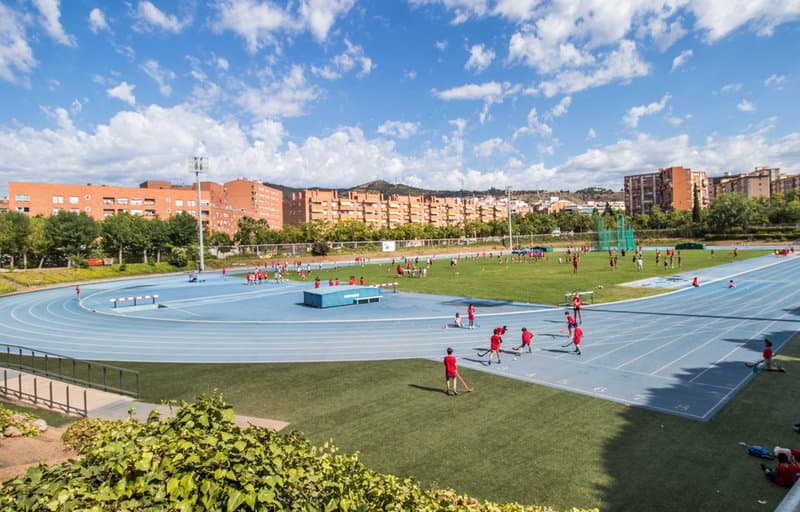
Nagora Fitness Barcelona bets on functional training and variety over monotony
Nagora Fitness is betting that boredom, not effort, is the real enemy. In Poblenou, it mixes functional training, natural props, and guided variety into a gym that feels curated, not generic.
Nagora’s real sell is not fitness. It is escape from repetition.
Nagora Fitness is trying to solve a problem almost every regular gym-goer knows too well: the routine gets stale long before the membership does. Its pitch is built around functional training, HIIT, strength work, and mobility sessions, but the sharper part of the offer is the promise that training will not feel like the same loop repeated for months. That is a smart way to position a gym in Barcelona, where competition is crowded and a lot of facilities still fight on price, class count, or pure convenience.
What Nagora is selling is variety with structure. The gym says its programming is guided and individualized, adapted to each user’s needs and goals, and it extends that promise to a wide range of people, from active users to sedentary newcomers and even gym-averse beginners. That matters because functional fitness only works as a product when it feels coached rather than improvised. The appeal is not just that you move differently. It is that someone is shaping the movement so each session feels like progress instead of punishment.
The floor plan is part equipment, part branding.
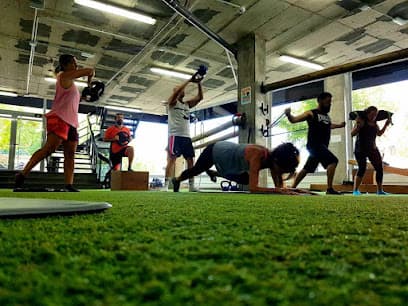
Nagora’s identity depends on a deliberately mixed environment. The site says it fuses the urban and the natural, pairing conventional gym equipment with logs, stones, and ropes, and it uses artificial turf to reinforce that in-between feel. That combination is not accidental decoration. It is the physical expression of the brand’s message that training should feel more alive than a room full of treadmills and machines.
This is where the concept becomes interesting from a product standpoint. Logs and stones do not invent a new training method, but they do change the emotional texture of the workout. They make the space feel more like a curated training ground than a standard weight room, and that can be enough to persuade people who are bored by linear, machine-heavy gyms. The practical upside is simple: the gym can frame the same core disciplines, functional training, HIIT, strength, and mobility, in a setting that feels fresher and less mechanical.
The strongest version of the Nagora pitch is not that it is radically different. It is that it knows exactly how to make familiar training formats feel less interchangeable. In a boutique market, that is often the difference between a concept people admire and a gym they actually join.
Poblenou gives the concept a useful backdrop.
The location at Carrer de Bac de Roda, 120, 08019 Barcelona is not a random address. Nagora sits in Poblenou, inside Sant Martí and near Barcelona’s eastern seafront, in a neighborhood that has long traded on its shift from industrial past to modern mixed-use district. That matters because Nagora’s nature-meets-urban language fits the area’s identity almost too neatly. It feels designed for a part of Barcelona that already blends old fabrication, new housing, creative businesses, and a strong outdoor streak.
That is also why the aesthetic lands. In a district where the urban grid meets the sea and where the neighborhood story is about reinvention, a gym that talks about natural elements inside an urban frame does not feel like random theme dressing. It feels locally legible. The turf, the ropes, the logs, and the stones all help Nagora look less like a generic boutique studio and more like a place that belongs to the neighborhood’s current identity.

Still, fit is not the same thing as differentiation. Poblenou’s context makes the story easier to believe, but it does not automatically make the product rare. That distinction matters, because in a district this recognizable and a city this competitive, branding can create the first visit; only the training experience can earn the second.
The market is crowded, which raises the bar.
Barcelona is not short on functional-training options, and that is exactly why Nagora’s positioning deserves a closer look. Urban Sports Club lists many functional-training venues across the city, which tells you the segment is established rather than niche. In that kind of market, a gym cannot rely on category alone. It has to sell a sharper reason to choose it over the next place offering circuits, coaching, and sweat.
Nagora seems to understand that. Instead of presenting functional training as a trendy label, it packages it as an experience-led system built around guided programming, constant variation, and social warmth. The gym also emphasizes community and belonging, framing the space more like a welcoming club than a sterile training box. That softer positioning is useful because it turns a workout decision into a lifestyle decision, which is exactly how boutique fitness survives when the category gets crowded.
From a practical angle, that makes Nagora’s proposition easy to explain and easy to market. People who want performance can see the strength and mobility work. People who want weight loss can latch onto HIIT and consistency. People who mainly want motivation can respond to the sense that every session will feel different. Functional training is resilient because it can speak to all three groups without changing its core identity.
The numbers suggest the message is landing.
Social proof is where the brand’s promise starts to look less like marketing copy and more like lived experience. Urban Sports Club lists Nāgora Fitness Sant Martí with a 4.9 rating from 44 reviews and a starting price from 33 euros per month. Trustindex shows a 4.8-star rating for Troba't Nagora Fitness based on 108 reviews. Those are not huge data sets, but they are strong enough to suggest that the concept is resonating with actual users, not just with people browsing for a niche gym.
The review pattern reinforces the same themes Nagora pushes on its own site: unique atmosphere, stronger motivation than a typical neighborhood gym, and training adapted to different levels. That is important because it confirms the product from the customer side. Anyone can say they are welcoming, flexible, and individualized. Fewer gyms can make enough people repeat those ideas in public reviews that the promise starts to sound credible.
The final read on Nagora is straightforward. It is not trying to outprice the competition or outgun it on machine count. It is trying to make functional training feel fresher, more social, and less monotonous, with a nature-meets-urban identity that suits Poblenou better than a generic downtown studio ever could. In a mature Barcelona fitness market, that is not category invention. It is sharper branding built on a product people can actually feel.
This article was produced by Prism’s automated news system from verified source data, official records, and press releases, then run through automated quality and moderation checks before publishing. The system is built and supervised by the people who set the standards it runs under. Read our full AI policy.
Did this article answer your question?