ACME expands Duqm green hydrogen project with $4.2 billion investment
ACME added $4.2 billion to its Duqm green hydrogen buildout, with each new phase targeting 71,000 tonnes of hydrogen and 400,000 tonnes of ammonia a year.
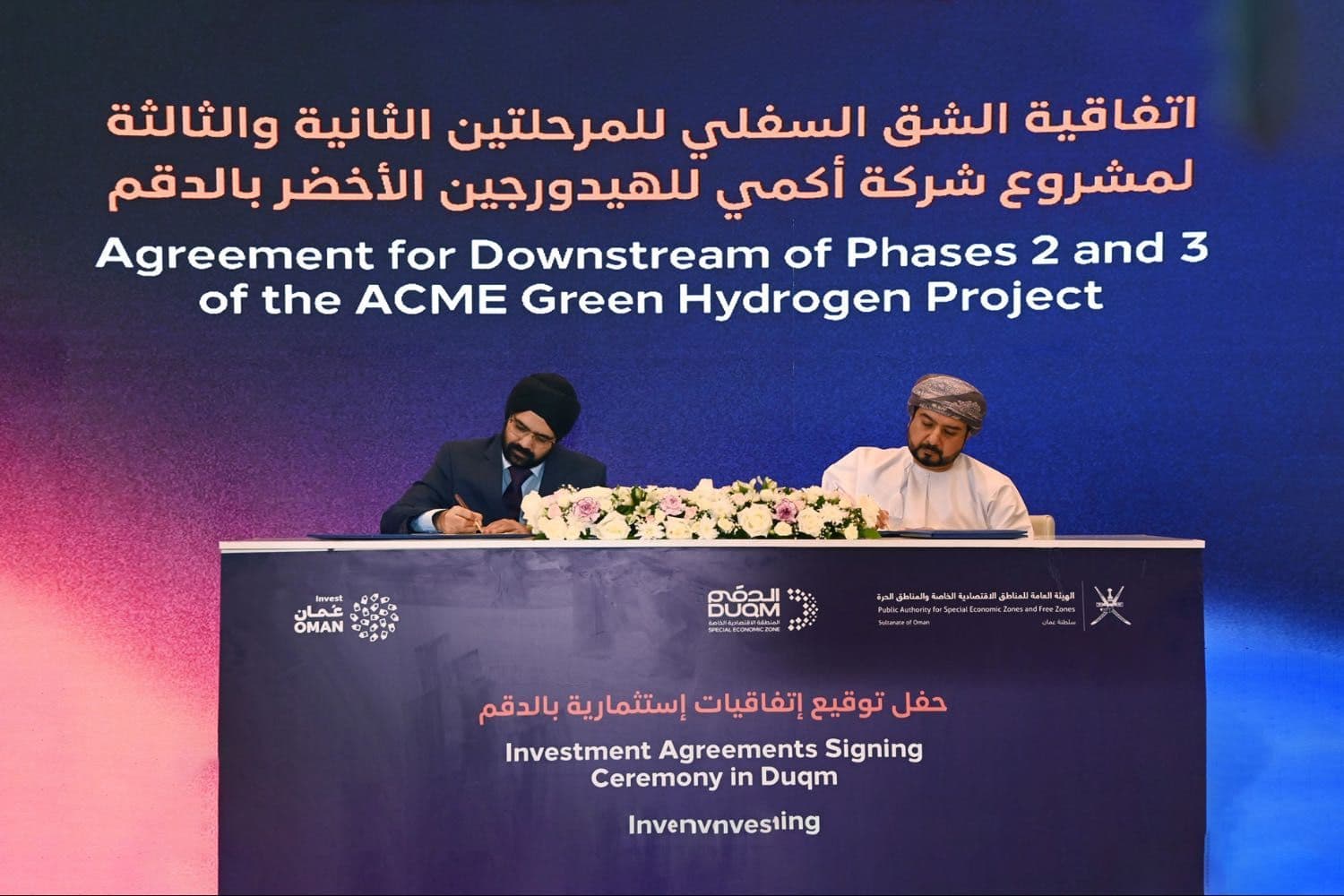
ACME Group on June 18 signed a $4.2 billion investment agreement for phases 2 and 3 of its Duqm green hydrogen project. The expansion will cover 10 square kilometers and is projected to produce about 71,000 tonnes of green hydrogen and 400,000 tonnes of green ammonia annually per phase.
The deal landed inside a broader June 2026 investment push in the Special Economic Zone at Duqm, where the Public Authority for Special Economic Zones and Free Zones said it signed 10 investment agreements and memoranda of cooperation worth about OMR 2.9 billion, or $7.5 billion. The package spanned clean energy, industry, tourism, logistics and housing, and kept Duqm at the center of Oman’s push to turn the port and industrial zone into an export platform for green molecules.

The second and third phases were formally brought under Hydrogen Oman’s framework on May 18, 2025, when OPAZ, Hydrom and ACME Group signed project development and land usufruct agreements for the project. ACME’s first phase is already under construction in Duqm and is designed to produce 100,000 tonnes of green ammonia a year, with commissioning described as due by late 2026 or in the first quarter of 2027.

The first phase has also been tied to a $540 million funding package, with ACME saying it received a first tranche of $140 million, and the project is backed by an offtake agreement with Norway’s Yara International. That financing structure, together with long-dated export volumes and state-backed land access, shows why Oman is still able to pull multibillion-dollar commitments into Duqm while SAF, renewable diesel and e-fuels developers continue to compete for the same project capital, infrastructure and offtake support.
This article was produced by Prism’s automated news system from verified source data, official records, and press releases, then run through automated quality and moderation checks before publishing. The system is built and supervised by the people who set the standards it runs under. Read our full AI policy.
Did this article answer your question?