Aether Fuels advances Project Beacon to de-risk sustainable aviation fuel scale-up
Project Beacon is moving from pilot to plant, but Aether still has to prove feedstock supply, uptime and offtake before the SAF concept becomes bankable.
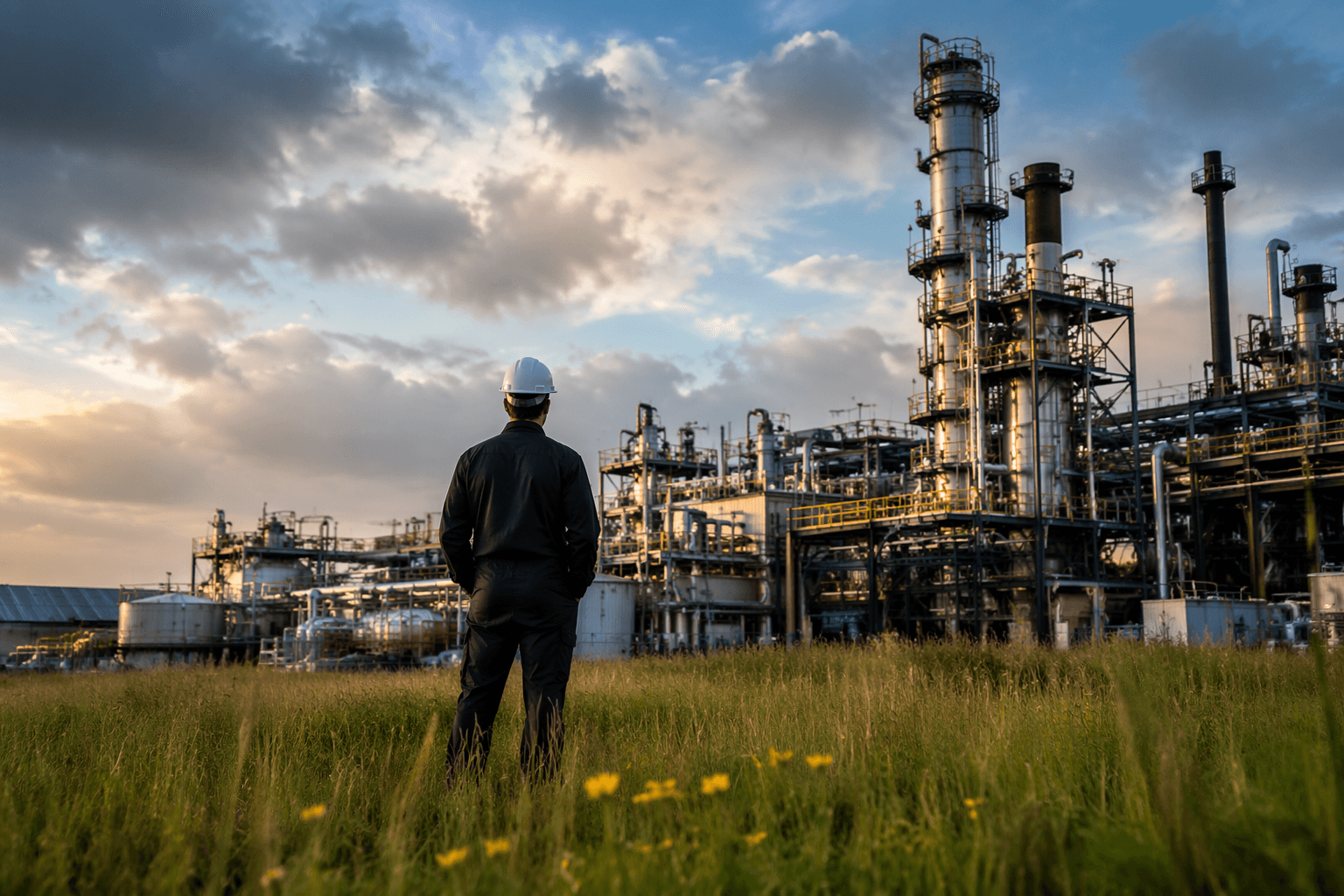
Aether Fuels on May 19 moved Project Beacon into a more commercial frame, pairing a 50-barrel-per-day demonstration plant with a site, a feedstock slate and a customer strategy meant to test whether next-generation SAF can move from engineering case study to investable deployment. The project is small by commercial SAF standards, but that is the point: it is designed to prove process reliability, feedstock flexibility and financing logic before a larger buildout.
What Beacon is trying to prove
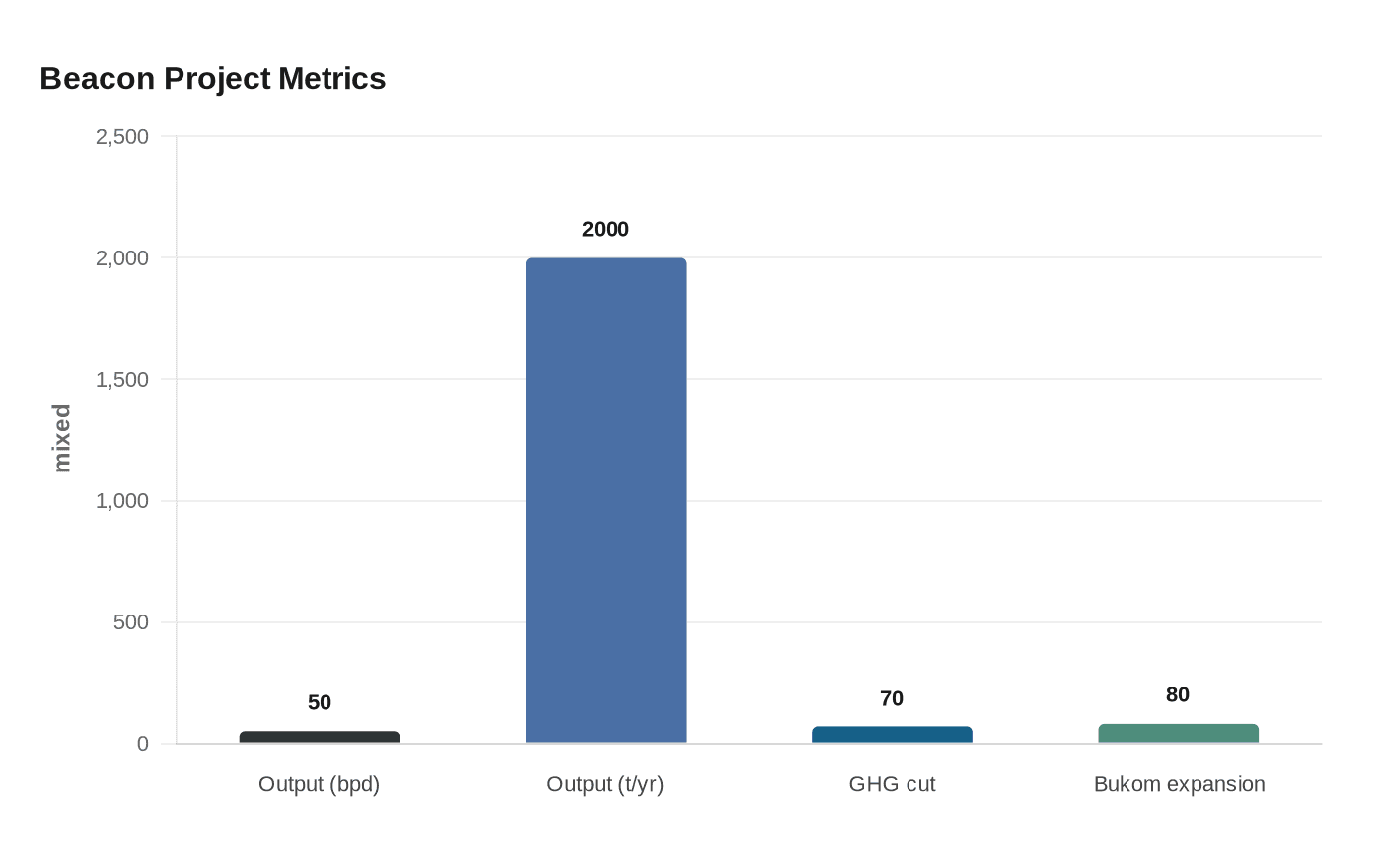
Project Beacon is being developed as Aether’s commercial demonstration program for sustainable aviation fuel, using the company’s Aurora technology to convert industrial waste gas and biomethane into SAF and naphtha. Aether and Aster said the plant is designed to produce CORSIA-certified SAF and achieve more than 70% lifecycle greenhouse-gas reductions versus conventional jet fuel, a combination that matters as airlines and buyers push beyond headline announcements toward certified, low-carbon supply.
The planned output is up to 50 barrels per day, or about 2,000 tons a year. That is not a scale that reshapes regional jet-fuel demand, but it is large enough to validate the chemistry, the operations model and the downstream handling chain in an industrial setting. For a pathway that still needs to win confidence from lenders, offtakers and regulators, a small but real plant can be more valuable than a bigger paper project.
Why Pulau Bukom matters
Aster said the plant will be located at its Pulau Bukom refining hub in Singapore, which it took over from Shell in April. That location gives Beacon access to existing industrial infrastructure, refining logistics and the kind of operating environment next-generation fuel developers often need but rarely control. In SAF, site selection is not just real estate, it is de-risking, because the project must plug into utilities, storage, feedstock handling and product movement without building an entire industrial ecosystem from scratch.
The broader Bukom context also matters. Aster announced a US$80 million expansion of ethylene export capacity at the site in April 2026, signaling that the hub is in an active phase of investment and redevelopment. For Beacon, that means the project is being inserted into a live industrial asset base, not a greenfield concept built in isolation. That should help with execution, provided the SAF unit can integrate cleanly with the site’s operating constraints.
Feedstock choice is the central test
Beacon’s feedstock slate, industrial waste gas and biomethane, is one of the project’s strongest commercial arguments and also one of its hardest execution challenges. Waste gas can support attractive carbon intensity performance, but it depends on reliable industrial supply, long-term contracting and process consistency. Biomethane adds another low-carbon input, but it also has to be secured, moved and balanced against other uses that can tighten availability.
That is why the project’s 70% plus lifecycle emissions reduction claim matters. It signals that Aether is not just trying to make SAF, it is trying to make a fuel that clears the certification and carbon-accounting threshold buyers care about. In a market where the value of a molecule increasingly depends on its carbon intensity and traceability, feedstock strategy is as important as reactor design.
The commercial stack around the plant
Aether has spent the past year building the ecosystem around Beacon rather than waiting for the plant itself to solve every problem. On February 4, 2025, Singapore Airlines Group signed an MoU with Aether to potentially source neat SAF for five years, with an option for a five-year extension, once Aether plants begin commercial production. That is not a binding offtake agreement, but it is still important because it shows a major airline group is willing to keep a commercial lane open if Aether can deliver qualified fuel.
On May 11, 2026, Aether and FlyORO signed a non-binding MOU to explore SAF supply-chain and blending solutions for Project Beacon and future projects. That adds another layer of realism to the project, because SAF value is not only created inside the reactor. It also depends on handling, blending, storage and delivery, especially in markets where customers want neat SAF but still need infrastructure to move it into the jet-fuel system.
The company also deepened its technical foundation earlier in the scale-up path. On June 26, 2025, Aether announced a one-barrel-per-day integrated Aurora plant at RTI Pilot Xcelerator to demonstrate the technology at smaller scale. That is the right sequencing for a difficult process pathway: prove the unit operation in a pilot setting, then move into a commercial demonstration that can surface reliability issues, uptime gaps and feedstock integration problems before the capital requirement jumps again.
Capital and leadership are now part of the story
Aether closed US$15 million in convertible-note financing on December 30, 2025, with Aster Ventures and EDBI among the new investors. The company said total funding rose to more than US$60 million after that round, which tells investors the business has moved beyond seed-stage concept work and into a phase where project execution will require repeated capital formation. That also raises the bar on milestone discipline, because future financing will likely depend on whether Beacon can show operating data, not just process claims.
The company also named Stu Stott global vice president of projects, Mei Chia to lead a planned Singapore R&D center expected to open in 2026, and TC Goh to continue leading business development across Southeast Asia. Those appointments suggest Aether is trying to build the organizational stack that a project developer needs once it leaves the lab and enters engineering, procurement and commercial negotiation. For next-generation SAF, technical progress without project-management depth is rarely enough.
The longer development arc
Aether’s February 5, 2024 global exclusive licensing agreement with GTI Energy puts Beacon in a longer R&D arc that began in 2022 and builds on a gas-to-liquid program initiated in 2016. That history matters because it shows Project Beacon is not a quick pivot into aviation fuel, it is the commercialization point of a multi-year technology pathway. The more the market looks at next-generation SAF, the more it will demand that kind of lineage, especially for pathways that are still proving themselves at industrial scale.
Beacon’s significance, then, is not that it is large. It is that it is trying to answer the questions that determine whether a novel SAF route becomes financeable: can the feedstock be secured, can the process run reliably, can the carbon math be certified, and can the product move into an airline supply chain. If Aether can answer those questions at Pulau Bukom, the project will become a reference point for waste-gas-to-fuel deployment across Southeast Asia and beyond.
This article was produced by Prism’s automated news system from verified source data, official records, and press releases, then run through automated quality and moderation checks before publishing. The system is built and supervised by the people who set the standards it runs under. Read our full AI policy.
Did this article answer your question?