Azane continues Norway’s first ammonia bunkering network, targeted for 2029
Azane is keeping three Norwegian ammonia bunkering terminals on track for 2029 as Enova backs a coastwide fuel chain with NOK 2.2 billion.
Azane Infrastructure on June 24 said it is continuing three Enova-supported ammonia bunkering projects in Florø, Stavanger and Mongstad, with first operations targeted for 2029. The terminals are intended to anchor Norway’s first ammonia-fueling network for ships built to run on ammonia rather than conventional marine fuel. Enova says it has already put about NOK 2.2 billion into maritime hydrogen and ammonia projects along the coast.
Enova’s ammonia bunkering support program is now closed to new applications, but remains open for reporting in projects already approved. The agency says its wider maritime push is designed to build the first functioning value chains for hydrogen and ammonia in shipping, and that it has supported about 30 vessels tied to hydrogen and ammonia, six hydrogen production plants and one ammonia production plant along the Norwegian coast.
Azane’s latest work follows an Enova grant announced in December 2025, when the company secured NOK 442 million for three bunkering terminals. Azane says it was founded in 2021 to fill the gap between ammonia production and ships that want to use ammonia as a carbon-free fuel, and says its bunkering system is patented and built for safe, reliable and cost-efficient handling. The company also says it was set up as a separate infrastructure business because it expects to become a major bunkering owner as ammonia-fuelled vessels enter service across Scandinavia.
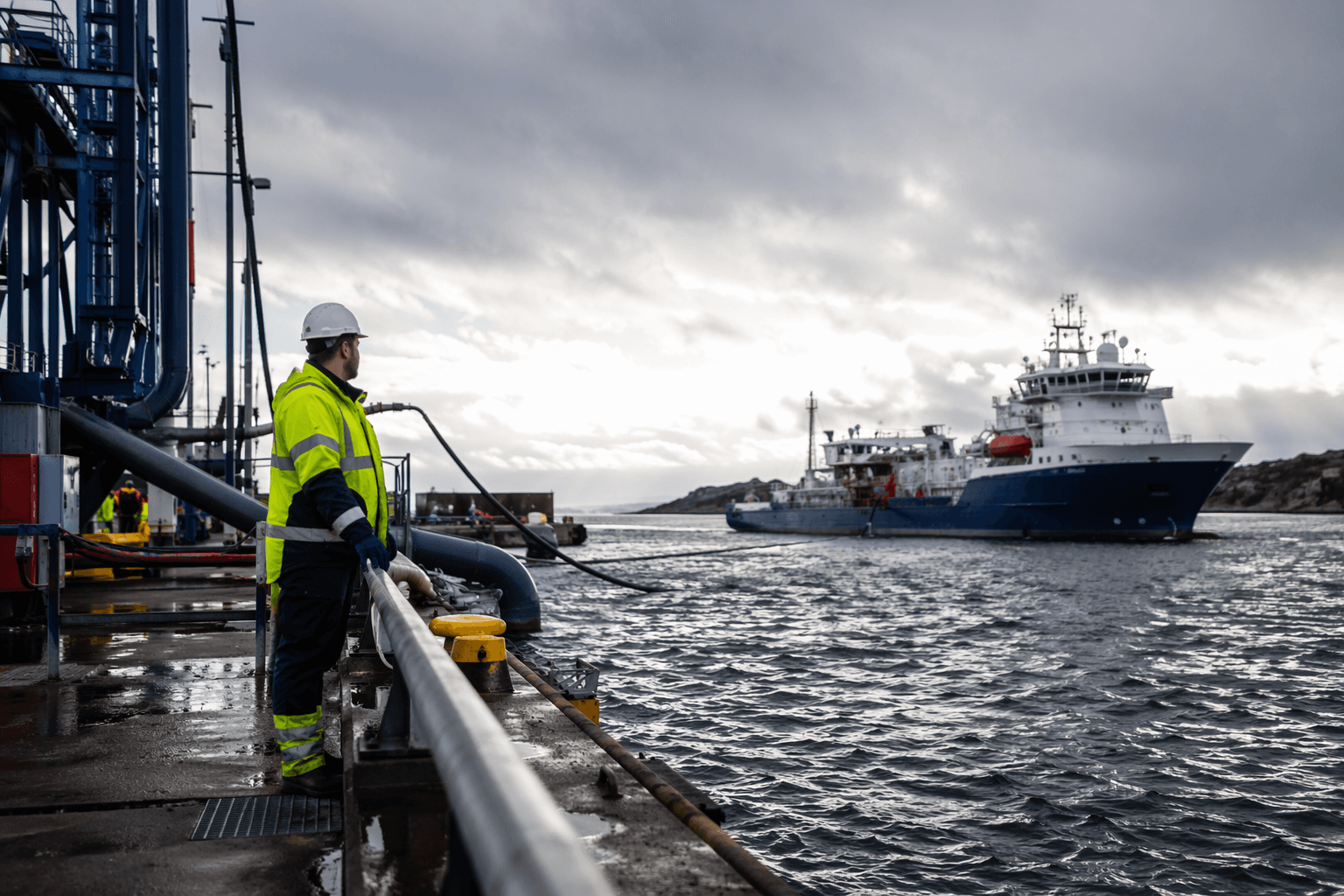
Florø is the most developed of the three sites. North Ammonia and Fjord Base Holding have already announced plans for a renewable ammonia production facility at Fjord Base, and project updates say the site has been assessed as mature and placed in the queue for reservation of grid capacity. In 2024, the Norwegian Directorate for Civil Protection approved the planned bunkering facility there, describing a floating stationary barge with capacity for 1,000 cubic metres, or about 650 tons, of ammonia.
The timeline underscores how early the segment still is. Enova said in a 2024 maritime update that rising electricity prices, a weak Norwegian krone and high inflation had slowed earlier hydrogen and ammonia projects, even after it had supported 14 vessels and five production plants over a little more than two years. Its ammonia vessel program can support newbuilds and retrofits, with aid capped at 30 million euros per project and limited to 80% of additional approved costs.
For biofuel-based marine fuels, the Norwegian ammonia build-out looks more like a parallel market than an immediate replacement. The 2029 target, the lack of realized projects so far and the need for dedicated bunkering infrastructure point to ammonia chasing the later wave of vessel orders, while biodiesel and other drop-in fuels keep serving operators that need fuel now.
This article was produced by Prism’s automated news system from verified source data, official records, and press releases, then run through automated quality and moderation checks before publishing. The system is built and supervised by the people who set the standards it runs under. Read our full AI policy.
Did this article answer your question?