Bhubaneswar plans 50-tonne green waste plant for smokeless charcoal
Bhubaneswar moved to a 50-tonne-per-day charcoal unit that would turn horticulture waste into smokeless fuel for homes and businesses.
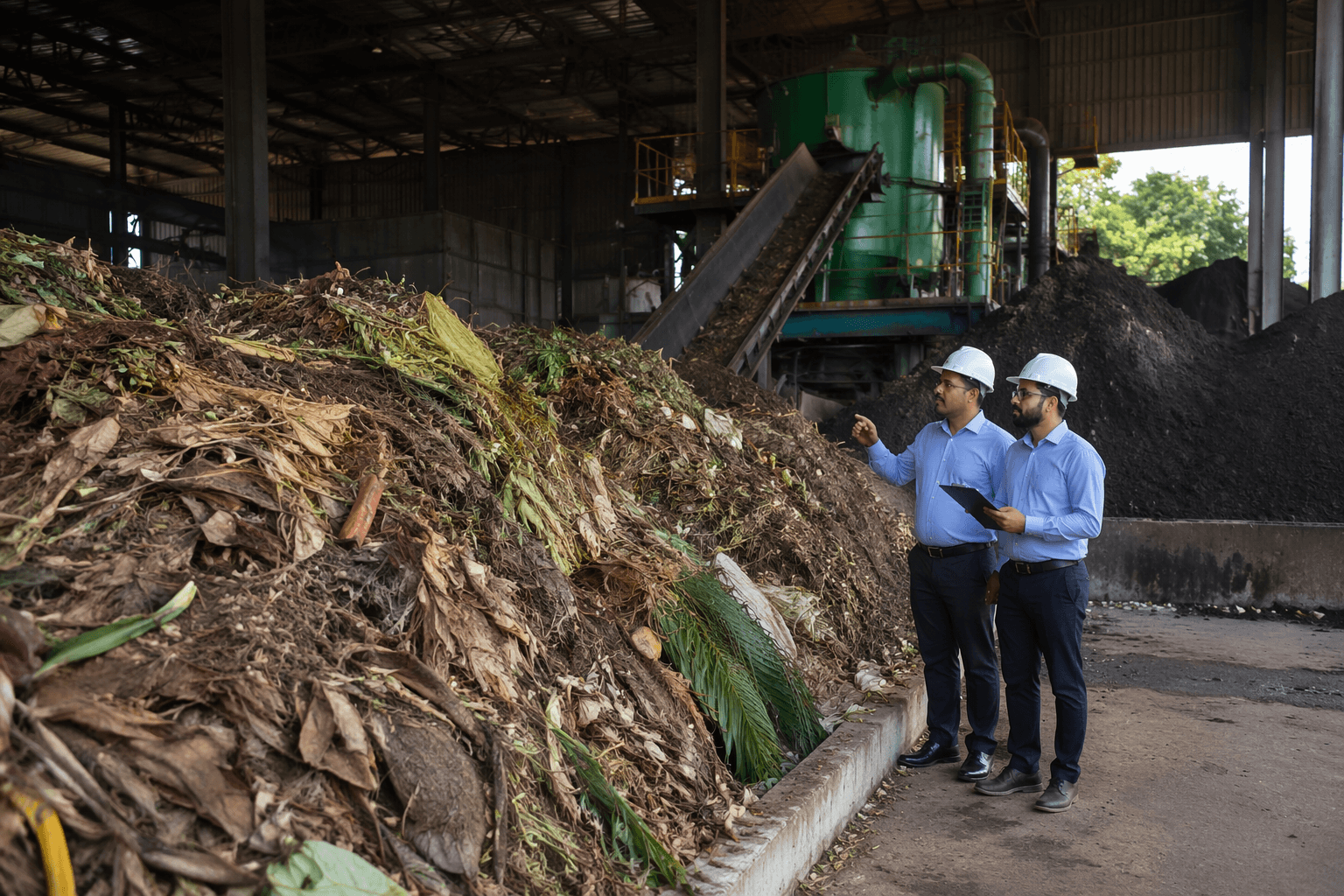
Bhubaneswar Municipal Corporation on June 1 published an RFP for a 50 tonne-per-day charcoal unit to turn city green waste into smokeless fuel. The plant was proposed to process horticulture and municipal green waste for commercial and household use, adding a solid-fuel outlet to the city’s waste-to-wealth push.
BMC officials said daily horticulture activity from tree pruning, trimming and gardening generates around 60 to 80 tonnes of waste. The proposed charcoal plant is meant to absorb part of that stream, which now has to be collected, hauled and handled as a disposal burden. City officials have said green waste is still being dumped at sites such as Pokhariput and Gadakana when processing capacity is not available.
The new unit would sit alongside BMC’s 25 tonne-per-day biomass briquette facility at Palasuni, which officials said is designed mainly for woody biomass and is not suited to green leaves and other soft horticultural residues. BMC had also planned a separate biomass briquette plant at Palasuni for green garbage, showing the corporation is splitting feedstocks by moisture, texture and end use rather than forcing all biomass through one line.
That matters for economics as much as for waste handling. In February 2026, BMC launched a biomass briquette manufacturing project to convert green waste into eco-friendly fuel, and officials said the plan was expected to reduce transport costs for bulky material, cut landfill loads and create revenue through sales and royalty. The charcoal proposal extends that logic into a different product form, one that could serve users looking for lower-smoke solid fuel in kitchens and small commercial boilers.
BMC has also been lining up other processing assets, including a 5 tonne-per-day construction-and-demolition waste unit at Pandra. The sequence points to a broader municipal strategy in which separate waste streams are routed to separate value chains, instead of being mixed and hauled to dumps.
The scale of the problem remains large. Bhubaneswar’s daily municipal solid waste generation has been reported at about 520 tonnes, 300 to 350 tonnes, and in one court-related report 800 tonnes, depending on the source and period cited. Against that backdrop, a 50 tonne-per-day green-waste charcoal plant is not a symbolic pilot, but a municipal infrastructure bet on whether urban biomass can be turned into a saleable fuel instead of a disposal cost.
This article was produced by Prism’s automated news system from verified source data, official records, and press releases, then run through automated quality and moderation checks before publishing. The system is built and supervised by the people who set the standards it runs under. Read our full AI policy.
Did this article answer your question?