Biodiesel producers turn waste glycerol into high-value solketal
A biodiesel plant’s waste stream may now be worth 50 times more as solketal, shifting the profit focus from fuel output to byproduct upgrading.
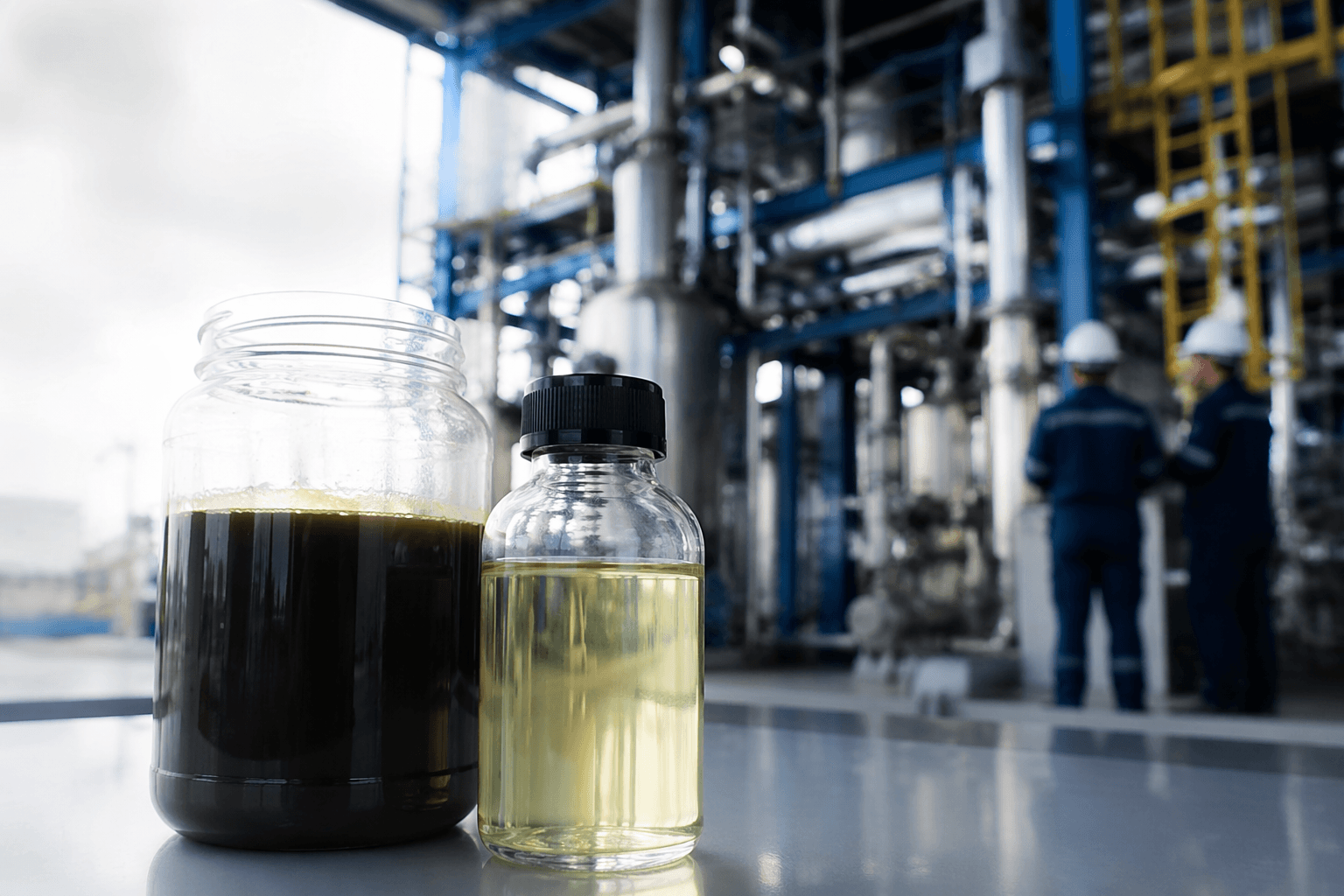
Biodiesel plants already make the key feedstock for the next profit pool: crude glycerol. Biodiesel transesterification typically produces about 10% crude glycerol by weight, which makes the coproduct too large to ignore in plant economics, especially when global biodiesel output reached about 46,799 million liters in 2020.
That scale matters because glycerol has long been treated as a low-value residue or disposal problem. R3V Tech, the Loughborough University spin-out, is betting that the better play is to upgrade that stream into solketal, a bio-derived solvent and fuel additive that can lift the value of crude glycerol by up to 50 times. For producers facing feedstock volatility and margin pressure, the shift is straightforward: the next efficiency gain may come from what leaves the reactor, not only what comes out as fuel.
How the process works
R3V Tech’s process turns crude glycerol into solketal through an electrochemical route that the company says runs at room temperature and atmospheric pressure. That operating profile is important. Lower temperature and pressure can cut energy demand, reduce equipment stress and simplify integration into a plant that already runs on tight conversion economics.
The company also says the process captures carbon dioxide while upgrading the glycerol stream. That gives the technology a second value proposition beyond coproduct monetization, because it links waste handling with carbon management in a single unit operation. In a sector where carbon intensity is increasingly central to market access and pricing, that kind of chemistry can matter as much as headline fuel yield.
Why solketal is the product to watch
Solketal is the commercial target because it sits at the intersection of chemical value and fuel utility. As a solvent, it has the kind of higher-margin outlet that crude glycerol normally lacks. As a fuel additive, it can slot into existing liquid fuel value chains rather than forcing biodiesel producers to search for a narrow specialty market.
That dual use is what makes the process more interesting than a simple waste-treatment step. If a producer can turn a low-value byproduct into a marketable solvent and additive, the plant’s economics improve in two directions at once: waste disposal falls, and coproduct revenue rises. In a market where biodiesel margins are often squeezed by feedstock costs, that can be the difference between a strained asset and a resilient one.
The commercial pressure behind the chemistry
The timing is not accidental. A 2026 study in Environmental Science & Technology found that the U.S. biodiesel industry faces significant economic pressure from falling glycerol coproduct values and rising feedstock costs, with plant closures already occurring. That is exactly the kind of signal that pushes producers to look beyond fuel volume and toward coproduct upgrading.
The broader biodiesel sector also offers enough glycerol to justify dedicated recovery and conversion systems. UKRI Gateway to Research has estimated that worldwide biodiesel production generates an enormous quantity of crude glycerol, around 5 billion liters a year, while the United Kingdom alone accounts for about 60,000 tonnes annually, with growth forecast at 8.1% CAGR by 2032. Those numbers point to a large and expanding waste stream that can be turned into feedstock for higher-value chemistry.
Where R3V Tech is in the scale-up
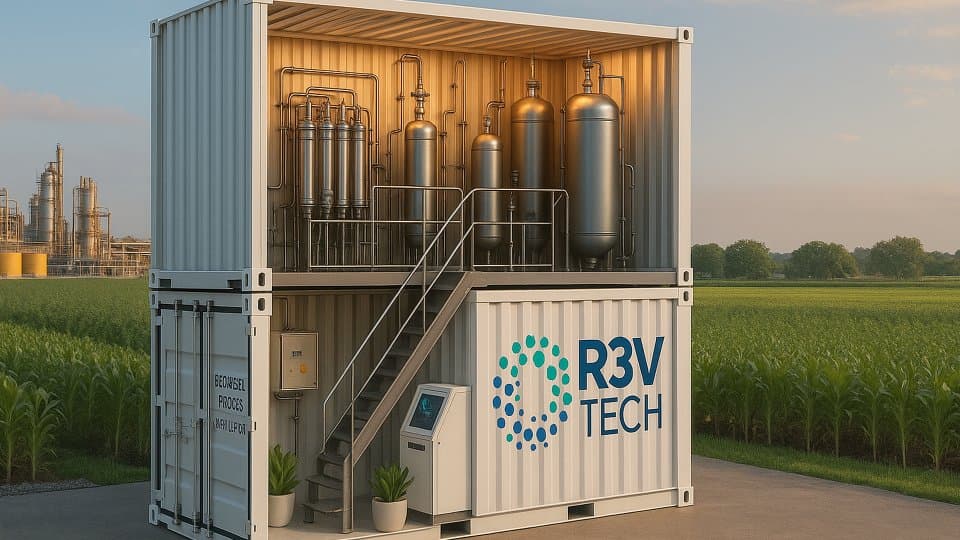
The technology is moving beyond the bench. Loughborough University says R3V Tech is scaling the process from gram-scale experiments to kilogram-per-hour production, a meaningful jump for any chemistry platform that hopes to reach a biodiesel site. The company has also won an Innovate UK grant to build and trial a pilot demonstrator at a biodiesel plant within the next five months.
That pilot timeline is a key marker. Many coproduct ideas stay trapped at laboratory scale because they never prove they can handle real plant conditions, variable feedstock quality and the operational discipline of a commercial biodiesel site. A trial inside a biodiesel plant will force the process to show whether its room-temperature, atmospheric-pressure design can actually survive industrial reality.
The team behind it includes Dr Adriano Randi and Professor Benjamin Buckley, with Professor Jin Xuan also named in the broader Loughborough work around the platform. Their challenge now is not proving the chemistry in principle. It is proving that the chemistry can be installed, run and monetized without adding complexity that wipes out the margin gains.
Why this fits the circular-economy model
The bigger story is not just solketal. It is the direction of travel across renewable fuels, where waste streams are increasingly being treated as inputs for a second product line rather than as a cost center. That is the logic behind circular chemistry: if a plant already creates a concentrated byproduct stream, then the highest-value move may be to upgrade it on site or near site before it ever becomes a liability.
For biodiesel producers, this approach can be more powerful than simply chasing more gallons. More output only helps if feedstock economics and policy support hold up. By contrast, a successful byproduct-upgrading system can widen the revenue base of the same barrel, improving resilience when feedstock prices rise or fuel prices soften.
What to watch next
The near-term test is the pilot demonstrator. If R3V Tech can convert crude glycerol into solketal reliably at kilogram-per-hour scale, while keeping the process at room temperature and atmospheric pressure, the model could be attractive to biodiesel plants looking for add-on revenue rather than major new fuel capacity. The 50-times value uplift the company cites is the number that will draw attention, but the real measure will be whether the process can deliver that uplift consistently in a commercial setting.
If it does, the next competitive edge in biodiesel may come from circular chemistry, not just volume expansion. In a market under pressure from feedstock costs, coproduct weakness and carbon requirements, turning waste glycerol into high-value solketal could become one of the clearest ways to improve plant economics without making more fuel.
This article was produced by Prism’s automated news system from verified source data, official records, and press releases, then run through automated quality and moderation checks before publishing. The system is built and supervised by the people who set the standards it runs under. Read our full AI policy.
Did this article answer your question?