Biofuel demand could boost US farm profits and rural economies
Expanded biofuel demand could hold corn acreage near current levels through 2050 and support rural jobs if policy keeps ethanol markets growing beyond a 10% blend ceiling.
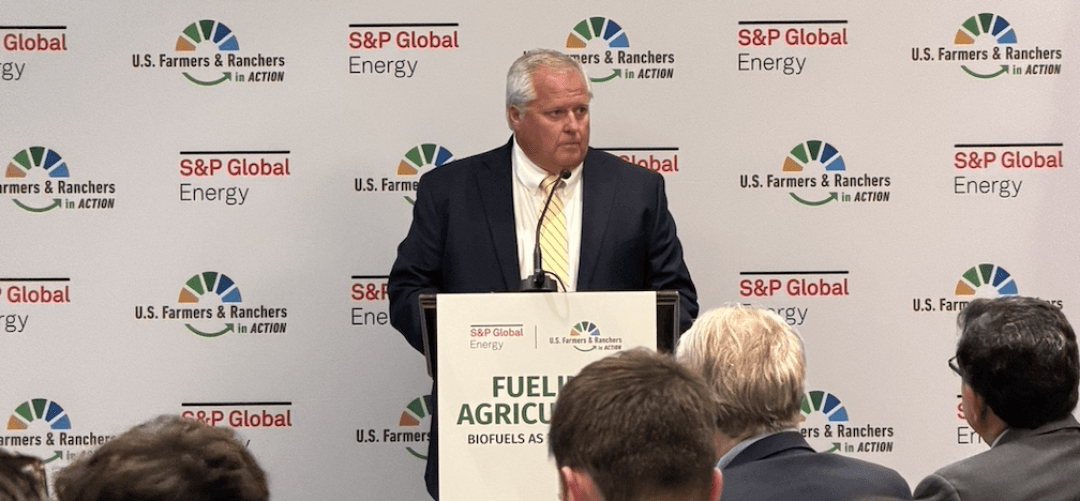
U.S. Farmers and Ranchers in Action on June 16 unveiled “Fueling Agriculture: Biofuels as the Catalyst,” a study that says corn acreage could stabilize at 97.5 million acres in 2050. At current 10% ethanol blend rates, the report says the United States could lose roughly 30 million corn acres by 2050 and ethanol demand could fall by about 6.6 billion gallons. The group cast the analysis as a rural growth case, not just a fuel-market argument.
What the model says about acreage
The center of the report is a stark split between two futures. In the high-growth case, U.S. corn acreage holds at about 97.5 million acres in 2050, just 1% below 2025 levels, while the low-demand path pushes roughly 30 million acres out of corn, an area the report compares with North Carolina. That gap is the study’s clearest signal to growers, merchandisers and lenders: biofuel demand is being framed as an acreage-retention tool as much as a fuel outlet.
The report also says U.S. corn yields could rise about 1.6% annually through 2050 in the high-growth case, which would unlock nearly 50% more production without expanding acreage. That matters because it changes the farm-level question from whether there is enough land to whether there is enough demand to absorb higher output. In the report’s telling, biofuels help keep the crop mix anchored in corn while allowing productivity gains to show up as volume, not acreage loss.
From farm gate to rural main street
The study’s economic case goes beyond the combine monitor. By increasing demand for crops, crop residues and other feedstocks, it argues for a more resilient agricultural system with more options when grain prices swing and export demand is uncertain. That should matter in the Corn Belt, where a stronger domestic pull on grain can influence basis, storage economics and the willingness to invest in newer agronomy and handling equipment.

The report also points to rural processing investment. If biofuel demand stays strong, the likely downstream winners are crushing, fermentation, waste handling, logistics and co-product markets, all of which need capital and labor in farm regions. That is where the study’s “catalyst” language lands most directly: more gallons do not just move through existing plants, they support more plant utilization, more truck traffic, more rail activity and more local payrolls around the facilities that turn crops into fuel.
The policy assumptions behind the upside
The high-growth scenario is not a baseline, it is a policy and market outcome that has to be built. The report says the downside case comes if ethanol blending stays at 10%, and the study’s growth case depends on new sources of feed demand emerging before acreage starts to erode. That puts the result in the middle of the current policy fight over Renewable Fuel Standard volumes, year-round E15 access and the economics that flow through 45Z and feedstock competition.
Sen. Chuck Grassley used the Capitol briefing to argue that stronger biofuel markets need E15 expansion, while Sen. Tina Smith said the report shows what agriculture can accomplish and points toward a new path forward. USDA Policy Advisor Kelsey Barnes also took part in the June 16 event alongside S&P Global Energy analysts and USFRA leadership, underscoring that the report is intended to inform both policy and investment decisions.
What the broader food and fuel balance looks like
The study does not stop at U.S. corn. It says global biofuel production could triple by 2050 under the high-growth scenario and that increased biofuel output could lift global food and feed supplies by 45% versus baseline projections. That is the report’s answer to the old objection that fuel demand must come at the expense of food: in this model, added biofuel demand coexists with larger total output because higher yields and more efficient supply chains do more of the work.
The report also frames agriculture as standing at a crossroads. It says productivity is rising faster than demand, global population growth is decelerating, food consumption growth is slowing and biofuel demand, especially ethanol, is under pressure. In that setting, the report argues, biofuels are not a side market but a stabilizer for crop income, land use and rural capital formation.
Kevin Burkum, USFRA’s chief executive, linked the stakes to the 1980s farm crisis, when roughly 300,000 U.S. farms defaulted on loans. Chip Bowling, USFRA’s vice chair and a Maryland grain farmer, said the report shows biofuels as an economic engine for farming’s future and warned that weaker demand would leave rural communities with fewer family farms, fewer agribusiness jobs, closed equipment dealerships and more young people leaving farm towns.
That is the report’s bottom line: biofuel demand is being presented as a lever that can hold acres in production, keep processing investment in rural areas and translate crop productivity into farm income rather than stranded supply.
This article was produced by Prism’s automated news system from verified source data, official records, and press releases, then run through automated quality and moderation checks before publishing. The system is built and supervised by the people who set the standards it runs under. Read our full AI policy.
Did this article answer your question?