Clean Fuels defends record RFS biomass diesel volumes in court
Clean Fuels moved to shield EPA's 9.07 billion RIN-gallon biomass diesel mandate for 2026 as court challenges target the Set 2 rule.
Clean Fuels Alliance America on June 26 filed to intervene in Center for Biological Diversity v. EPA, defending EPA's 9.07 billion RIN-gallon biomass-based diesel volume for 2026. The group moved in the consolidated challenge to the 2026-27 Renewable Fuel Standard Set 2 rule and said the mandate underpins market growth for biodiesel, renewable diesel and feedstock suppliers.
EPA finalized the rule on March 27 and published it in the Federal Register on April 1, with the package set to take effect June 15. The final rule requires 70% reallocation of small refinery exemptions granted for 2023-2025, a provision refiners and other challengers are contesting alongside the overall volume set in eight consolidated cases before the U.S. Court of Appeals for the District of Columbia Circuit.

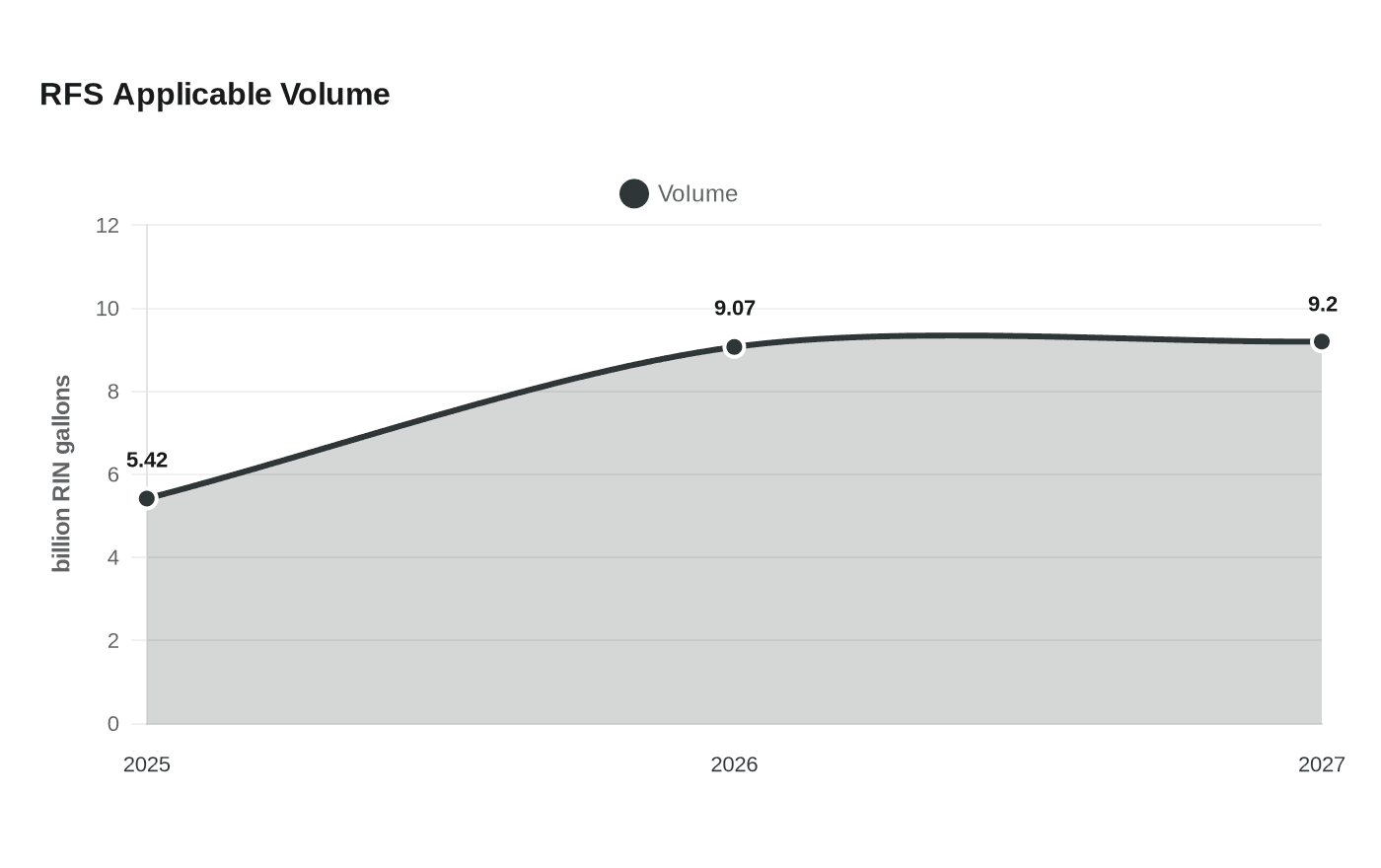
EPA set the 2026 applicable volume at 9.07 billion RIN gallons and 2027 at 9.20 billion. An Illinois farmdoc analysis found those levels were the largest in RFS history and nearly 70% above the 2025 applicable volume of 5.42 billion RIN gallons.
Clean Fuels Alliance America vice president of federal affairs Kurt Kovarik said the 2026 and 2027 volumes are driving growth in a critical domestic market for U.S. farmers, and that rural economies need market opportunities that match productivity and rising input costs. Growth Energy filed its own motion to intervene in support of EPA on June 24, saying the challenges follow the annual litigation pattern that accompanies each new RFS volume rule.
The rule also lowers the renewable diesel equivalence value to 1.5 starting in 2027, matching biodiesel, and delays any foreign-produced fuel or feedstock penalty until 2028 or later.
This article was produced by Prism’s automated news system from verified source data, official records, and press releases, then run through automated quality and moderation checks before publishing. The system is built and supervised by the people who set the standards it runs under. Read our full AI policy.
Did this article answer your question?