Climate change cuts soybean quality, despite higher yields in new study
Soybeans may yield 50% more under heat, drought and elevated CO2, but a new study found 20% less starch and 6% less protein.
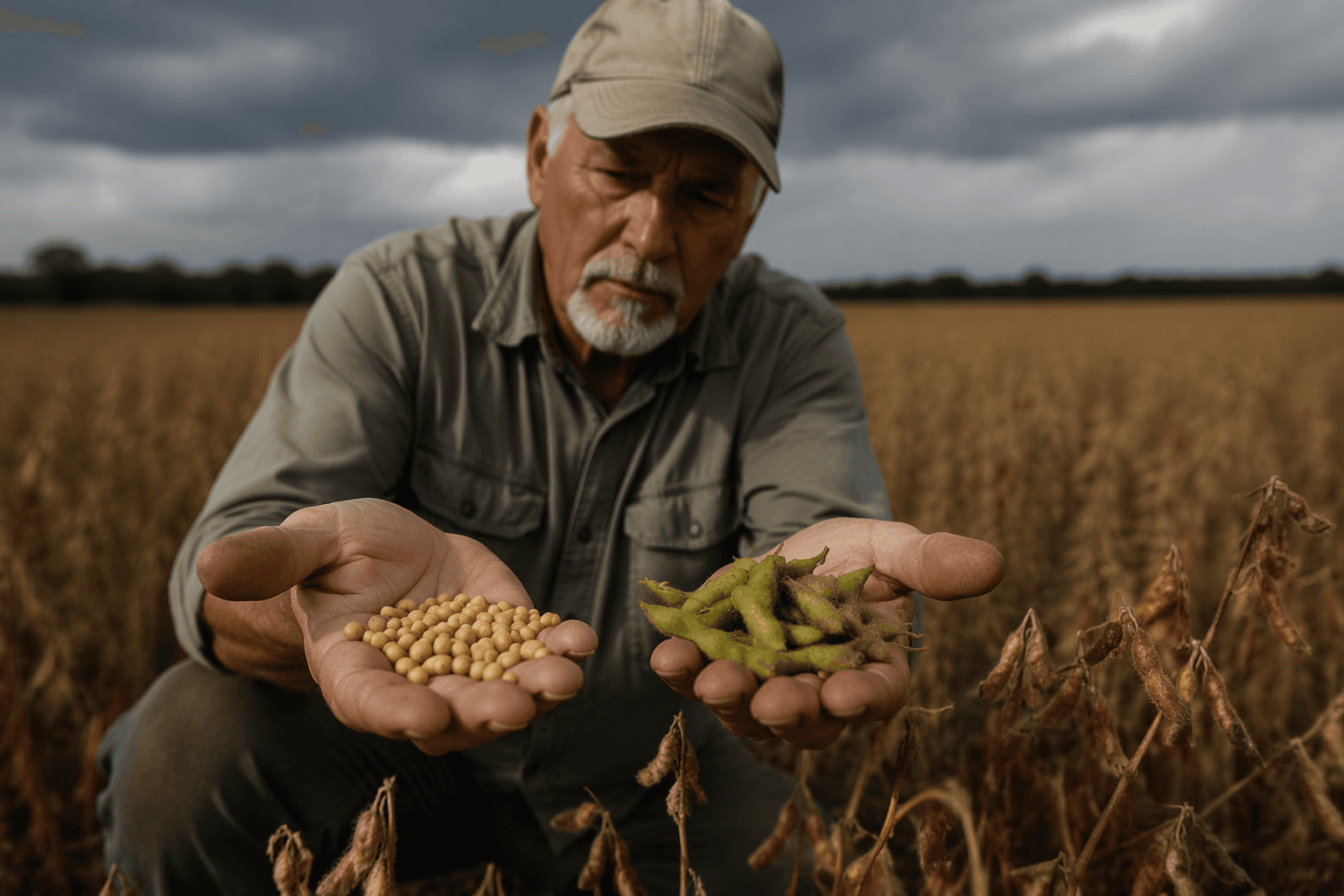
A University of São Paulo team in a 2026 Food Research International study found soybean plants could produce up to 50% more beans under elevated CO2, high temperature and drought. The same analysis projected a 20% drop in starch, a 6% drop in protein and a 175% surge in amino acids.
The paper, titled Soybean grain production and nutritional quality responses under elevated CO2, high temperature, and drought, used experimentally verified data and machine-learning modeling to test the combined pressure of the three climate factors. It was published in Food Research International in volume 233, Part 2, as article 119004, and the authors said it was the first study to estimate all three stresses together on soybeans.
The work came from the Laboratory of Ecological Plant Physiology, or LAFIECO, at the University of São Paulo’s Institute of Biosciences. The group spans bioinformatics, plant physiology, biochemistry, chemistry, statistics and mathematical modeling, and it focuses on plant growth, development and carbohydrate metabolism in crops including soybeans and beans. Marcos Buckeridge, who coordinates LAFIECO, said the amino-acid increase was unexpected and that its effect on animals is not yet known. He said the starch loss means less energy in the bean, and that the result is especially important because soybeans are used in animal feed.
For crushers, feed formulators and biodiesel producers that lean on soybean oil and soy meal, the study is a quality-versus-volume warning. More beans do not automatically mean a more valuable crop if the seed carries less starch and protein into the feed stream, even before end users begin adjusting rations, export specs or crush assumptions. The paper adds to earlier research showing that elevated CO2 and temperature can lift some soybean yield measures while altering grain composition, including oil concentration.
The broader climate-risk backdrop is already well established. Prior work has linked severe hot-and-dry conditions to major soybean production shocks, including the 2012 event across North America and South America. That history is why researchers are increasingly modeling compound stresses rather than isolating CO2, heat or drought one at a time, and why a bigger soybean harvest will not necessarily translate into cleaner economics for the feedstock chain.
This article was produced by Prism’s automated news system from verified source data, official records, and press releases, then run through automated quality and moderation checks before publishing. The system is built and supervised by the people who set the standards it runs under. Read our full AI policy.
Did this article answer your question?