European Biogas Association maps research priorities for biomethane growth
The European Biogas Association has set five research priorities to unblock biomethane scale-up, from feedstock and digestion to digital monitoring and deployment.
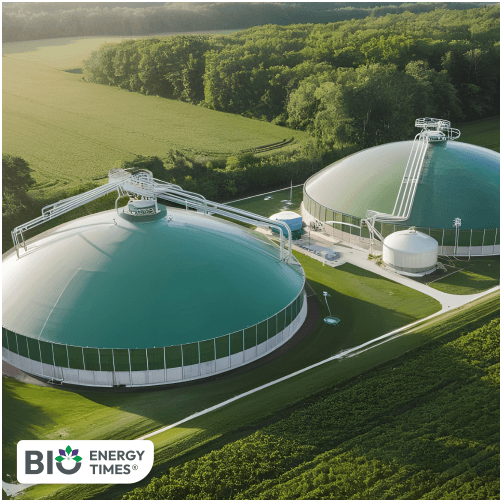
Europe had 1,620 biomethane plants in 2024, and 86% of biomethane plants were connected to a grid in 2025. In June 2026, the European Biogas Association mapped five research priorities for biomethane scale-up in a paper built from surveys, expert review and research-landscape analysis.
Feedstock is still the first bottleneck
Scale-up starts before the digester. The EBA puts biomass, nutrients, water and soil management at the center of the feedstock pillar, alongside better processing of lignocellulosic material, improved digestate use and nutrient recovery. That focus ties biomethane to fertilizer sovereignty and soil health as much as to gas supply, because the value chain only closes if residues and digestate can move back into agriculture cleanly.
The emphasis on feedstock also reflects a practical constraint in Europe’s current buildout. More plants will not solve feedstock logistics if collection, preprocessing and seasonal availability remain uneven, so the research agenda pushes upstream into materials handling rather than stopping at production volumes. The question is not just how to make more gas, but how to make more usable input streams from biomass that is harder to digest or more expensive to transport.
Digestion efficiency and contamination control sit close behind
The production technology pillar moves the bottleneck inside the plant gate. The EBA calls for advances in microbial performance and biological enhancers, which points to the limits of current anaerobic digestion efficiency rather than a lack of basic process familiarity. It also links digestion more explicitly to pathogen reduction and antimicrobial resistance reduction, a sign that the sector wants stronger evidence on what happens to the biological load in the system before digestate goes back to land.

The industry is looking for repeatable operating gains, not one-off process tweaks. Better microbial control can support steadier yields, while clearer work on pathogen reduction helps reduce the uncertainty around digestate handling and land application.
The applications agenda goes well beyond gas-to-grid
The EBA’s advanced applications pillar shows how the sector is trying to widen the revenue stack. The paper explicitly calls for work on advanced fuels, chemicals, biorefinery integration, hydrogen generation, synthetic hydrocarbons and carbon capture or utilization. That shifts biomethane from a single-output model into a platform for multiple industrial pathways, especially where carbon streams can be reused or captured and where gas production can be integrated into larger bio-based complexes.
If biomethane facilities can support chemicals, hydrogen or synthetic hydrocarbon production, the asset class becomes less dependent on a single gas market. The next round of R&D is meant to help plants function as multi-product sites, not only as stand-alone waste-to-gas operations.
Digital systems are becoming part of core infrastructure
The digital pillar is a clear sign that measurement now sits alongside pipes, tanks and compressors. The EBA wants more work on monitoring, artificial intelligence and standardized methane and carbon accounting, which would make plant performance easier to compare across sites and jurisdictions.
Deployment is where those digital tools meet the physical fleet. EBA data also show membrane separation was used by about half of plants, a sign that the sector already has a mature technology base, but still needs better monitoring and data systems to support wider replication.
Policy is pulling the research agenda toward the market
The European Commission set a target of 35 bcm of sustainable biomethane production and use by 2030, the benchmark cited by the Biomethane Industrial Partnership, and launched a Biomethane Mechanism in June 2026 to connect buyers, suppliers and investors. The EBA estimates 35 bcm a year could replace around 20% of pre-war Russian gas imports, which is why the sector is being discussed in energy-security terms as well as climate terms.
The EBA’s 2025 statistical reporting puts combined biogas and biomethane production at 22 bcm in Europe in 2024, with 19 bcm in the EU-27 and biomethane output at 5.2 bcm in Europe. The association estimates Europe’s production potential could reach 167 bcm by 2050. The research paper is aimed at the bottlenecks that hold up commercial rollout, from feedstock logistics and digestion efficiency to grid connection, digital verification and market-ready applications.
This article was produced by Prism’s automated news system from verified source data, official records, and press releases, then run through automated quality and moderation checks before publishing. The system is built and supervised by the people who set the standards it runs under. Read our full AI policy.
Did this article answer your question?