Germany launches up to €2 billion fund for eSAF production
Germany opened consultation on up to €2 billion for eSAF as it backs a €350 million Schwedt project and a €70 million INERATEC plant.

Germany's Federal Ministry of Transport launched a public market consultation on May 19 for up to €2 billion in eSAF support. The plan is aimed at accelerating the market ramp-up of electricity-based sustainable aviation fuel and removing investment barriers.
The consultation is the clearest signal yet that Berlin wants to build a domestic supply chain for synthetic jet fuel before the market settles around imports. The ministry says renewable aviation fuel made from green hydrogen and sustainable carbon is a key piece of the aviation sector's path to climate neutrality, and the new fund would be designed to back that transition at industrial scale.

Germany had already moved earlier in May 2026 to commit €350 million to a Brandenburg eSAF project at the PCK refinery in Schwedt. That package was described as the largest public funding award in Europe to date for a synthetic SAF project, underscoring how aggressively the government is using state support to de-risk first-of-a-kind plants.
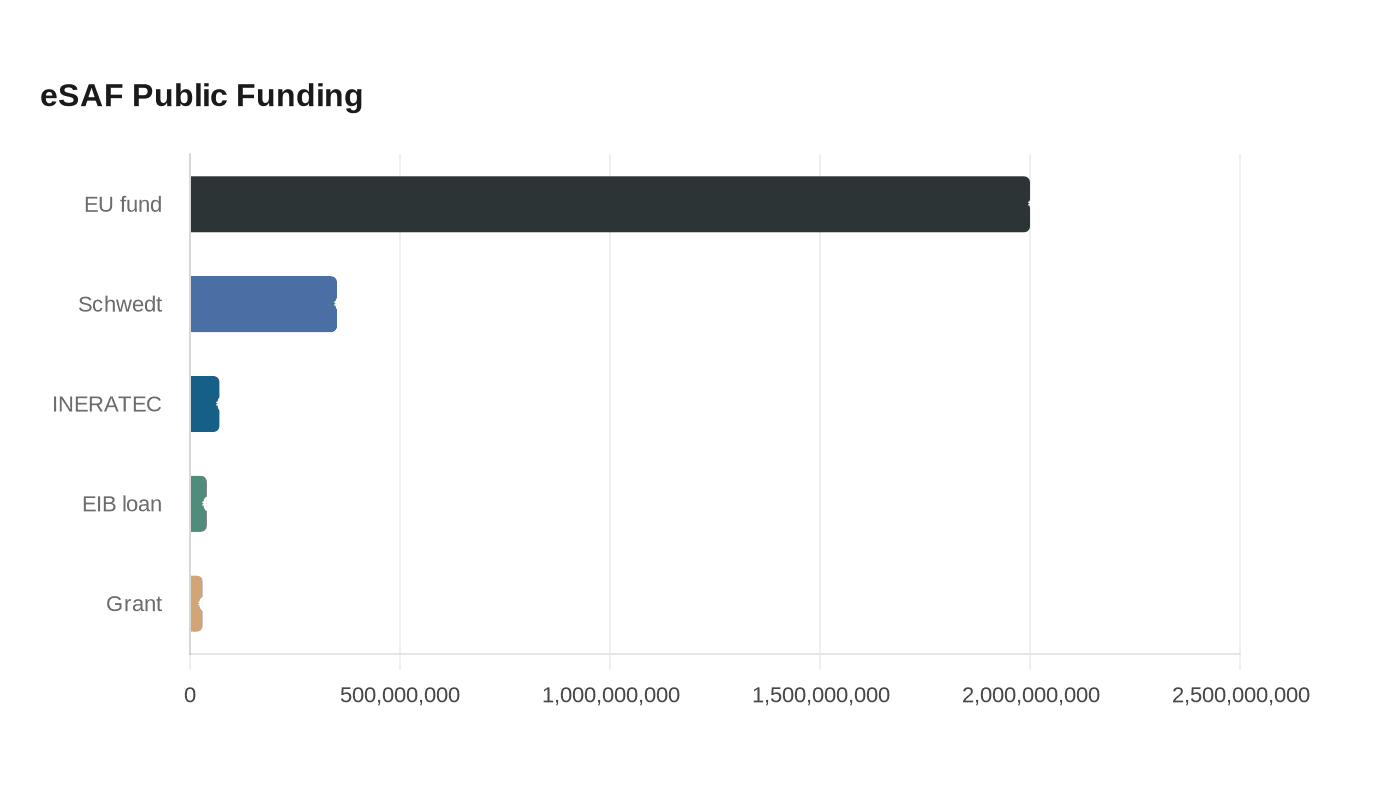
A separate financing round in March 2025 pushed that strategy deeper into the industrial base. The European Investment Bank and Breakthrough Energy Catalyst provided €70 million for INERATEC's Frankfurt project, split between a €40 million EIB venture-debt loan and a €30 million grant. The company described the plant as Europe's largest sustainable e-fuel production facility and a first-of-a-kind German e-SAF project.
The policy push tracks the commercial pressure on airlines and fuel producers. Lufthansa Group says SAF can be used in regular flight operations without infrastructure changes, cuts CO2 emissions by at least 80% versus fossil fuel, still accounts for less than 1% of total aviation fuel used worldwide, and costs about three to five times more than fossil fuel.
That cost gap is the industrial-policy problem Germany is trying to solve. By layering a market consultation, direct project support in Schwedt, and financing for INERATEC in Frankfurt, Berlin is signaling that it wants homegrown eSAF capacity, not just certificates or imports, to anchor the country's aviation decarbonization strategy.
This article was produced by Prism’s automated news system from verified source data, official records, and press releases, then run through automated quality and moderation checks before publishing. The system is built and supervised by the people who set the standards it runs under. Read our full AI policy.
Did this article answer your question?