Growth Energy backs EPA in latest challenge to renewable fuel targets
Growth Energy moved to defend EPA’s record RFS volumes, putting 26.81 billion RINs for 2026 and 27.02 billion for 2027 at the center of eight court challenges.
Growth Energy on June 24 filed in the D.C. Circuit a motion to defend EPA’s 2026-2027 RFS volumes in Center for Biological Diversity v. EPA et al., case No. 26-1132, in a case now spanning eight consolidated challenges. Refiners, the Sierra Club and other opponents target EPA’s March 27 Set 2 rule.
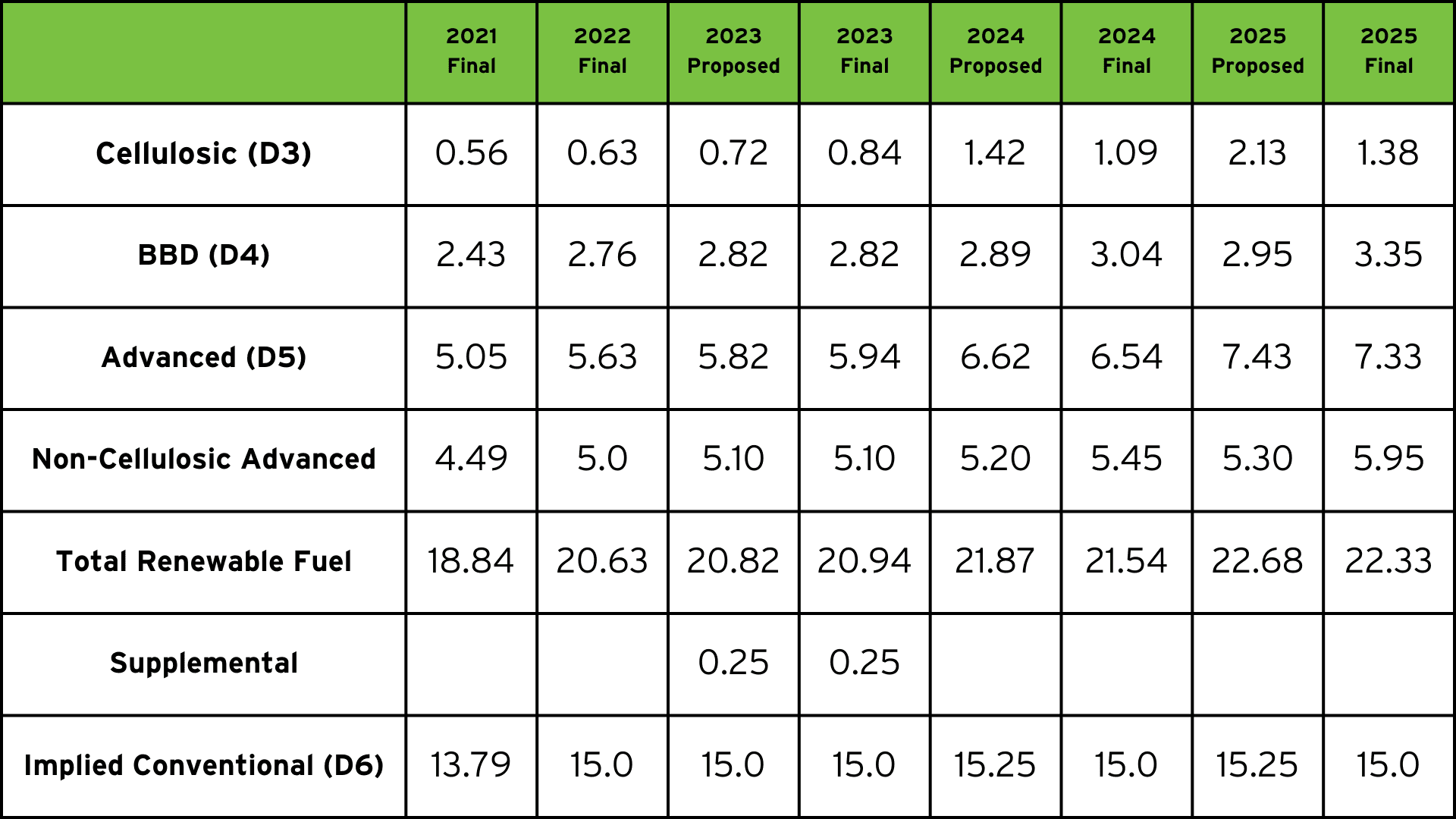
EPA’s final rule set 2026 renewable volume obligations at 26.81 billion RINs and 2027 obligations at 27.02 billion, the largest levels in the Renewable Fuel Standard’s history. The agency also finalized 25.82 billion RINs of conventional renewable fuel for 2026 and 25.98 billion for 2027, 9.07 billion and 9.20 billion RINs of biomass-based diesel, 11.10 billion and 11.32 billion RINs of advanced biofuel, and 1.36 billion and 1.43 billion RINs of cellulosic biofuel. EPA also reallocated 70% of small refinery exemptions granted for 2023-2025 and removed renewable electricity, or eRINs, as a qualifying renewable fuel.

Growth Energy chief executive Emily Skor said the litigation looked like another yearly effort to blunt the program. She said EPA’s new RVOs advance energy security, environmental and economic development goals, do not pose a real threat to small refineries and will benefit farmers, consumers, drivers, rural communities and biofuel producers. Skor called the newest RVOs “the strongest ever.”
EPA’s final rule would require biodiesel and renewable diesel production and use to rise by more than 60% from 2025 volumes, generate a $31 billion value for American corn and soybean oil in 2026, add more than $10 billion to rural economies and support more than 100,000 jobs in agriculture and manufacturing.

American Fuel & Petrochemical Manufacturers filed a June 3 lawsuit challenging the Set 2 rule as the most expensive RFS iteration in history. The group put RFS compliance costs at more than 35 cents per gallon for the first time and argued the rule could cost more than $106 billion over two years.
This article was produced by Prism’s automated news system from verified source data, official records, and press releases, then run through automated quality and moderation checks before publishing. The system is built and supervised by the people who set the standards it runs under. Read our full AI policy.
Did this article answer your question?