India allocates 544.15 crore to turn crop residue into bioenergy
India set aside 544.15 crore for 2026-27 residue management, backing 141 supply-chain projects to handle 2.762 crore tonnes of stubble.

The Centre on June 17 allocated 544.15 crore for 2026-27 under the Crop Residue Management scheme. The first instalment of 272.07 crore has already gone out, and the target is to move 2.762 crore tonnes of paddy stubble into collection, processing and end-use channels instead of open burning.
Agriculture Minister Shivraj Singh Chouhan and Environment Minister Bhupender Yadav chaired the review at Krishi Bhavan in New Delhi, underscoring that stubble management is being treated as both an agriculture input issue and an air-pollution problem. The scheme began in 2018-19, and since then the Centre has provided 4,266.47 crore in financial assistance to Punjab, Haryana, Uttar Pradesh, Madhya Pradesh and the Indian Council of Agricultural Research. The official tally also shows more than 3.54 lakh crop-residue management machines distributed and more than 43,500 Custom Hiring Centres set up.
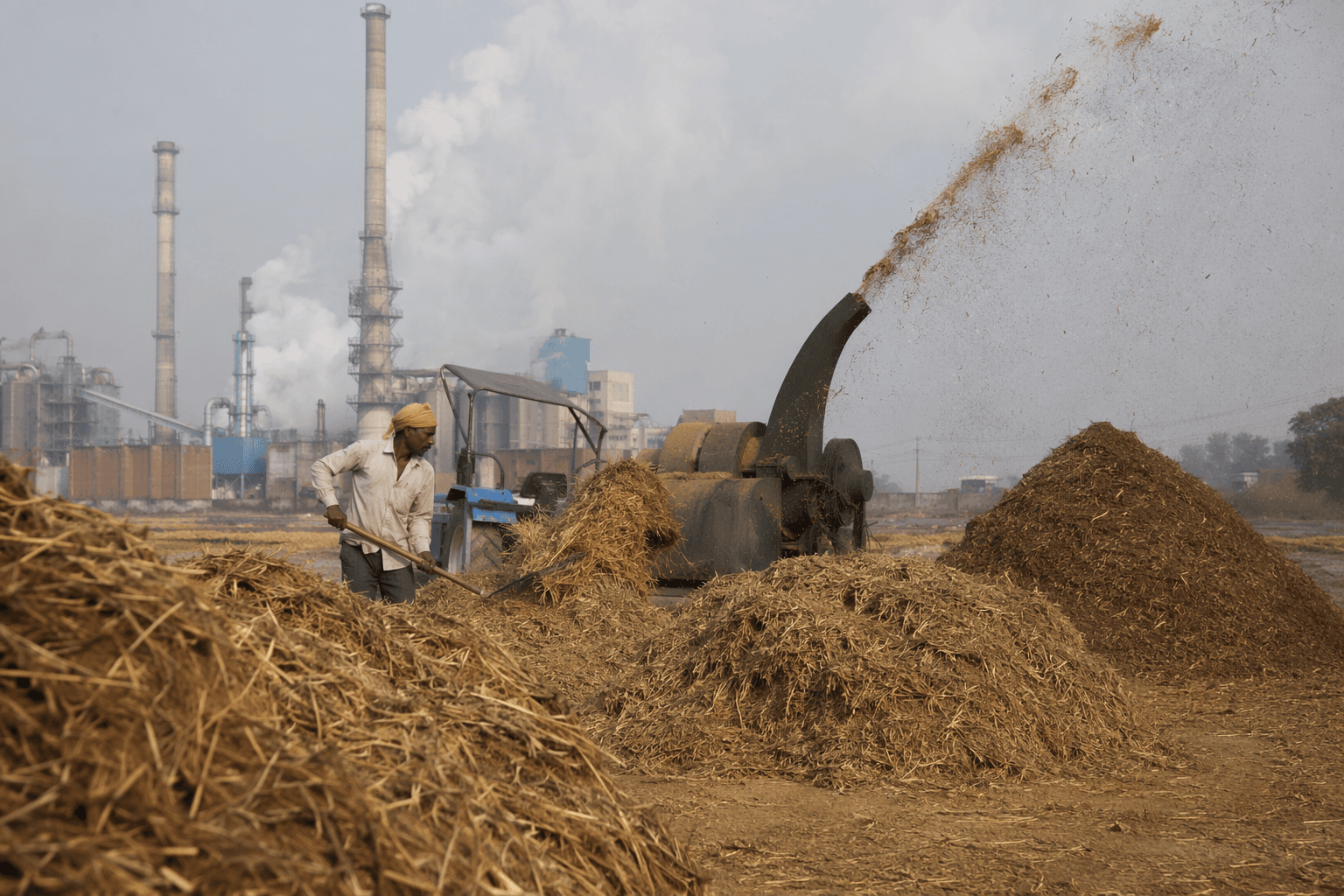
For 2026-27, the government wants more than 46,000 machines, 910 Custom Hiring Centres and 141 stubble supply-chain projects. On the Agriculture Ministry’s Crop Residue Management portal, farmers get 50% financial assistance for machinery purchases, while cooperative societies, farmer producer organisations and panchayats can receive 80% support to establish Custom Hiring Centres. The machinery list includes Happy Seeder, Super Seeder, Smart Seeder, Surface Seeder, Zero Till Seed Cum Fertilizer Drill, Super Straw Management System, Balers and Straw Rakes, the kit that determines whether residue stays a field problem or becomes a tradable feedstock for biogas, biomass power and other industrial uses.
That supply-chain angle is the practical test. The scheme is no longer framed only as a subsidy for machines; it is also an effort to build a residue market with baling, aggregation, transport and off-take links that can work for biomethane plants and other bioenergy developers. The government has paired the funding with public awareness, real-time monitoring and a Stubble Protection Force operating in 70 tehsils across 14 NCR districts, while the Commission for Air Quality Management in February 2026 directed coordinated, time-bound state action plans ahead of the wheat burning season.
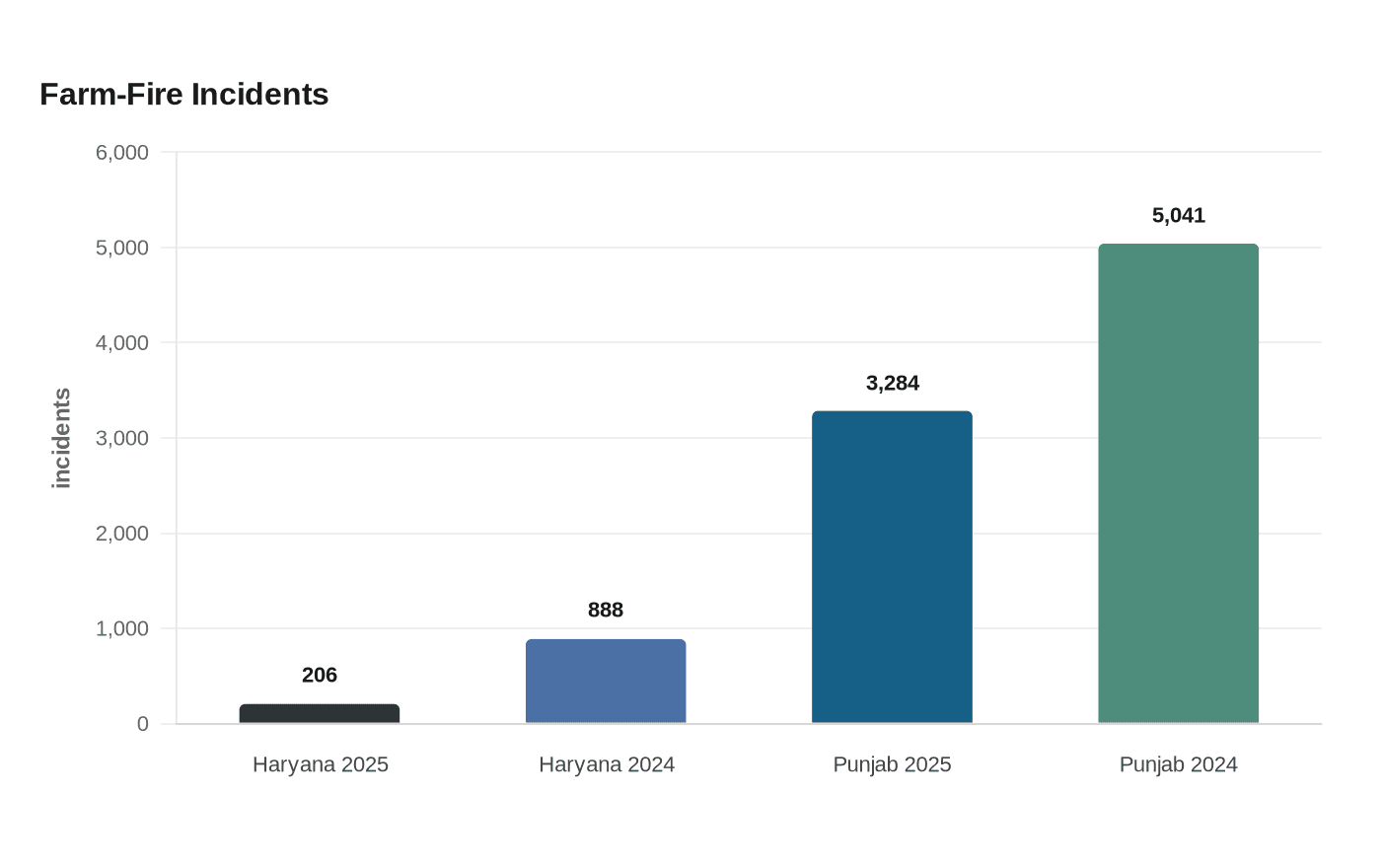
The latest farm-fire data suggest the pressure is real. CAQM said Haryana recorded 206 farm-fire incidents between September 15 and November 6, 2025, down from 888 in the same period of 2024, while Punjab logged 3,284 incidents, compared with 5,041 a year earlier. The paddy harvest season 2025 ended with a notable reduction in farm fires across Punjab and Haryana, but the scale of the 2026-27 residue burden shows the market for straw, not just the penalty for burning it, will decide how far the turnaround goes.
This article was produced by Prism’s automated news system from verified source data, official records, and press releases, then run through automated quality and moderation checks before publishing. The system is built and supervised by the people who set the standards it runs under. Read our full AI policy.
Did this article answer your question?