India says ethanol blending impact will be clear next year
India’s ethanol blend hit 17.98% through February 2025, while officials prepared E22 to E30 standards and said the policy’s impact will be clearer next year.
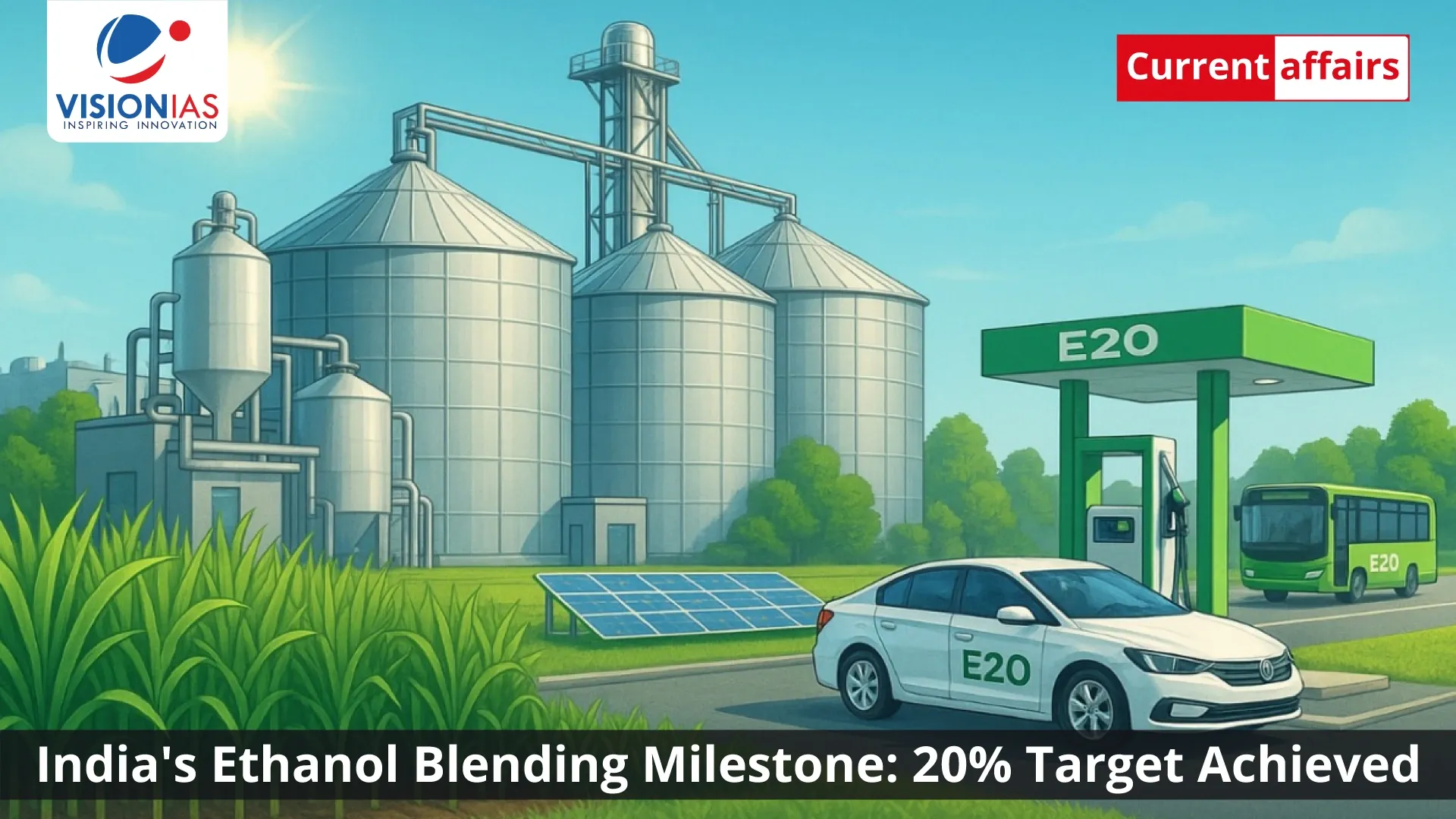
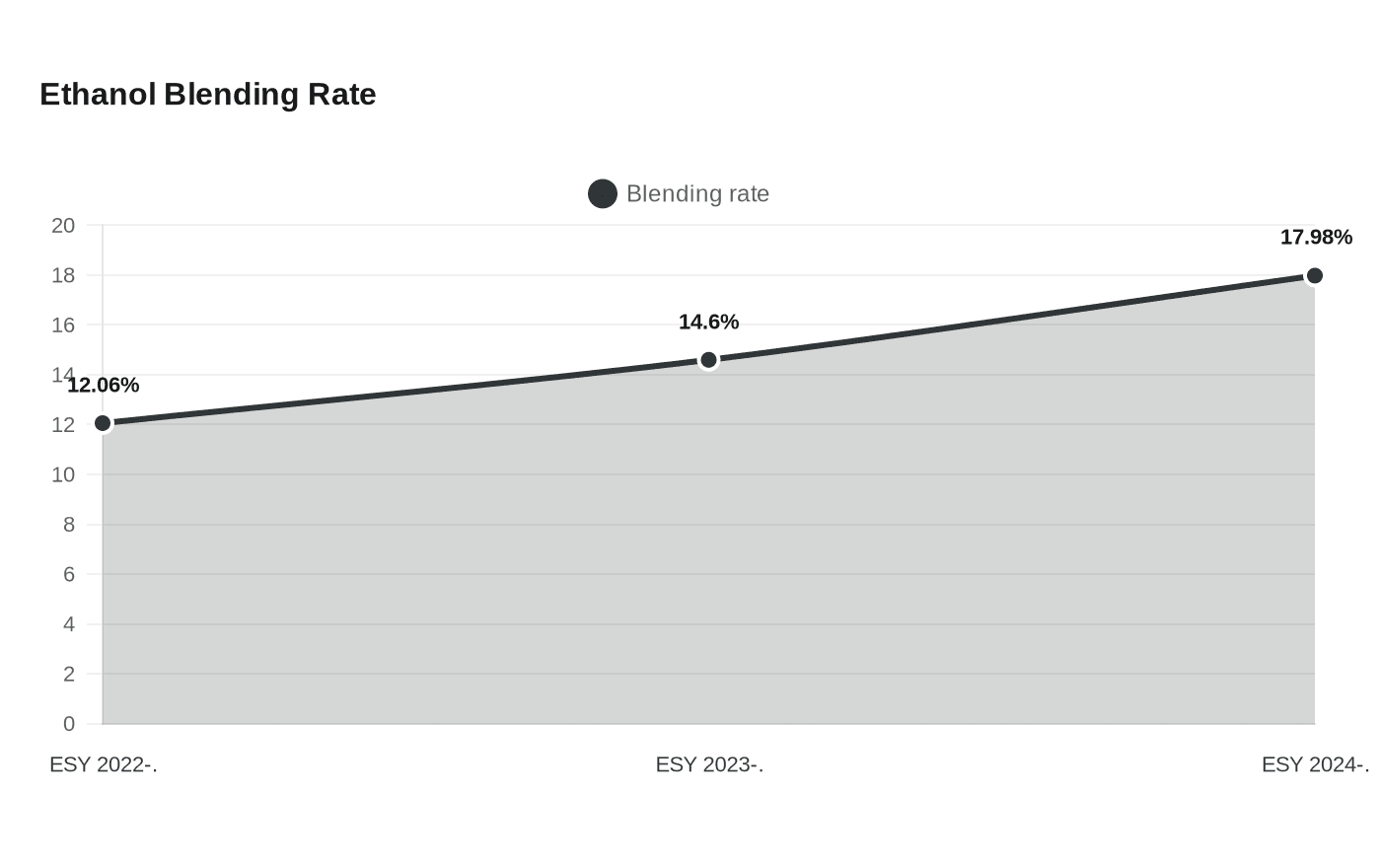
India’s public-sector oil marketing companies raised ethanol blending to 17.98% in ethanol supply year 2024-25 through February 28, 2025, government data showed.
The government said the effect of the E20 rollout would be clearer next year, after a run that took blending from 12.06% in ESY 2022-23 to 14.60% in ESY 2023-24. India launched the Ethanol Blended Petrol programme in 2003, then moved the National Policy on Biofuels target for 20% blending from 2030 to ESY 2025-26 in a 2022 amendment. Public-sector oil marketing companies hit 10% in June 2022, five months ahead of schedule.

In March 2025, the government said no decision had been taken to push blending beyond 20% at that point. It also said E20 can cause a marginal reduction in fuel efficiency in four-wheelers designed for E10 but calibrated for E20. The Petroleum Ministry has separately rejected viral claims that E20 damages engines, affects insurance cover or contaminates water, saying those allegations have no scientific basis. For motorists, the open question is how that marginal efficiency loss plays out across a larger vehicle fleet and whether the consumer experience matches the blend targets on paper.
NITI Aayog’s 2021 road map said a successful E20 programme could save about US$4 billion, or Rs 30,000 crore, a year in import costs. That same plan said the target would still need regulatory streamlining, single-window clearance for distilleries, smoother interstate movement of denatured ethanol, consumer awareness and close monitoring. The policy has since moved again: petrol containing 22% to 30% ethanol was exempted from excise duty in June 2026, and the Bureau of Indian Standards notified E22, E25, E27 and E30 fuel grades under IS 19850:2026, effective May 15, 2026.
Those steps point to a government preparing for higher blends before the full E20 balance sheet is in. The remaining evidence will come from whether automakers accept the compatibility case at scale, whether farmers and distillers see cleaner economics across the feedstock chain, and whether air-quality regulators get hard emissions data that matches the import-savings case.
This article was produced by Prism’s automated news system from verified source data, official records, and press releases, then run through automated quality and moderation checks before publishing. The system is built and supervised by the people who set the standards it runs under. Read our full AI policy.
Did this article answer your question?