India tests 2 percent isobutanol diesel blend in commercial vehicles
India began validating a 2 percent isobutanol-diesel blend in commercial vehicles, a possible first diesel biofuel program beyond ethanol.

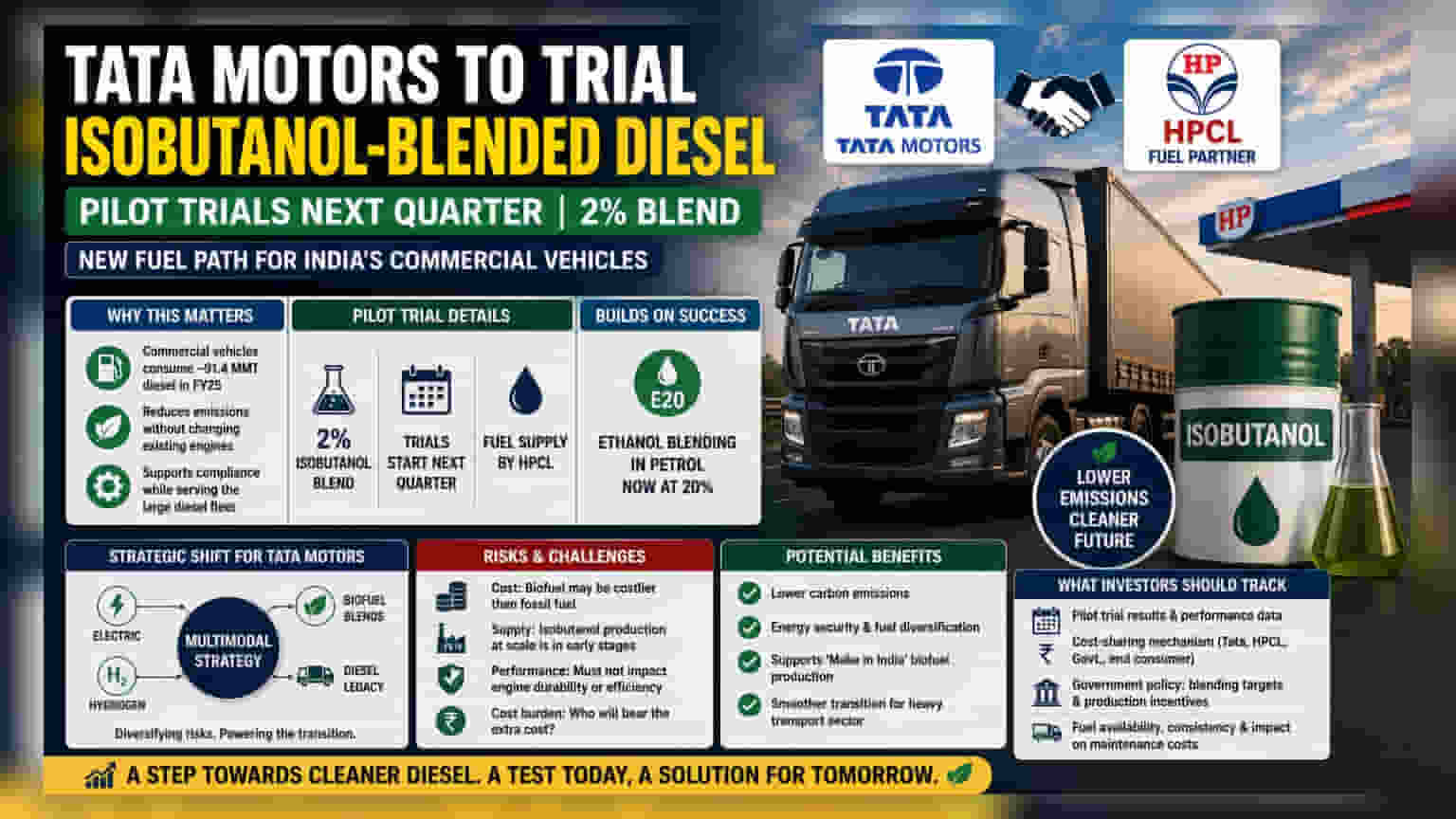
Tata Motors on June 25 said it will begin pilot trials next quarter of trucks running on 2 percent isobutanol-blended diesel. The test pushes India toward a diesel biofuel pathway that has lagged the country’s long-running ethanol program and brings commercial vehicles into the center of that shift.
The Ministry of Road Transport and Highways, Hindustan Petroleum Corporation Limited, the Automotive Research Association of India, Praj Industries and vehicle manufacturers were tied into the validation work, with Tata Motors among the first participants. The trial is designed to check performance, compatibility and operational practicality before any wider rollout, a screen that will matter more in freight than in passenger cars because diesel still anchors commercial transport.
The policy backdrop already points to a broader diesel blending agenda. India amended its National Policy on Biofuels in June 2022 to move the 20 percent ethanol-blending target in petrol up to the ethanol supply year 2025-26 and to propose an indicative 5 percent biodiesel blending target in diesel by 2030. The isobutanol trial goes beyond that framework by probing a different oxygenated fuel for diesel use, one that industry participants appear to view as a lower-risk fit for existing logistics patterns than a faster pivot to unfamiliar hardware or fuel systems.
V. Umashankar, the transport secretary, said on May 30 that a diesel-isobutanol blending mandate could come as early as this year. That makes the current vehicle testing more than a laboratory exercise, because ARAI’s engine development and emission certification labs will have to verify how the blend behaves across alternative-fuel vehicle and engine platforms, including diesel, ethanol, methanol and biodiesel applications. Any fleet-scale adoption would also need certification rules that cover drivability, emissions, storage stability and compatibility with commercial-duty operating cycles.
The work follows HPCL’s 2023 pilot study on vehicles using E27 fuel and ethanol-blended diesel fuel, which had already widened India’s biofuel research beyond petrol-only blending. It also sits inside the larger national push that Narendra Modi marked with the launch of the Global Biofuels Alliance at the G20 summit in New Delhi on Sept. 9, 2023. Praj Industries, which describes itself as India’s bio-based technology company with global biofuel operations, is part of the current trial set, underscoring the commercial interest in whether isobutanol can move from test fleet to diesel market.
This article was produced by Prism’s automated news system from verified source data, official records, and press releases, then run through automated quality and moderation checks before publishing. The system is built and supervised by the people who set the standards it runs under. Read our full AI policy.
Did this article answer your question?