India’s ethanol push stalls without storage and transport infrastructure
India’s E20 rollout hit a logistics wall as storage, transport and trust lagged. The blend is flowing, but the infrastructure test is still ahead.
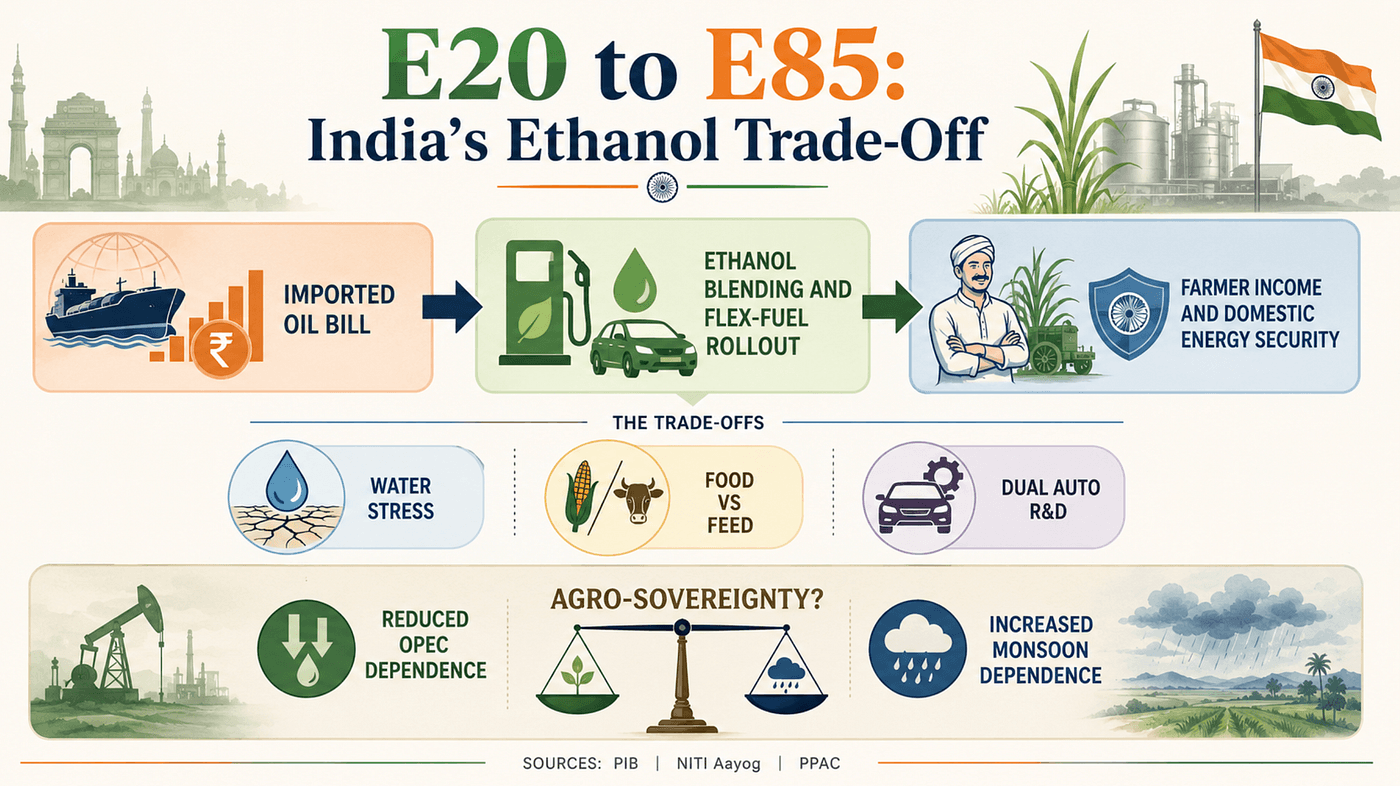
Tankage, road links, terminal handling and depot capacity still decide whether India’s ethanol programme reaches the pump. NITI Aayog and the Ministry of Petroleum and Natural Gas in June 2021 tied India’s ethanol roadmap to cutting the country’s petroleum import bill, but logistics lagged. The Roadmap for Ethanol Blending in India 2020-25, authored by Rakesh Sarwal, Sunil Kumar, Amit Mehta, Amit Varadan, Subodh Kumar Singh, S.S.V. Ramakumar and Reji Mathai, was designed to cut the import bill and widen blending.
The policy frame was always about imports, not just fuel chemistry
The June 2021 roadmap put hard numbers on the incentive. Its foreword put India’s net petroleum import at 185 Mt at a cost of US$55 billion, a bill the government wanted to trim by pushing blended petrol across the market. The ethanol programme was not only a refinery or blending exercise; it was a national logistics programme built around moving more fuel, more often, through a constrained system.
But the policy architecture did not remove the physical bottlenecks. Ethanol still has to be sourced, stored, transported and blended cleanly before it reaches retail outlets, and each step adds friction if tankage, road links, terminal handling or depot capacity do not keep pace.
The real constraint is the chain behind the nozzle
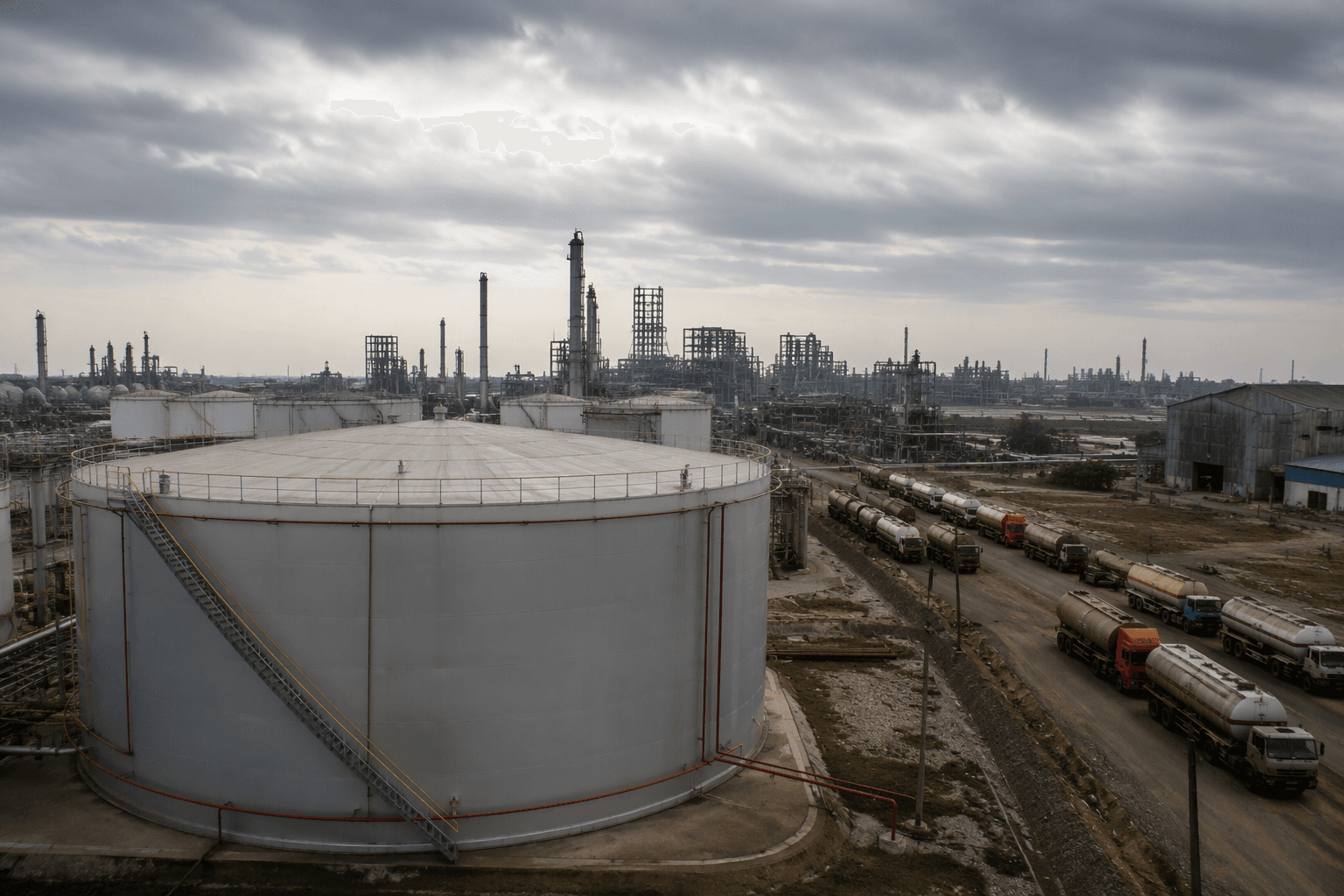
India’s ethanol strategy now depends on the chain that links feedstock, distilleries, depots and pumps. The discussion has moved beyond blend targets and into the less visible work of storage and distribution infrastructure, the part of the system that decides whether a national target exists on paper or at the pump. If fuel cannot move reliably, or if the retail network cannot handle the blend consistently, the headline percentage loses practical value.
A March 2022 Mongabay India article warned that higher ethanol production could intensify pressure on farms and groundwater, which means the constraint is not only downstream logistics but also upstream supply. India’s ethanol push therefore has to clear two tests at once: securing feedstock without worsening farm stress, and moving finished fuel through a distribution system that is still being stretched to E20.
E20 exposed the public-facing side of the bottleneck
By 2025, the issue had moved from policy rooms into driver sentiment. On August 29, 2025, India’s push for ethanol-mixed fuel sparked driver backlash and put carmakers under pressure. On September 1, 2025, the Supreme Court of India dismissed a challenge to the government rollout of 20% ethanol-blended fuel, leaving the legal basis intact even as the backlash continued.
The consumer response turned a blending mandate into a trust problem. If drivers worry about mileage or durability, the market tests every part of the chain, from fuel quality at the terminal to compatibility at the engine. That pressure remained visible in July 2026, when petrol stations were offering fuel with 20% ethanol blended in.
What the infrastructure test looks like now
For India’s ethanol programme, the next phase is not a fresh target. It is execution across the logistics system that supports the current blend. The sequence is straightforward, even if the build-out is not:
- Storage capacity has to absorb more ethanol and blended petrol without creating handling bottlenecks at depots and terminals.
- Transport links have to move the fuel from production areas into the retail network at scale.
- Retail and vehicle compatibility have to hold up under public scrutiny, or backlash will keep slowing adoption.
The debate has shifted from whether India can blend 20% ethanol to whether it can keep the programme stable at 20% without creating new costs in logistics, supply and consumer confidence. In July 2026, junior oil minister Suresh Gopi said India had no plans to raise ethanol content in gasoline beyond the current 20%.
Brazil remains the closest reference point
A 2026 Mongabay India feature examined what India’s ethanol push can learn from Brazil’s long ethanol journey.
This article was produced by Prism’s automated news system from verified source data, official records, and press releases, then run through automated quality and moderation checks before publishing. The system is built and supervised by the people who set the standards it runs under. Read our full AI policy.
Did this article answer your question?